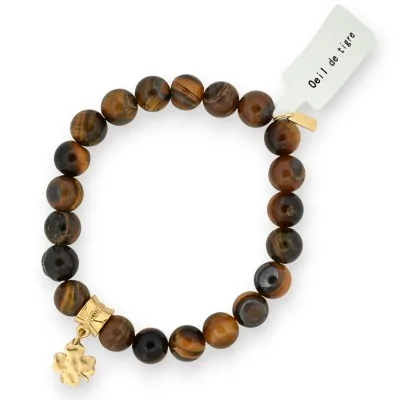
Availability: 1 In Stock

Natural stone beads, gold-plated steel and no clasp anywhere: that is the short version of this shelf. Amethyst, rose quartz, tiger's eye, labradorite, amazonite, malachite, agate…
Hoops with a stone bead sit at the quiet end of the crystal healing range. The ring is gold-tone steel, the bead does the talking, and the whole thing weighs almost nothing on the…
There are 54 products.
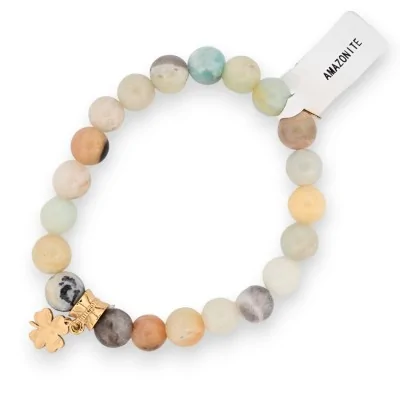
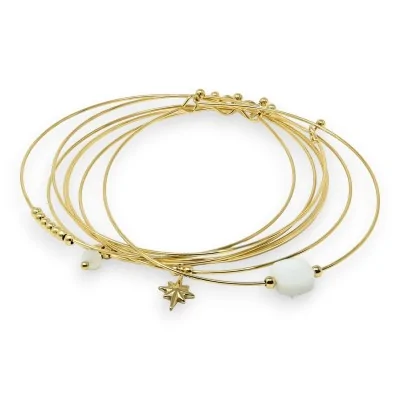
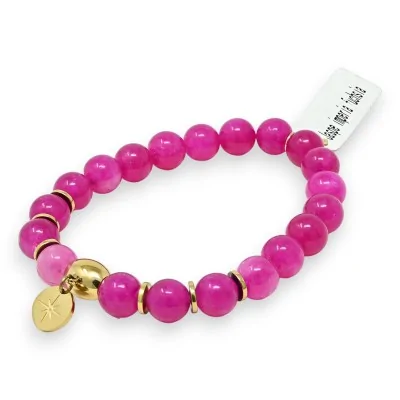
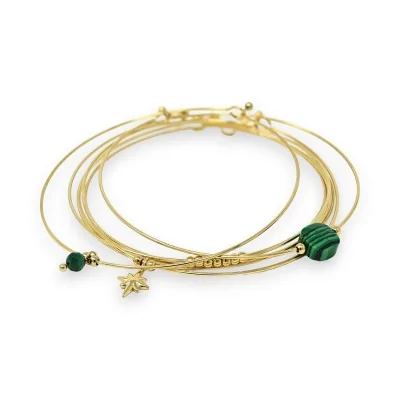
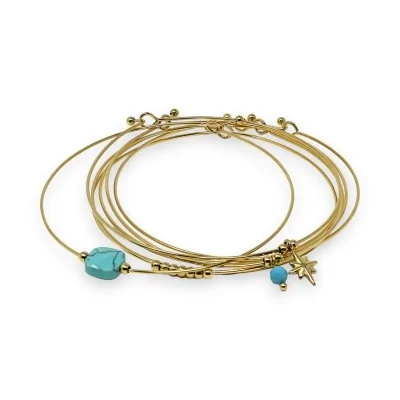
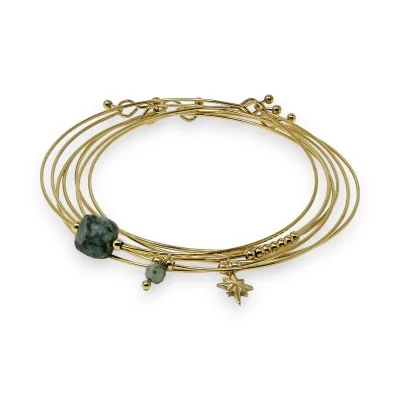
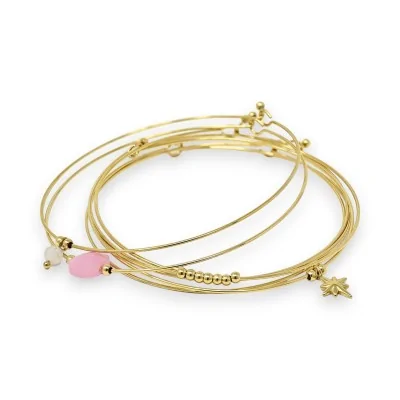
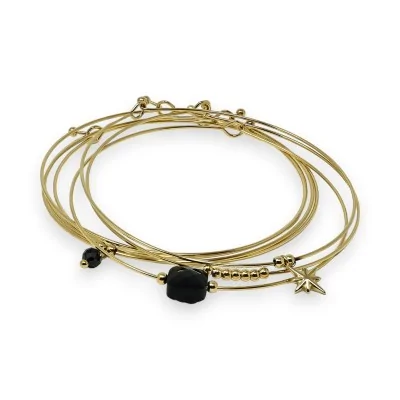
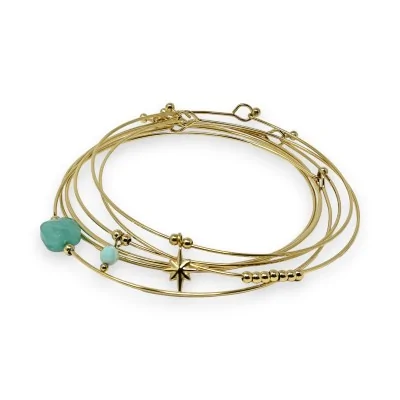
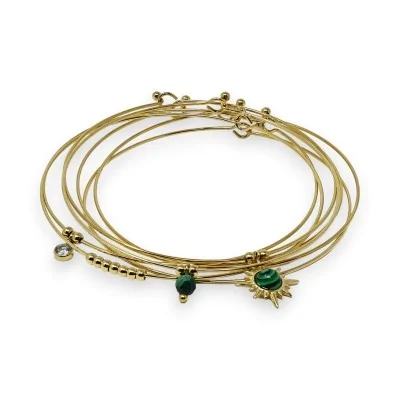
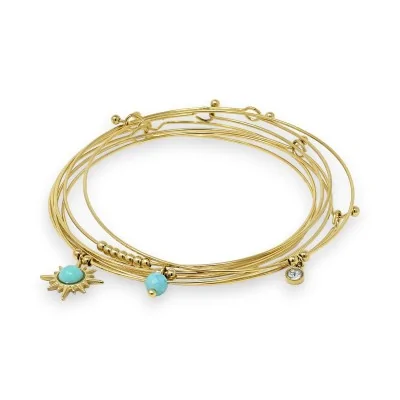
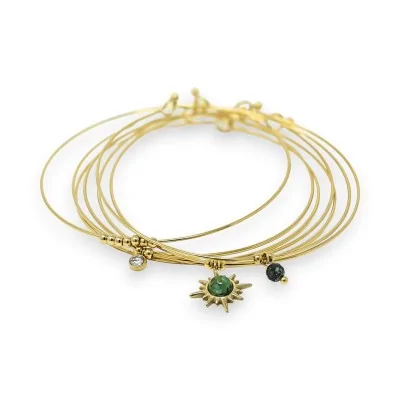
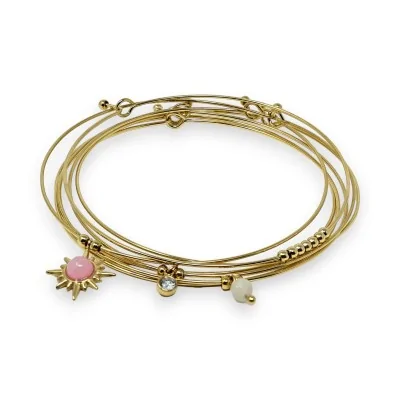
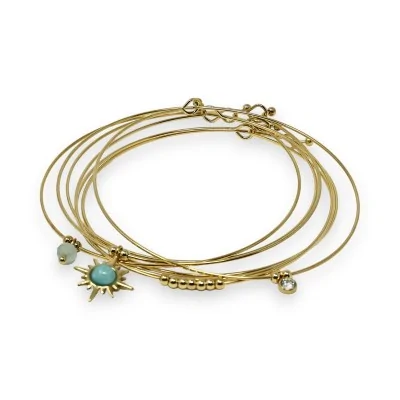
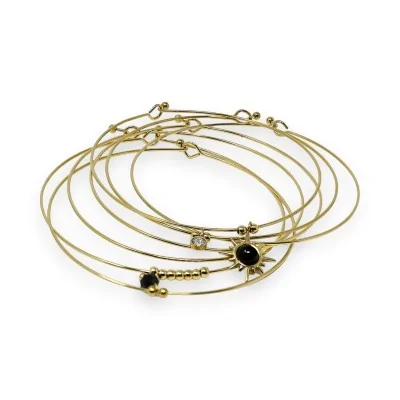
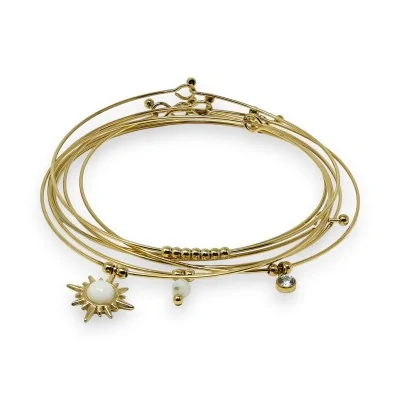
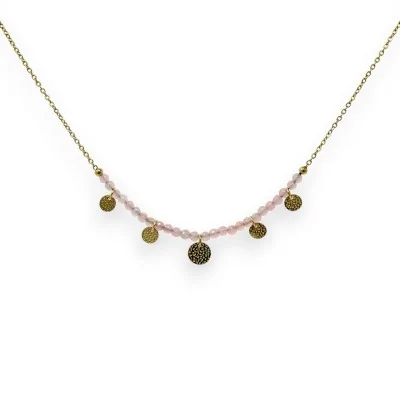
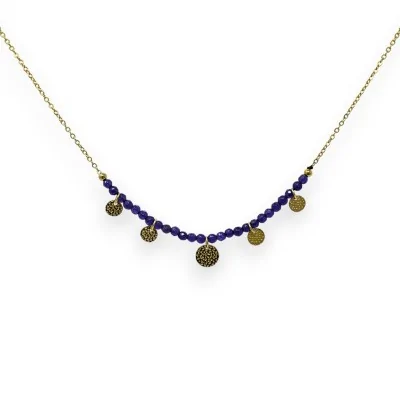
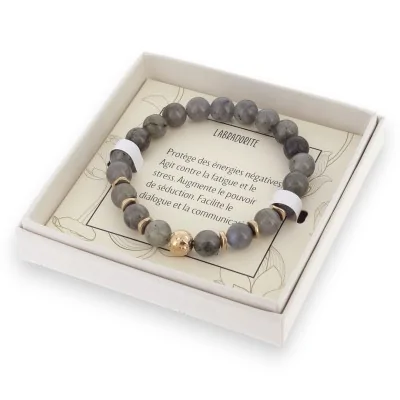
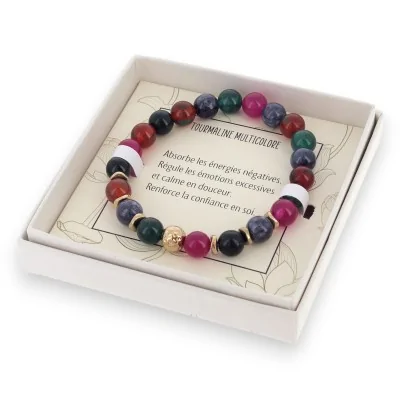
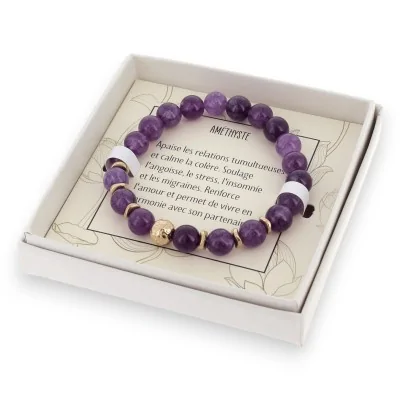
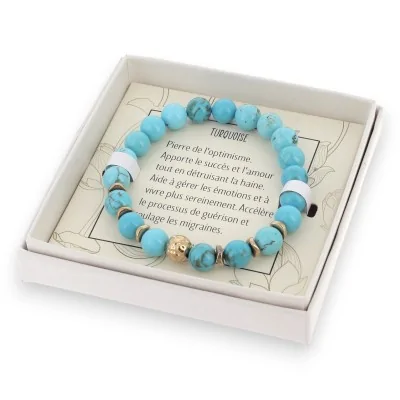
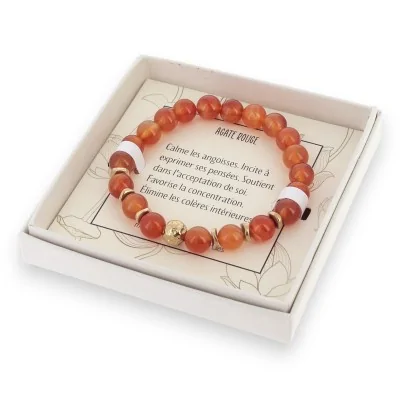
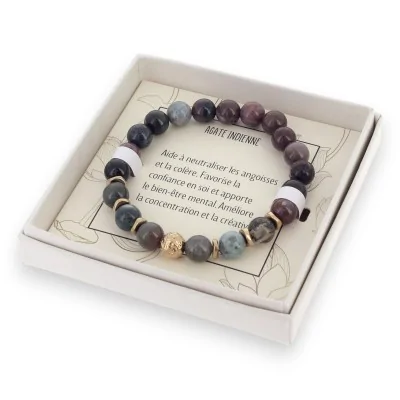
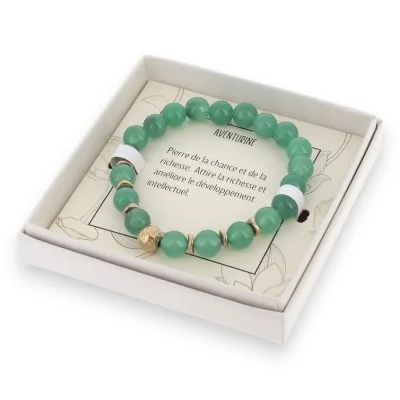
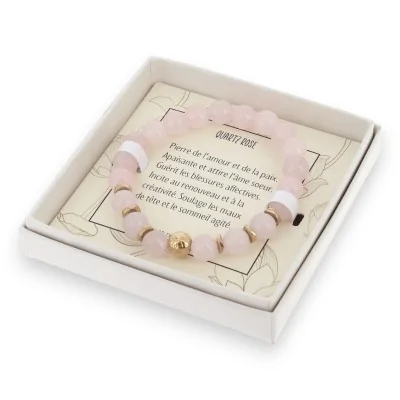
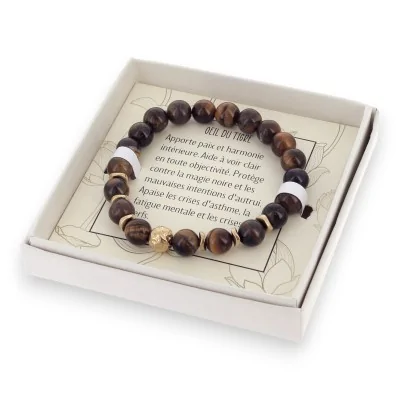
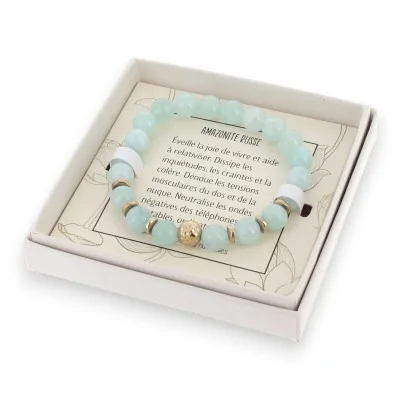
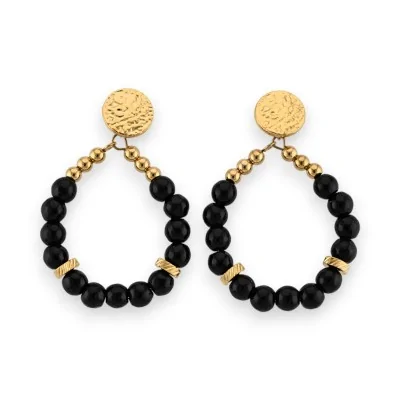
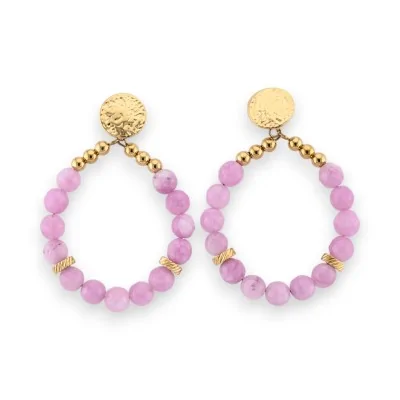
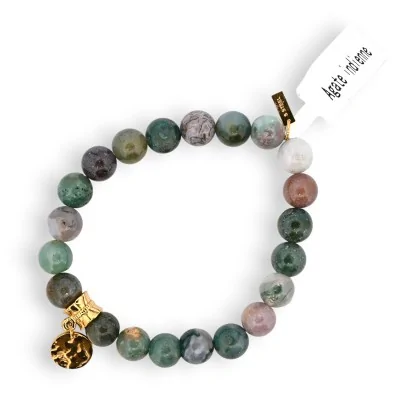
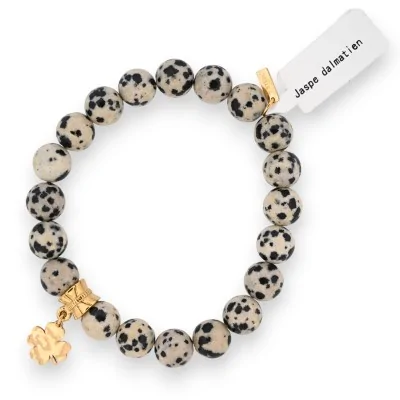
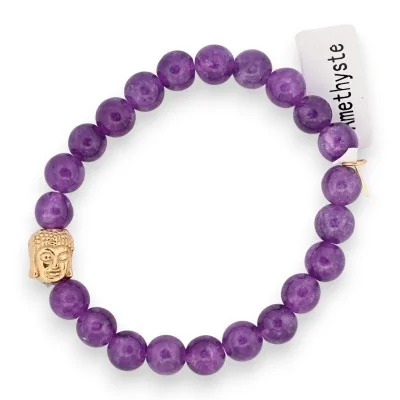
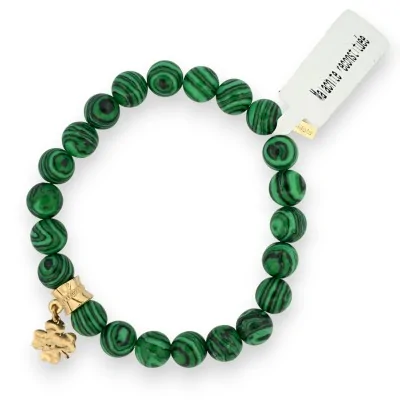
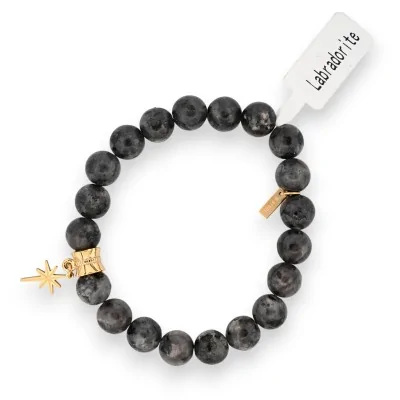
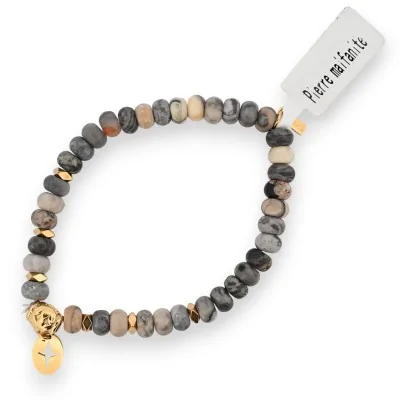
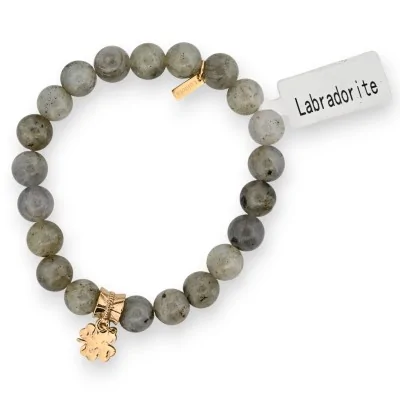
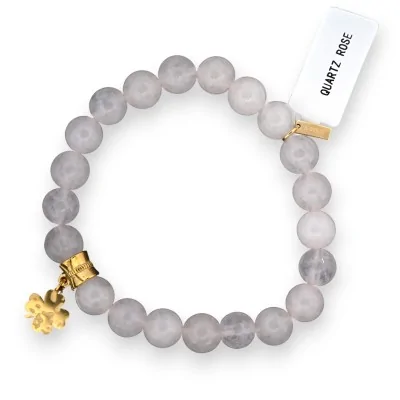
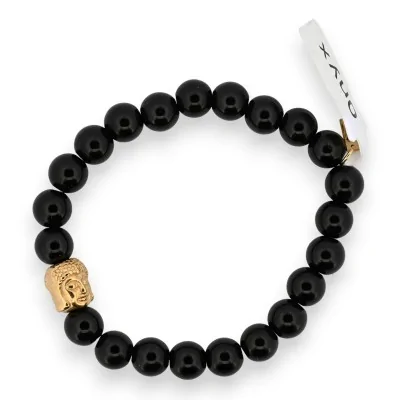
The build matters more for daily comfort than the mineral does. Beaded bracelets slip straight on, with no clasp to fiddle with, and settle round the wrist as you move. Bangles are the opposite: rigid gold-plated steel, sold in stacks so the colours read as a graduated set, and they stay exactly where you put them. Hoop earrings keep the stone at the ear on a stainless steel ring, which is the lightest option and the kindest to pierced ears that react to other metals. Elastic thread is the part that ages fastest, so treat it as the wear point on any beaded piece. Everything in both builds sits in our beaded and bangle bracelets in natural stone.
Colour is the quickest route round the shelf, so the table below groups what is actually stocked rather than a textbook list of forty minerals.
| Colour family | Stones | What the bead looks like |
|---|---|---|
| Purple | Amethyst | Translucent, from pale lilac to deep violet, often zoned |
| Pink | Rose quartz | Milky and soft-toned, sometimes faintly cloudy inside |
| Green | Amazonite, malachite, aventurine | From chalky mint to banded deep green |
| Amber and red | Tiger's eye, carnelian, red agate | Warm, banded, with a moving sheen on tiger's eye |
| Dark and neutral | Onyx, black agate, snowflake obsidian, white jade | Dense and opaque, obsidian flecked with pale grey |
Labradorite, dalmatian jasper, imperial fuchsia jasper, turquoise and multicoloured tourmaline sit alongside these families and behave as accent stones in a stack.
Stacks work when one thing stays constant. Keeping to a single colour family is the easiest version: amazonite, malachite and aventurine sit together and read as one piece rather than three. The alternative is a deliberate contrast, tiger's eye against onyx for instance, held to two stones and no more. Metals are where stacks usually come unstuck, so match the plating across the whole wrist rather than mixing gold-plated and silver-tone findings. If you would rather keep the stones off the wrist altogether, hoop earrings set with matching stone beads use the same minerals in a quieter format.
Here the phrase is a materials label, nothing more. It tells you the beads are cut from minerals such as amethyst or tiger's eye instead of moulded from glass. Plenty of people who buy these pieces attach a meaning to the stone, usually drawn from its colour or its name, and that is a cultural habit rather than a treatment. We make no claim about what a stone does. What we can stand behind is the material itself: no two beads carry the same veining, so a bracelet you order will never be an exact copy of the photograph.
Two things shorten the life of these pieces: chemicals and friction. Take them off before showering, swimming and cleaning, because perfume, hairspray and detergents dull the polish and lift gold plating at the edges. A dry soft cloth handles routine care. Store each piece flat in its own pouch rather than loose in a dish, since harder beads scratch softer ones and elastic thread tires when it is left stretched or twisted. On charm styles, check now and then that the jump ring is properly closed. The rest of the catalogue is grouped in all our women's fashion jewellery.
Plating is a surface layer, so it wears where the piece rubs, typically the inside of a bangle or the back of a hoop. Keeping it away from perfume, chlorine and abrasive cloths slows that down considerably. The base metal and the finish are stated on each product page.
Because the beads are cut from natural rough, colour depth, banding and inclusions vary from batch to batch. The photograph shows one example rather than the exact piece you receive. Reconstituted stones, such as reconstituted turquoise, are labelled as such on the product page.
Better not. Some minerals are porous, some are soft enough to pit, and elastic thread holds moisture and weakens. Chlorine and salt water are the harshest of all, so take beaded pieces off before a pool or a swim.