Availability: 1 In Stock

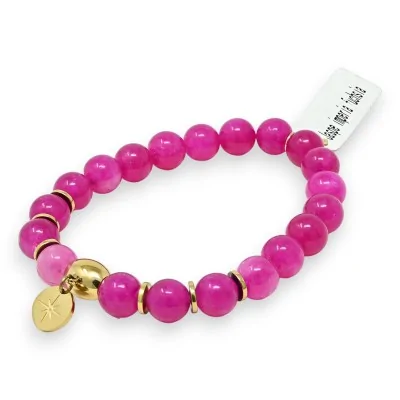
Two jaspers sit on this shelf, and they pull in opposite directions. One is speckled cream with a four-leaf clover; the other is hot pink with a star medallion. Both are strung…
This page brings together our bracelets strung from amethyst beads, the purple stone most people recognise on sight. The shade shifts along the strand, from a deep violet to…
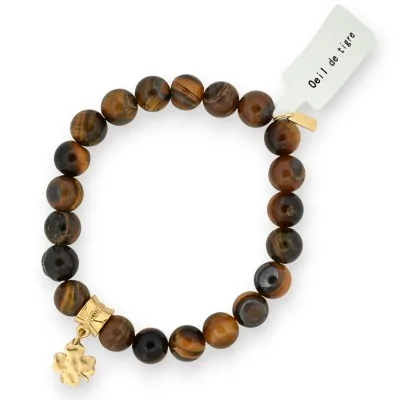
Every bracelet in this section is strung from polished natural tiger's eye beads in the 8 mm size, in the warm brown the stone is known for. What changes from one to the next…
Deep green beads, banded and swirled with black, threaded into a single row that slips straight over the hand. Every bead here measures 8mm, round and polished, and each bracelet…
At Mode Tendance, discover our lapis lazuli healing stone bracelets, crafted from the legendary royal blue healing stone with gold-shimmering pyrite inclusions, revered since…
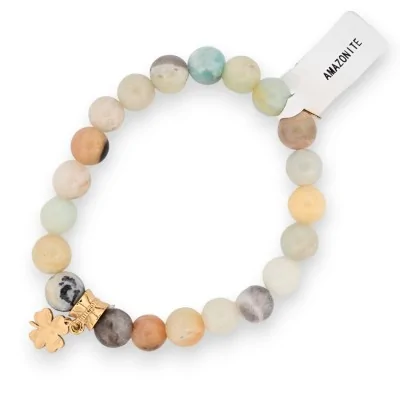
Amazonite bracelets are strung from 8 mm round beads, in greens that shift towards turquoise from one strand to the next. Every piece carries a gold-tone detail, either a charm…
Every maifanite bracelet in this range is strung on stretch cord with matt-polished stone beads, and each one closes on a gold-tone charm. What varies is the stone itself.…
Labradorite reads as a plain grey stone until the light catches it: turn your wrist and a blue or green flash crosses the beads, then it fades out again. Every bracelet in this…
This range brings together bracelets strung from polished rose quartz beads , in a pale pink that lets light through without ever turning clear. Every strand carries a piece of…
Our onyx page brings together the black bead bracelet from the Mode Tendance selection, strung on elastic cord with a single gold-plated Buddha head among the beads. Onyx is the…
Most people picture obsidian as glossy jet black. Snowflake obsidian is the softer cousin: dark-brown volcanic glass scattered with pale-grey markings. Here it is strung as…
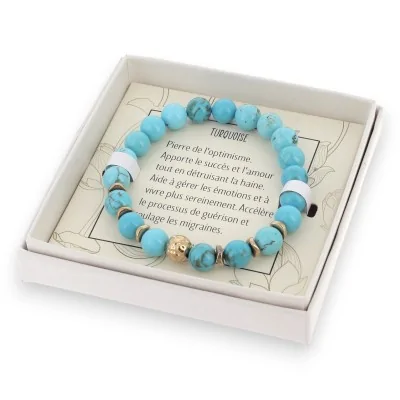
Turquoise is the stone people recognise on sight. Its colour runs from a clear sky blue to a soft sea green, and no two beads carry quite the same veining. This range brings…
Aquatic stone is a shop name rather than a mineral one. It points to the markings on the beads, pale and dark patches that shift across the polished surface the way light shifts…
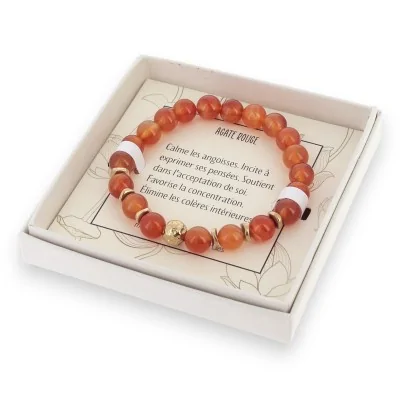
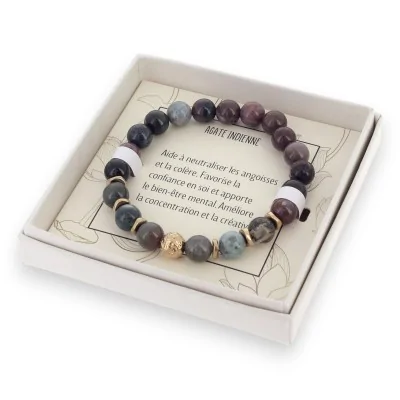
Two shades of agate sit in this section: Indian agate, where green and grey drift across every bead , and a deeper red agate that reads as one solid colour. Beads are round,…
Carnelian is the warm orange of the quartz family, and it rarely holds one shade for long. Along a single strand the beads shift from brick red to a milky apricot, some of them…
Discover our howlite healing stone bracelets at Mode Tendance, fine bijoux from the white healing stone with its characteristic gray marbling reminiscent of natural marble.…
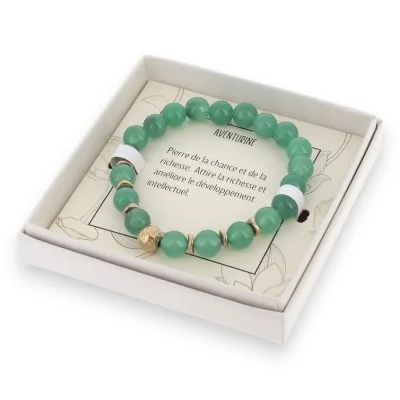
Our aventurine bracelets pair polished green beads with small gold-tone fittings. Green is the colour stated on every listing on this shelf, a clear green that runs from soft to…
There are 50 products.
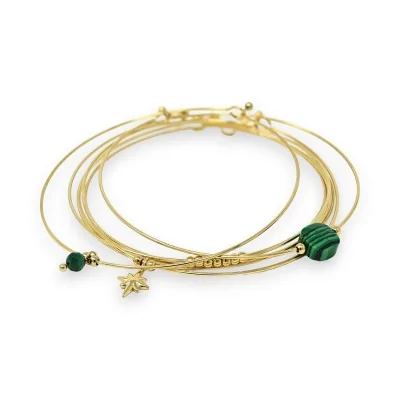
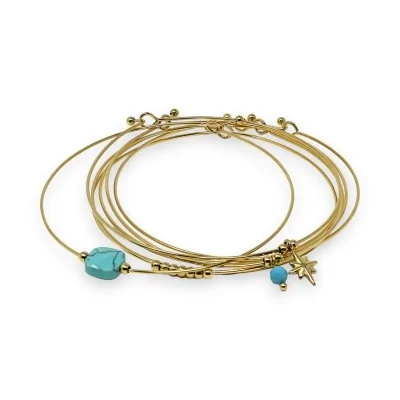
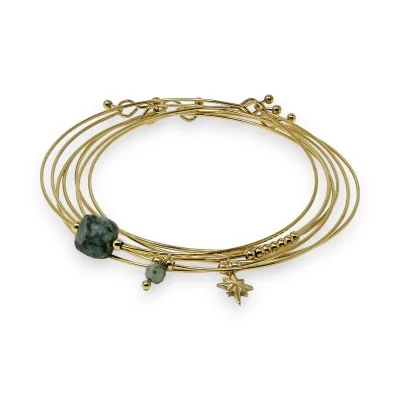
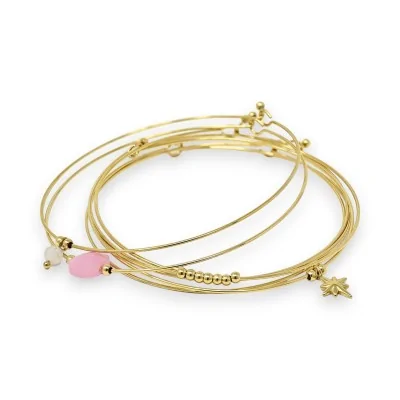
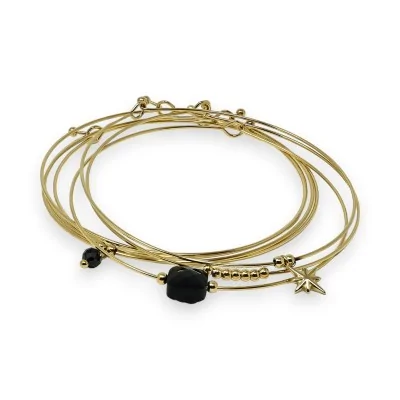
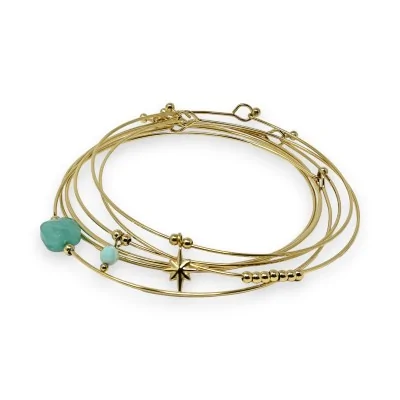
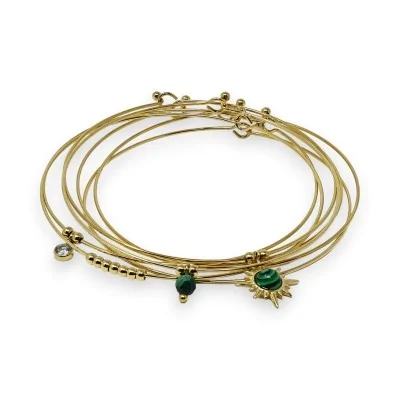
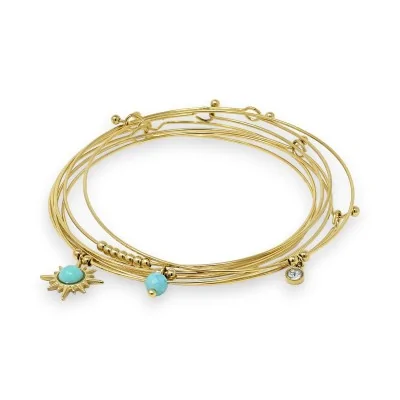
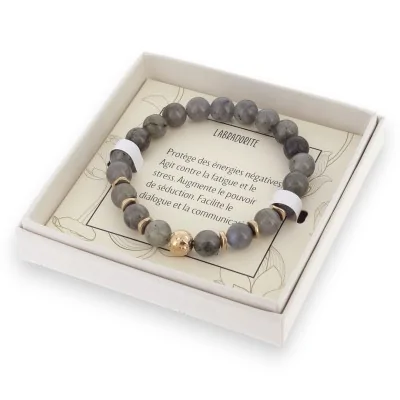
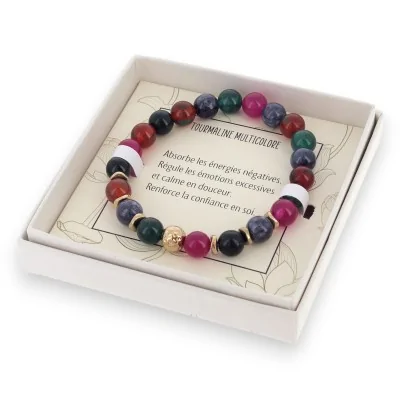
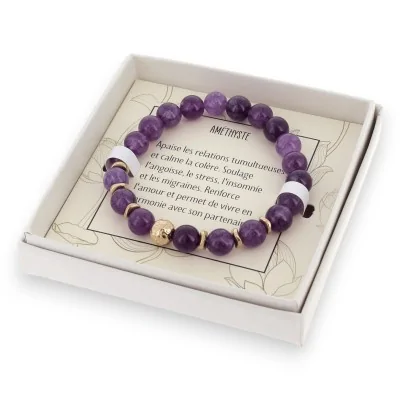
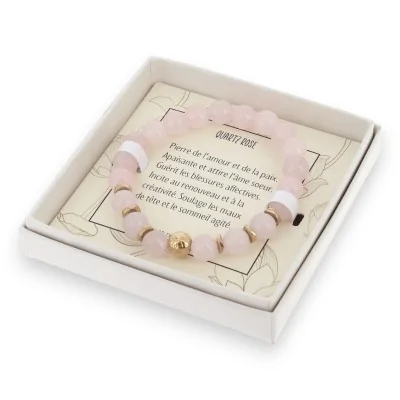
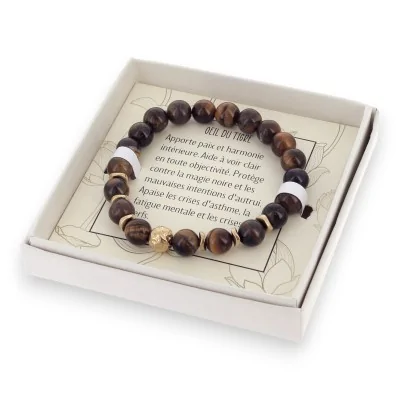
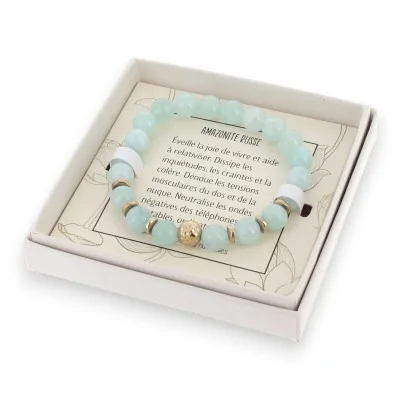
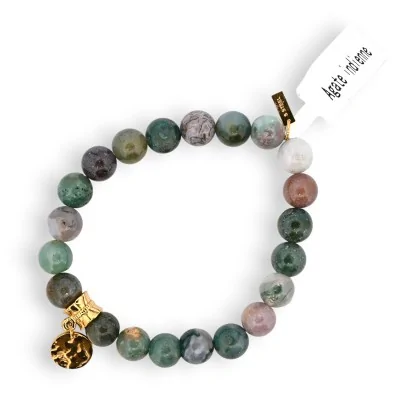
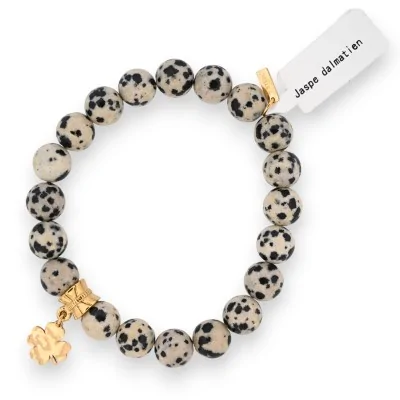
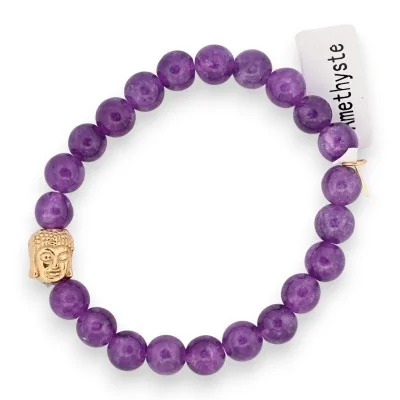
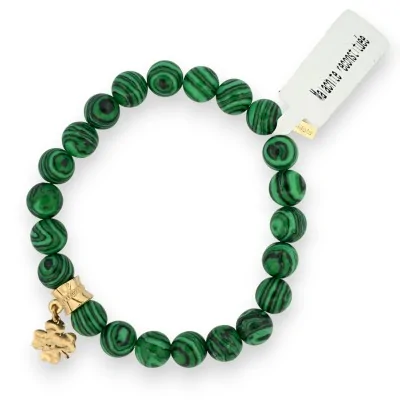
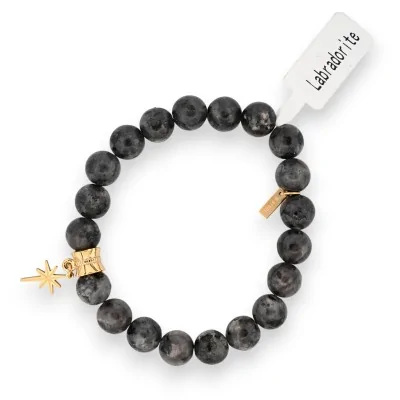
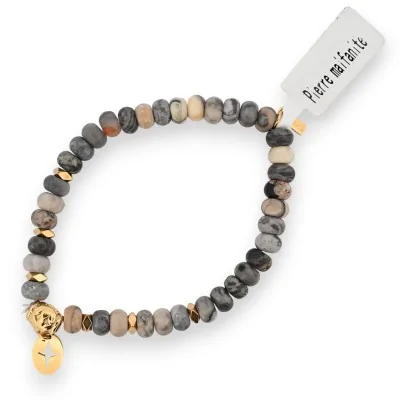
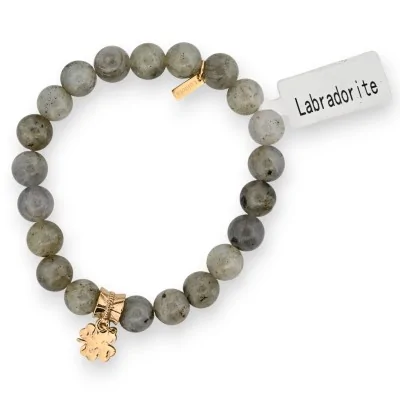
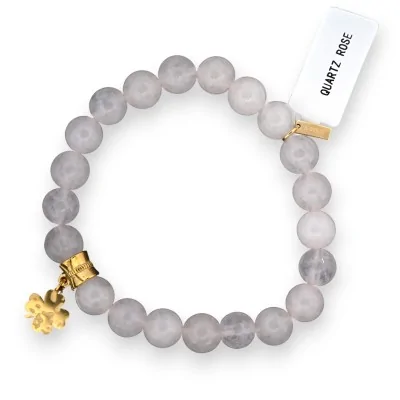
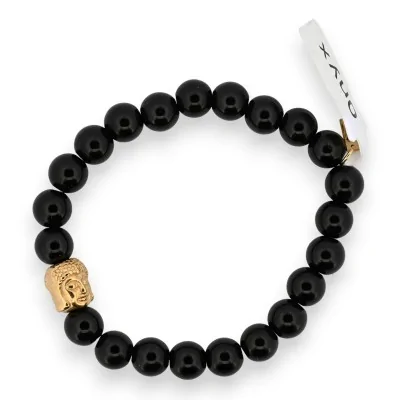
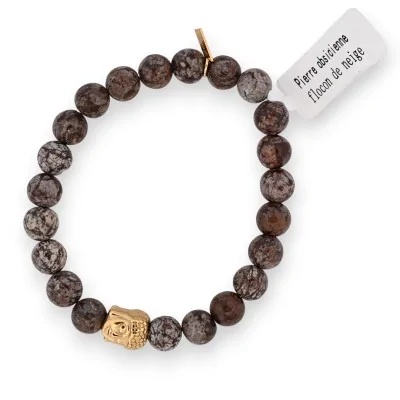
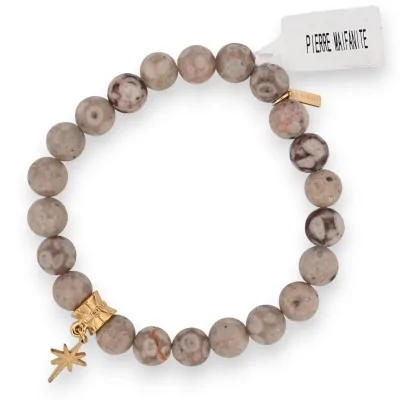
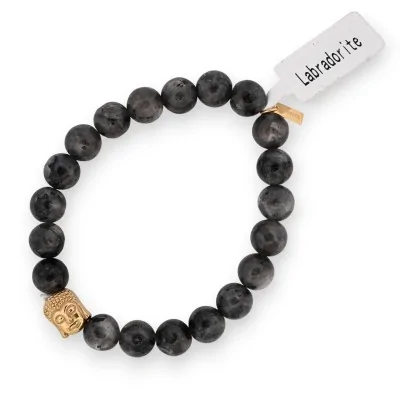
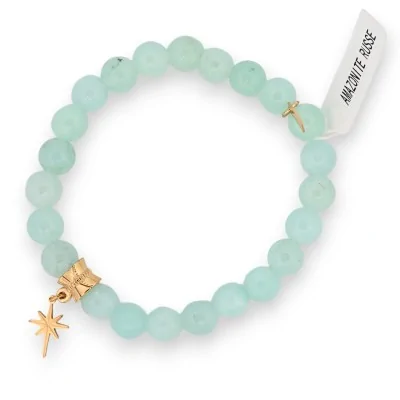
Colour here comes from the mineral, not from a coating. Amethyst brings the purples, rose quartz a powdery pink, amazonite and malachite two greens that share almost nothing, and tiger's eye its banded browns. Labradorite is the odd one out, grey until the light hits it at the right angle. Every bead is cut from a different part of the rough, so no two strands match exactly, even within one model.
The table below gathers what is actually visible on the bead, colour and pattern, so you can narrow the range down before opening a product page.
| Stone | Colour | Visible pattern |
|---|---|---|
| Amethyst | Purple, pale to deep | Translucent, with uneven colour zones |
| Tiger's eye | Golden brown | Silky bands that move with the light |
| Labradorite | Grey blue | Flashes of blue at certain angles |
| Malachite | Deep green | Concentric rings |
| Snowflake obsidian | Black | Pale grey speckles |
| Dalmatian jasper | Cream | Scattered dark spots |
The names of these minerals come from a long-standing cultural practice. On our product pages they do one job: they tell you which material and which colour you are looking at. Necklaces and hoops built on the same beads sit alongside the bracelets in the wider natural stone range.
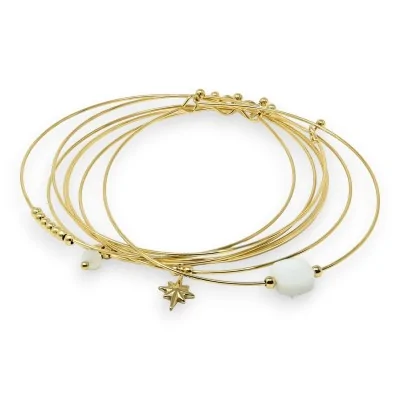
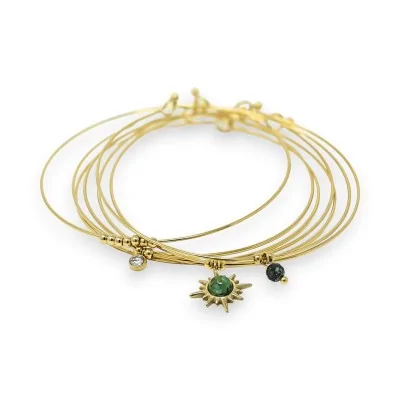
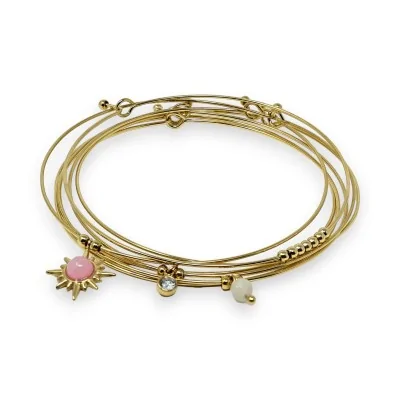
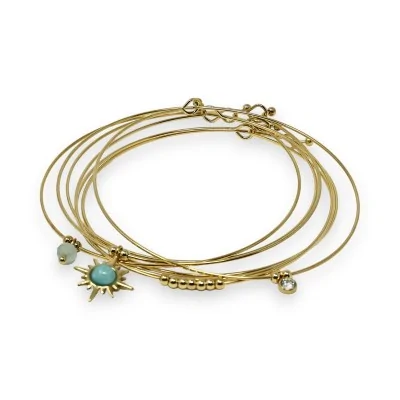
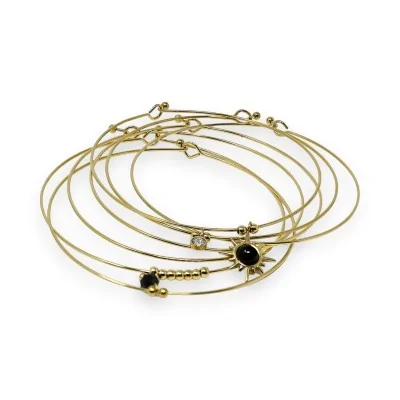
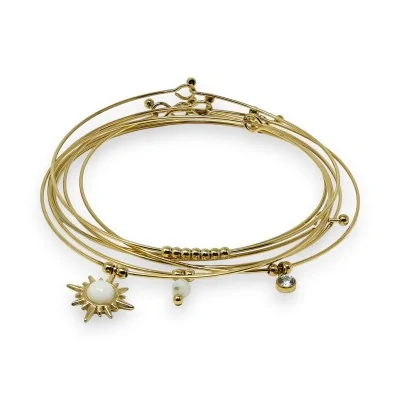
Two builds share the shelf. The bangle version is rigid gold-plated stainless steel and arrives as a set of seven rings, each carrying a round bead or a square-cut stone; it holds its diameter and slides under a sleeve. The beaded version threads mineral beads onto elastic and finishes with a small gold-plated charm, a clover, a star, a Buddha, a medallion or a padlock. Neither build uses a clasp, which takes most of the guesswork out of sizing.
Stacking is the whole point of a seven-bangle set: worn together the rings read as one wide band, and nothing stops you splitting them across both wrists. Banded minerals gain from that repetition, which is why the agate pieces rarely look the same twice in a stack.
Bead size appears on every product page and it shapes the result more than the stone does. A 4 mm strand stays quiet under a shirt cuff, while wider beads carry on their own and need no neighbour. If the bracelet is meant for the office, read the diameter first. The effect shows up most on stones that need room to work: labradorite beads want a fair amount of surface before they flash at all.
Take a tape measure round the wrist without pulling it tight, then compare that figure with the circumference given on the product page. On elastic strands, leave a little slack: a bracelet worn too tight tires the thread and marks the skin. And roll it on, never stretch it: pulling is what wears elastic out.
Take the bracelet off before a shower or a swim, since hot water and soap slacken the thread. Store bangle sets flat and keep them away from harder beads, which scratch the softer minerals. A soft dry cloth is enough for everyday marks.