Mode Tendance, Click here to understand delivery to the United States, Australia and United Kingdom
English GB
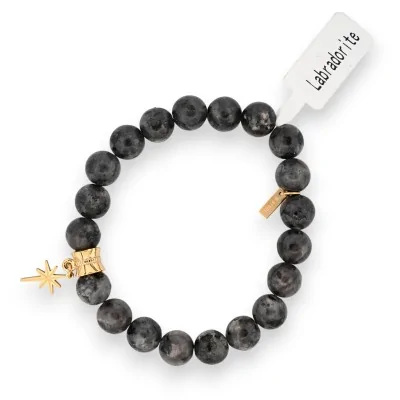
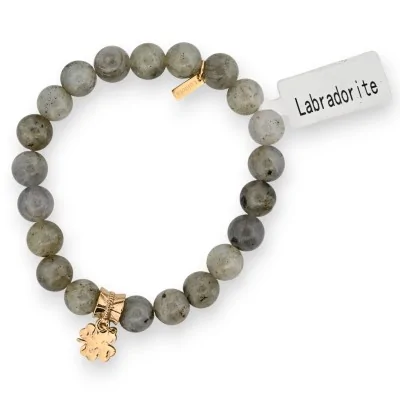
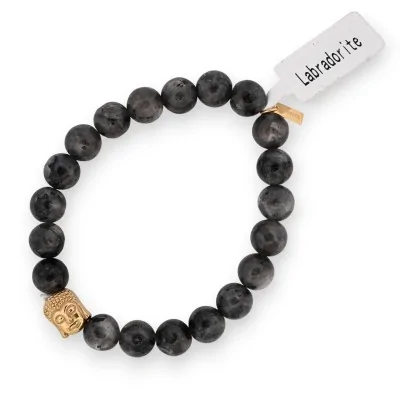
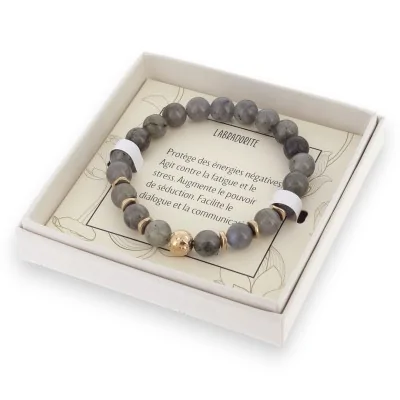
Our labradorite bracelet selection brings together bracelets in the iridescent blue-green stone discovered in Canadian Labrador in 1770 by Moravian missionaries, polished beads on stretch elastic for everyday wear. A variety of plagioclase feldspar, labradorite is traditionally called the « stone of intuition and protection » in British crystal healing, popular at Glastonbury and Mind Body Spirit fairs. Its unique blue-gold labradorescence makes it one of the most magnetic stones on the UK market.
There are 4 products.
Our labradorite bracelet selection brings together bracelets in the iridescent blue-green stone discovered in Canadian Labrador in 1770 by Moravian missionaries, polished beads on stretch elastic for everyday wear. A variety of plagioclase feldspar (sodium-calcium silicate), labradorite captivates with its characteristic labradorescence: light plays in blue-gold-green shift according to the angle, creating a hypnotic visual movement unique in gemology. A stone of the Inuit peoples and Sami, it accompanies today's British crystal healing practices with consistent presence at Glastonbury, Camden Market and Mind Body Spirit fairs.
Labradorite is a member of the plagioclase feldspar family (composition between albite and anorthite, NaAlSi3O8 - CaAl2Si2O8). Its labradorescence (Schiller effect) comes from light diffraction on fine demixing lamellae of albite and anorthite inside the crystal, acting as natural prisms producing blue, green, gold and sometimes pink-purple reflections according to orientation. Its Mohs hardness (6 to 6.5) makes it a moderately resistant stone, suited for everyday wear but to protect from violent shocks. Main deposits are in Canada (Labrador, historic source from 1770), Madagascar (current world's leading producer, most colourful labradorite on the market), Finland (spectrolite variety, particularly intense), Russia (Urals) and Australia. Small native British finds occur in the Hebrides and Scottish Highlands, prized by British gem collectors at Kernowcraft in Cornwall. To browse the wider universe of energy stones, see our crystal healing bracelets section.
In Britain, labradorite has carved a distinctive niche at the intersection of three cultural traditions: the Scottish Highland and Hebridean connection (small native labradorite finds on the Isles of Skye and Lewis are prized by Scottish gem hunters and feature in some highland silversmith jewellery), the British gem retail tradition (Kernowcraft in Cornwall, Djuna in London, Gemporia, Boho Betty consistently feature labradorite as a bestselling shimmering stone), and the contemporary New Age intuition movement championed by writers like Judy Hall (« The Crystal Bible ») and Cassandra Eason. Joma Jewellery's labradorite « A Little Magic » bracelet line has become a defining gift of British female friendship. The Glastonbury and Mind Body Spirit fairs feature labradorite consistently in their top 5 « shimmering » stones alongside moonstone and opal. Our selection fits this accessible tradition: natural polished beads, fair pricing, controlled sourcing.
Labradorite comes mainly in polished round beads (6 mm calibre for a discreet silhouette, 8 mm for a balanced presence, 10 mm for a boho statement) threaded on stretch elastic. Several visually distinct varieties exist: classic Madagascar labradorite (dominant blue-green reflections), Finnish spectrolite (intense multicoloured reflections, rarer and precious), white labradorite / rainbow moonstone (pale variety with rainbow reflections), Norwegian larvikite (grey variant with blue reflections, sometimes sold as black moonstone). Labradorescence is more intense on larger calibre beads (8-10 mm) where light plays are visible from a distance. For chromatic pairings, blue labradorite pairs naturally with green stones in cool analogous harmony; see our aventurine section for the labradorite + aventurine combo balancing intuition (blue) and luck (green), particularly appreciated by holistic practitioners.
In traditional lithotherapy (note: symbolic wellbeing approach, not medical advice), labradorite is associated with the throat chakra (Vishuddha) and the third eye chakra (Ajna). Considered the stone of the energy shield, intuition and inner transformation, it is traditionally worn to protect from heavy outside energies, strengthen confidence in one's own perceptions, and accompany periods of personal mutation. Classic pairings recommend combining it with amethyst (intensify the meditative and spiritual dimension), with hematite (strengthen grounding so as not to lose oneself in intuition), or with clear quartz (amplify the general protection effect).
A common UK question: which wrist? For labradorite, a stone of shield and intuition, the left wrist is traditionally preferred (receptive side, receive and integrate protection). This is particularly recommended for nurses, NHS staff, teachers, social workers and counsellors who absorb a lot of emotional energy from others daily. Care: labradorite is moderately resistant (Mohs 6-6.5), to protect from shocks and aggressive chemicals. Recharge on an amethyst geode or under moonlight (the labradorescent effect is revived by lunar light according to tradition). Avoid prolonged intense sun which can subtly alter labradorescence over the very long term. For more discreet lithotherapy supports, see also our lithotherapy earrings.
According to crystal healing tradition, labradorite acts as an energy shield: it helps protect from negative outside energies, fight stress and feelings of insecurity, and favours mental clarity. Particularly recommended for British carers, NHS nurses, teachers, social workers and therapists who absorb much of others' emotions daily.
Crystal healing tradition favours the left wrist for labradorite (receptive side, integration of protection benefits). The left wrist is also recommended by British wellbeing publications like Nabil London. Many practitioners wear a labradorite on each wrist for symmetrical protection.
Labradorite is traditionally associated with Scorpio (transformation), Aquarius (intuition) and Cancer (heart-chakra resonance). However, the stone is considered universal and benefits all zodiac signs seeking energetic protection. The British astrological tradition (Russell Grant, Mystic Meg in The Sun) often features labradorite as a Pisces and Scorpio support stone.