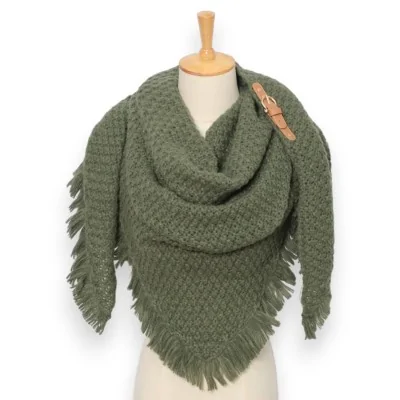
Availability: 3 In Stock

Each of these squares is split into four quarters, and every quarter carries a different design. Fold one way and you get gold stars; fold another and a leopard or paisley panel…
Our neck warmer range gathers closed-loop scarves that you pull on over your head: plush fleece, faux fur, burgundy velvet, lace layered over tulle and polyester scattered with…
There are 56 products.
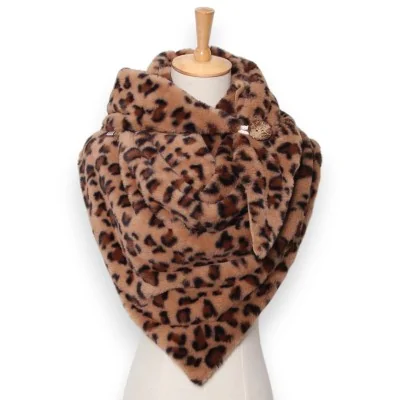
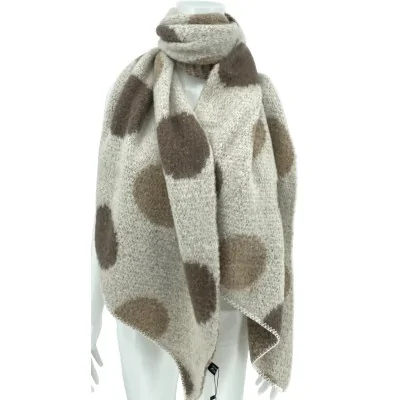
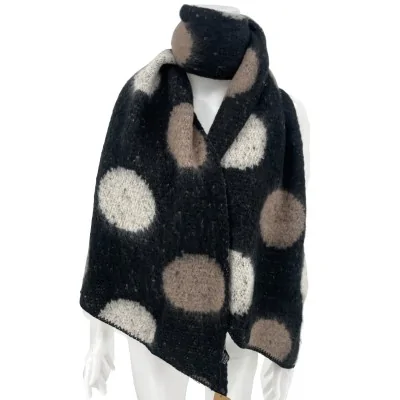
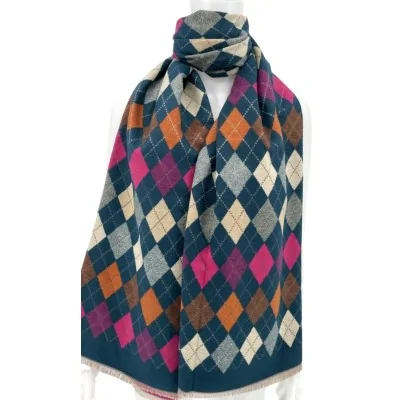
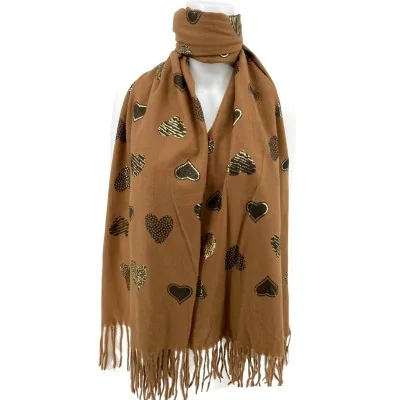
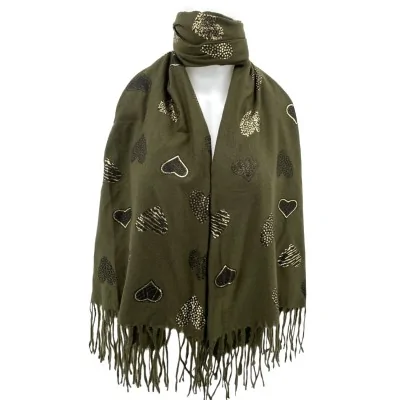
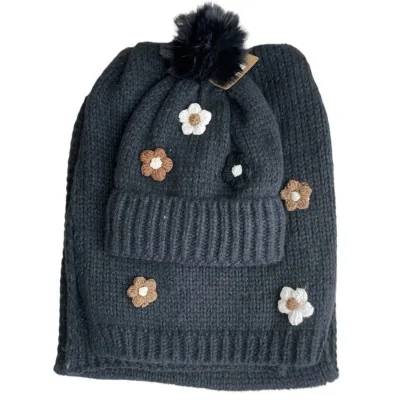
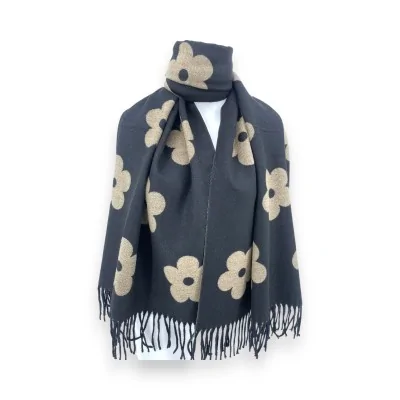
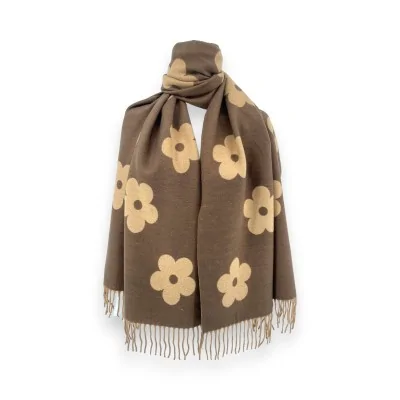
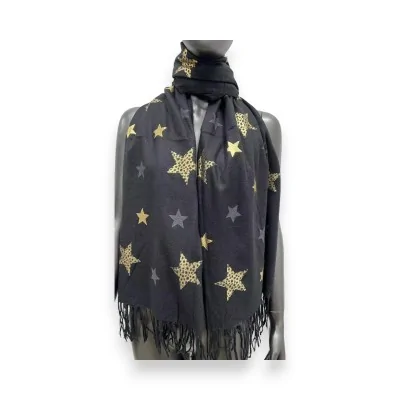
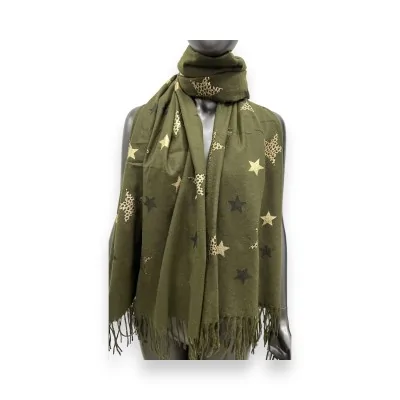
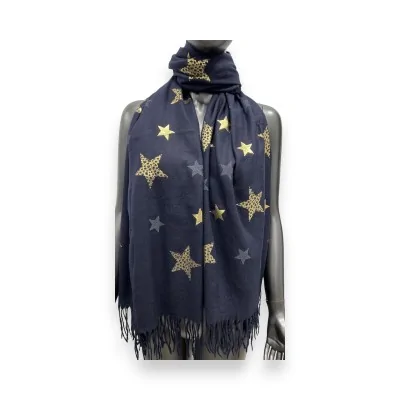
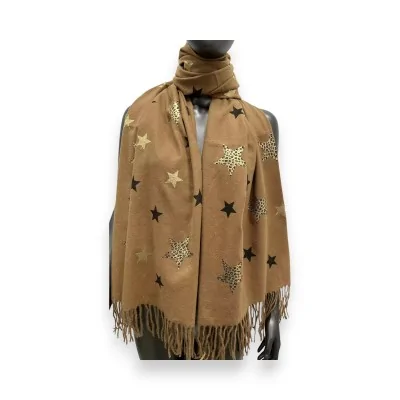
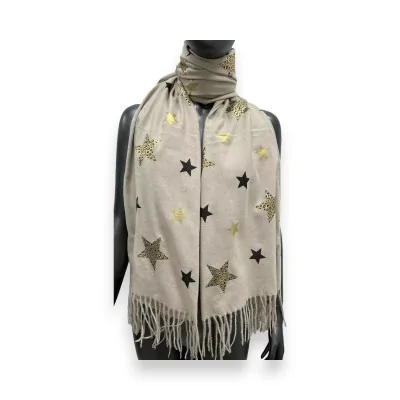
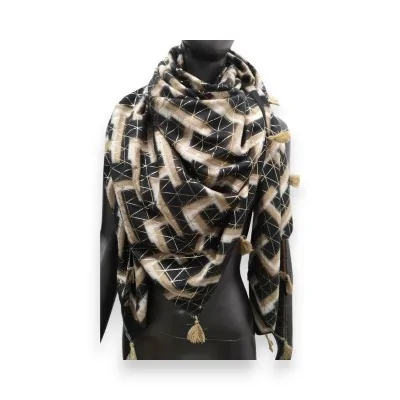
Four fabrics cover the whole range, and each one behaves differently once the weather turns. Brushed fleece holds its shape when folded into a triangle, soft plush traps warmth without weight, knit gives that loose slouchy volume, and the lace or velvet tubes sit closer to evening wear than to a school run. None of them needs specialist care. That matters when a scarf gets worn four days out of seven. If you want one scarf that survives daily wear, start with fleece or plush and keep the lace styles for occasions. Fabric also decides how a print reads: the same gold stars look flat on a smooth weave and softer on a brushed surface.
| Brushed fleece | Holds a fold, best on the reversible squares, dries quickly |
|---|---|
| Soft plush | Warm and light, used on tubes and triangles, very soft against the skin |
| Knit | Slouchy volume, pom-pom or fringe trims, stretches if hung up wet |
| Lace and velvet | Found on a few snoods, dressier finish, gentle cycle only |
Gold stars are the ones that keep coming back, printed on black, beige, khaki or navy, and they lift a coat that would otherwise read as sensible. Leopard here comes in camel and grey and stays softer than the version you would find on a coat, so it works in daylight. Checks feel more traditional, hearts and spots lighter, and the embroidered florals want a plain dark jacket behind them. Patchwork pieces mix several of those prints at once and need nothing else around them, which makes them the easiest answer on a morning when the rest of the outfit is plain. Colour matters less than contrast here: a beige scarf on a camel coat disappears, while the same scarf on navy reads instantly. If the coat is already patterned, keep the scarf plain. That one rule saves most outfits.
Shape decides how a scarf sits far more than length does. A 140 × 140 cm square folded on the bias gives bulk high on the chest; an asymmetric knit stays narrow and long and never quite loses its drape. Petite frames usually do better to avoid the thick double wrap, which swamps the neck; broader shoulders carry the flat-draped square easily. Over a roll neck, a closed tube adds no extra bulk at all. Under a lapel coat, a triangle tucked inside the collar looks tidier. Exact measurements sit on each product page, and they are the only reliable figures before you commit, because two pieces in the same shape drape differently depending on how much give the fabric has. Fringes and pom-poms add visual length too, so a fringed triangle hangs lower than its stated size suggests.
Fleece and plush take a cool, delicate machine cycle, provided you get them out of the drum quickly and dry them flat. Knit prefers a hand wash and a flat dry on a towel; hung on a radiator it lengthens and never springs back. The lace and velvet snoods want a very gentle cycle inside a mesh bag. Fringes and pom-poms come back to life with fingers rather than a brush, worked from the ends inwards. Whatever the fabric, the care label on your piece beats any general advice, The tumble dryer is best avoided on soft fibres, since they pill quickly under heat.
For bulk without any knot at all, look at the reversible squares with four faces, which change character depending on which side you fold outwards. If you would rather pull something on in the hallway and forget about it, the closed tube styles stay put through a commute, a cycle ride or a cold platform. And once winter properly arrives, the obvious pairing is with knitted hats: match them by texture rather than by exact colour, far easier to live with than a head-to-toe matching set. Bags and gloves follow the same logic. Repeat one texture across the outfit and let the prints stay in a single place, usually at the neck.