
Availability: 2 In Stock

Colour does most of the work in this range. The declared shades stay wearable: grey and black, brown and black, taupe and beige, plus a black-and-white bandana pair and one blue multicolour design in denim. Widths are 4 cm or 5 cm, and the wider ones carry a twist across the top. Pick the shade first, then decide between a flat print and a raised finish.
There are 8 products.
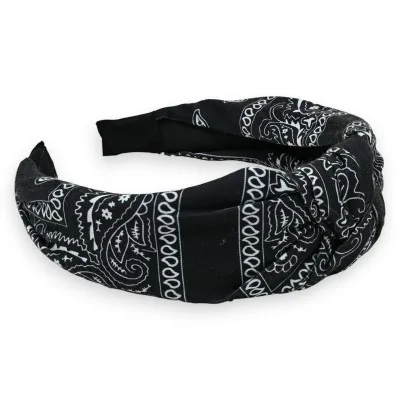
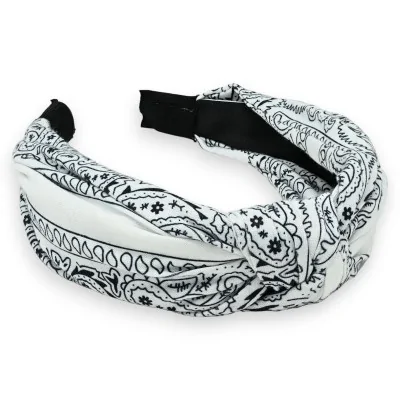
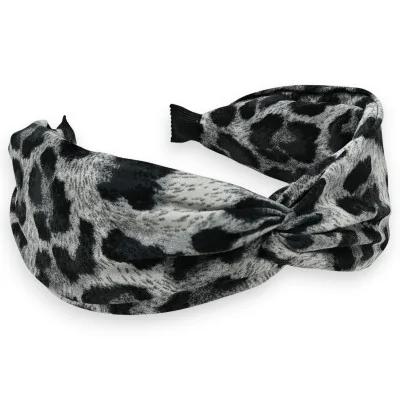
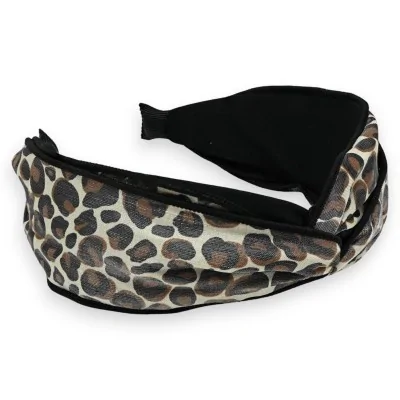
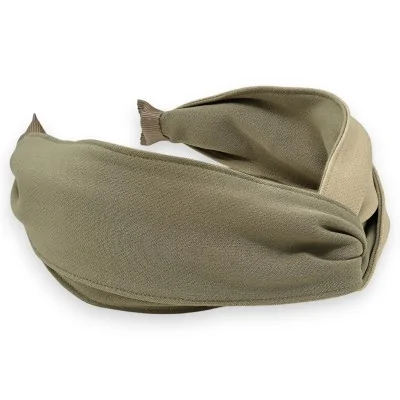
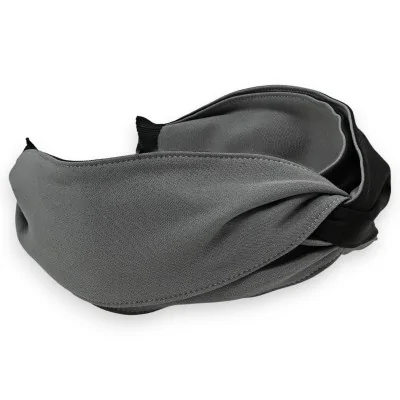
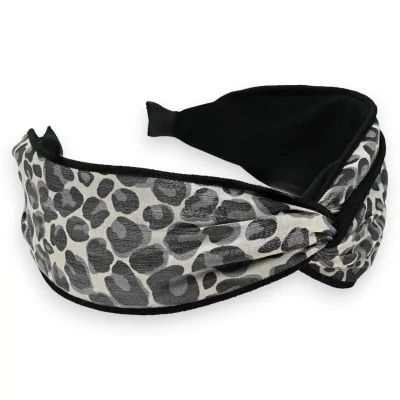
A hair hoop covered in fabric behaves differently from a moulded plastic one. It takes print, it takes colour, and it sits against the hair rather than on top of it. The range here is small and easy to read, so the sensible starting point is the shade you already wear. Everything that follows comes from the product pages themselves: declared colours, measured widths, and whether the top is flat or twisted.
Every band in the range declares its colour pair on its own page. The table below groups those pairs and suggests where each one sits most comfortably in a wardrobe.
| Declared colours | Character | Works with |
|---|---|---|
| Grey and black | Neutral, low contrast | Tailoring, knitwear, anything already patterned |
| Brown and black | Warmer, softer edge | Camel, cream, olive and other earth tones |
| Taupe and beige | The quietest pair | Pale layers where a dark band would cut the line |
| Black and white | Graphic, high contrast | Plain shirting and denim |
| Blue and multicolour | The only sparkling one | Evenings and plain, unfussy outfits |
The second decision is the finish, and it follows the width. At 4 cm the fabric lies flat, so a bandana paisley or a scattering of sequins reads as one clean band. At 5 cm a twist runs along the top, breaking the surface and lifting the hair a little at the crown. Neither is dressier than the other by default; the twist simply makes the band visible from the front. If you would rather compare every width and material we carry, open the wider hair hoop selection.
These bands are quiet enough for a working day and loud enough for a weekend, depending on the pair you pick. Two are enough to cover a whole week, which is worth knowing before you reach for a third.
A taupe and beige band behind a low bun keeps the outline clean and adds a finish that a plain elastic never gives. Grey and black does the same job on darker suiting.
The leopard print on loose or waved hair is the easiest pairing here, and the black-and-white bandana is its graphic cousin. For something with a raised trim on one side instead, look at the floral-topped designs.
The denim band with its scattered sequins is the only one that catches the light, which makes it the obvious evening choice when the rest of the outfit stays plain.
Set the hoop about two centimetres back from the hairline rather than on the crown. The contact area is broader there and the band stops sliding forward. On fine or very straight hair, pull a small section of hair over the arms to anchor them. On thick hair, ease the hoop open before you place it and let it close on its own. If you prefer a soft band with no rigid arms at all, the knitted and bouclé hair bands cover that shape.
Fabric asks for less care than people expect, but it does not like water. Keep the band off in the shower, at the pool and while you are applying anything to your hair. Lift a mark by dabbing it with a barely damp cloth and a trace of mild soap, without soaking through. Dry it flat and in the open air, never on a radiator. Store it flat or hanging: crushed in a bag, a twisted band loses its line.
They do, and that is part of the point: the width builds a shape that fine hair does not hold on its own. The 5 cm twist gives the most visible result, while the 4 cm flat version simply keeps hair off the face.
Start with a 4 cm flat band. The contact is gentler and the print is easier to wear. Move up to the 5 cm twist when you want the accessory itself to show.
Darker prints, leopard and bandana in particular, hold their contrast well as long as they stay away from water and direct sunlight. An occasional wipe with a damp cloth freshens the surface without touching the pattern.