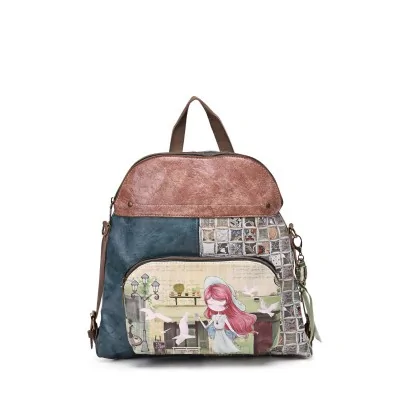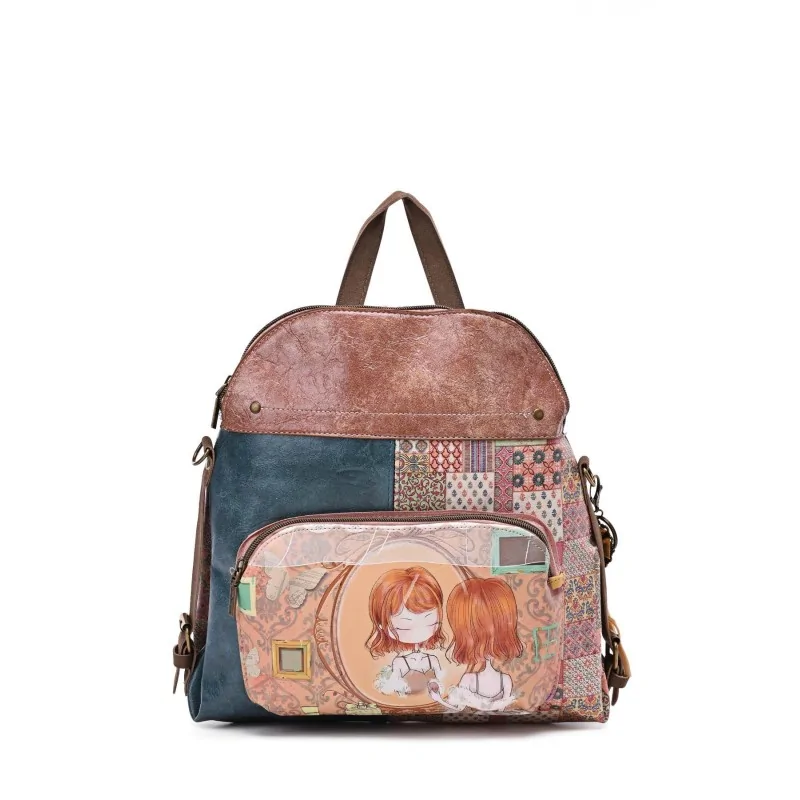
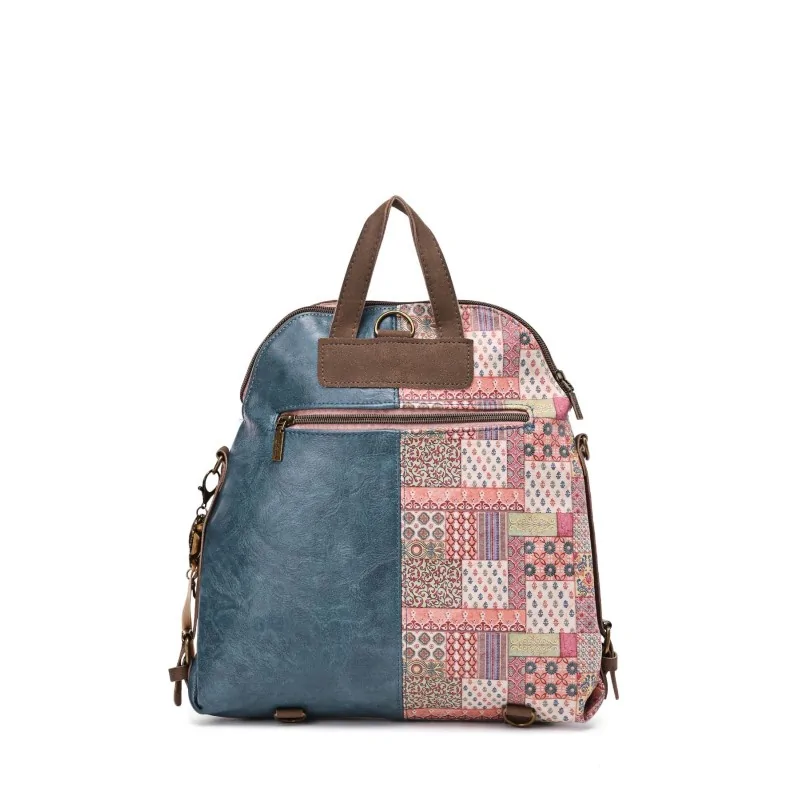



A small rounded backpack split down the middle: a plain teal panel on one side, printed patchwork tiles on the other, and a dusty pink-brown band across the top. The front pocket carries a drawn scene, and the zips, rivets and buckles all share the same bronze tone.
This is a backpack you open in three places. The main zip follows the curve of the rounded top, so the bag opens wide rather than through a narrow slot. A second zip runs the full width of the front pocket, just under the drawing. A third sits across the back panel, below the handle. Three separate openings, none of them hidden away.
| Curved top zip | The main compartment, along the rounded edge |
|---|---|
| Front pocket zip | The illustrated pocket, full width |
| Back panel zip | A flat horizontal pocket under the handle |
The body is split down the middle. On the left, a plain teal panel with a worn, slightly mottled finish. On the right, small printed tiles in coral, soft rose, cream and terracotta, set side by side like a patchwork. Above both runs a band of dusty pink-brown, held down by bronze-toned rivets. The same split carries round to the back.
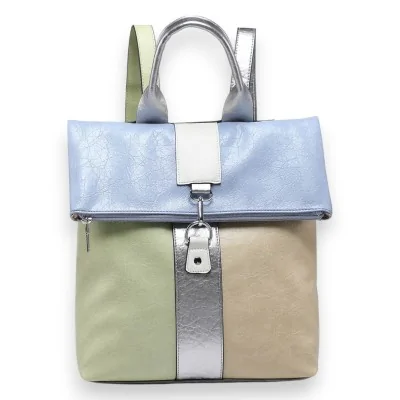
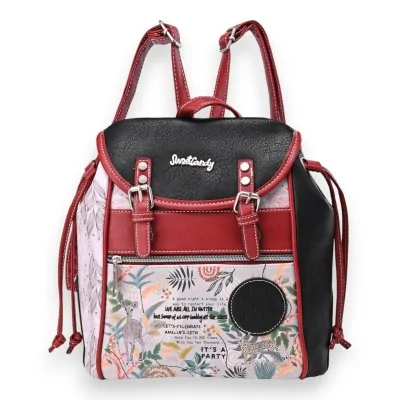
On a shape like this one, reaching in is usually the problem, not capacity. A zip that stops halfway down the side forces you to dig; one that follows the whole curve lets the top fold back. That is the difference between a bag you unpack on a table and a bag you use standing up on a platform. The rest of the department shows what else comes in this shape.
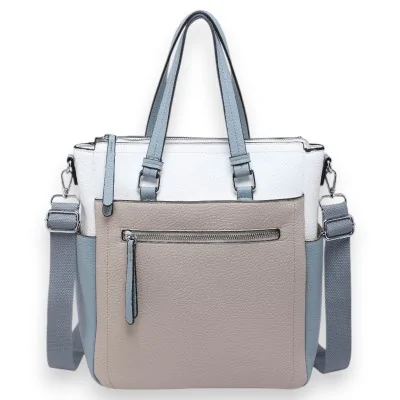
The front pocket carries a printed scene: two red-haired girls in front of an oval mirror, one facing you with a soft toy held against her, the other seen from behind. Small framed pictures hang around them on an apricot background. It is the part of the bag people notice first, which is why the rest of the print stays quiet. One picture, one focal point. Straps are not the only option: the shapes you carry by hand instead sit one level up.

Data sheet