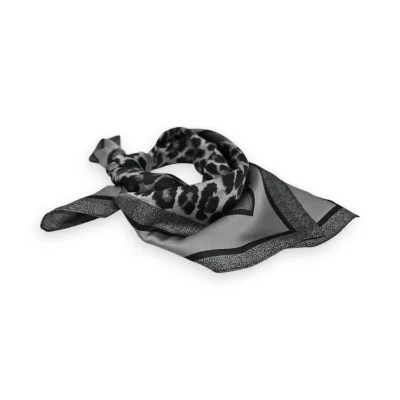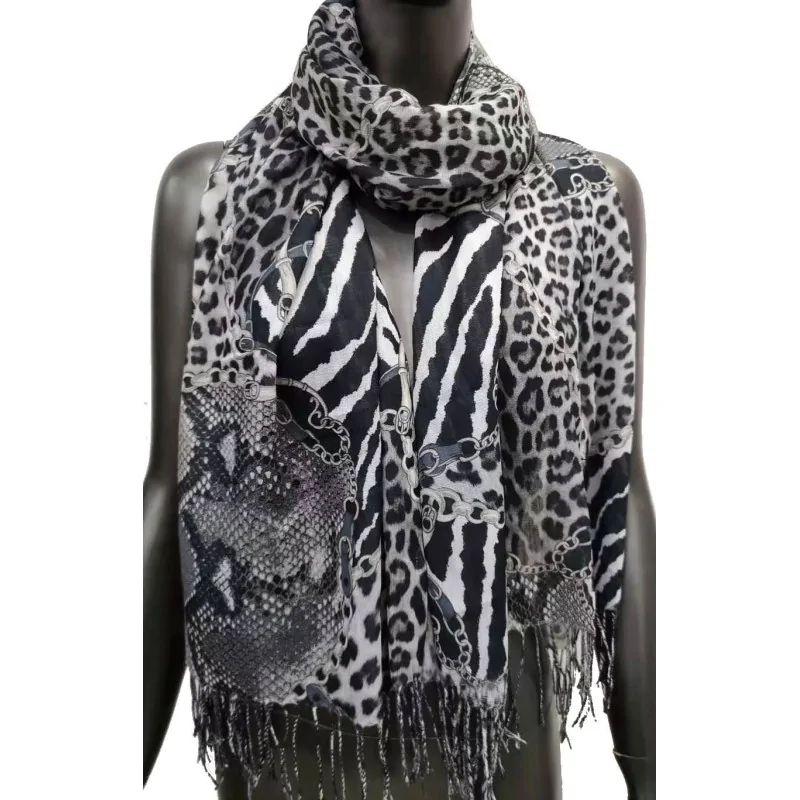


Black, white and grey only, with no accent colour anywhere. That is what keeps this long scarf readable from a few paces away, which a print this busy usually loses.
Leopard spots sit along the edges, zebra stripes cut through the middle, a python panel darkens one corner, and drawn chain links thread between the sections. Both ends finish in knotted fringing.
Nothing on this scarf pulls towards a colour. With only black, white and grey in play, the eye separates the three prints instead of blending them into a single grey mass. It also settles the styling question early: navy, camel and charcoal all take it without a clash to think about. On sunglasses, hair bands and bags, the same markings come back at different scales, and that is what the animal-print corner of the shop gathers in one place.
| Prints | Leopard, zebra, python and chains |
|---|---|
| Colour | Black and white |
| Ends | Knotted fringing |
| Shape | Rectangular, worn open or tied short |
Most animal-print pieces pick one creature and stay there. This one runs leopard along the borders, drops into wide zebra bands across the centre, then hands a whole corner over to a python panel. Drawn chain links and buckle shapes fill the gaps between those areas, so the three prints never run straight into each other.
Worn open over a coat, the two ends hang free and the full width of the pattern shows. Tie it short and only the tightest leopard spots stay near the face. A brushed grey jumper or a plain white shirt gives the print room; a printed blouse does not. If you are weighing up widths and lengths before choosing, the rest of the scarf range sets them out side by side.
Fringing tangles faster than the fabric wears. Fold the scarf lengthways with the knotted fringing lined up, then lay it flat in a drawer rather than hanging it from a hook that will slowly drag the strands out of shape. For washing, go by the sewn-in care label, which gives the temperature and method that suit the cloth.
Data sheet