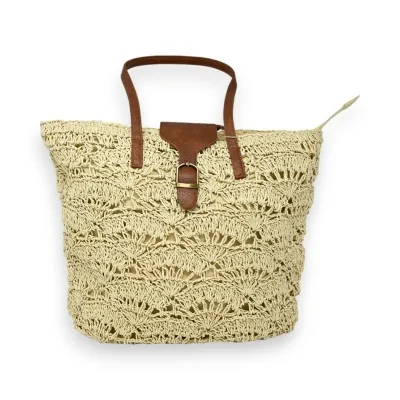
Availability: 2 In Stock

Woven straw, light tones and summer shapes. The pieces gathered here run from crossbody bags and openwork rectangles to crescent shapes and round models, in colours that go from pale beige to dark straw, with gold or silver threads and a few sky-blue touches. Most sit on the shoulder or across the body, which keeps your hands free on the sand and in town.
There are 16 products.
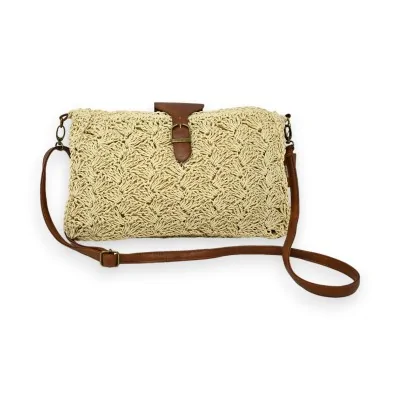
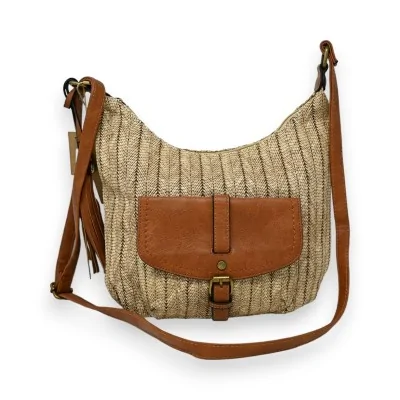
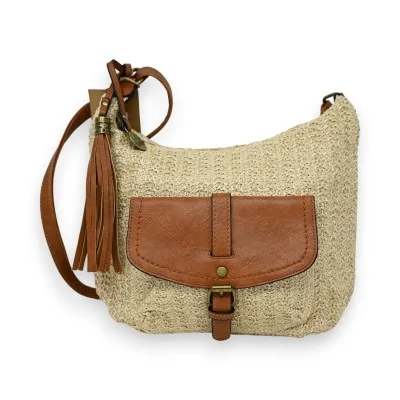
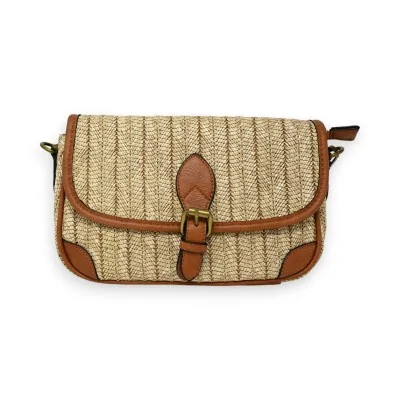
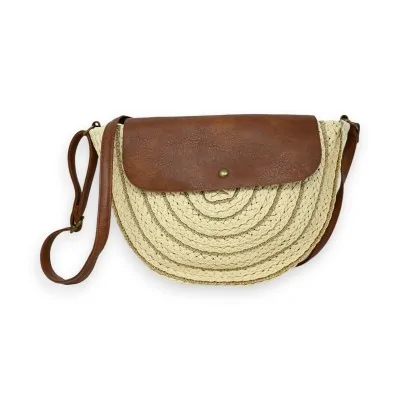
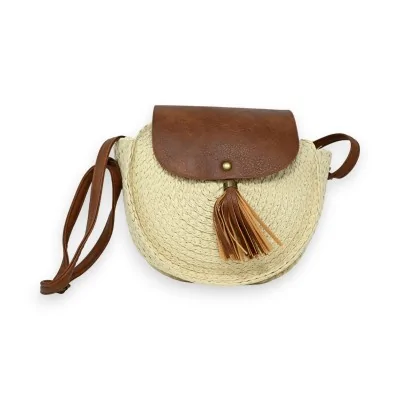
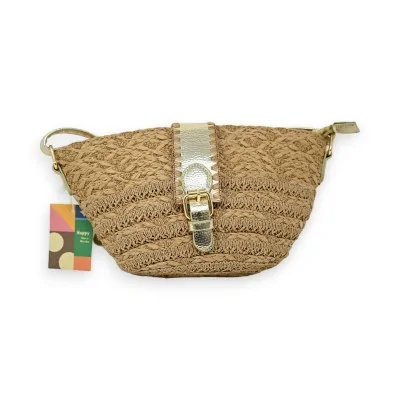
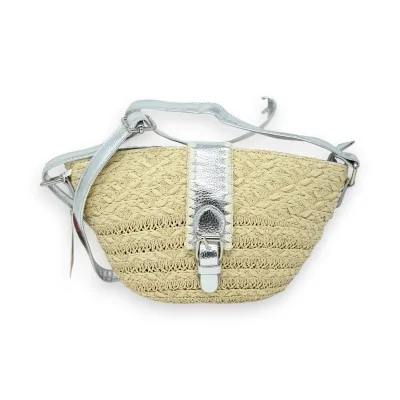
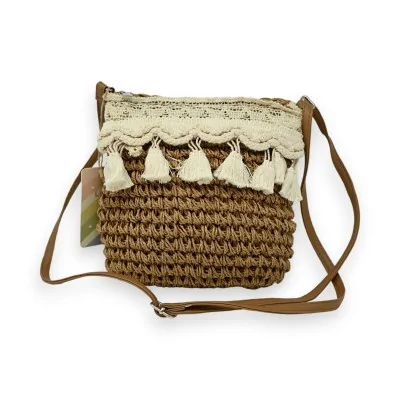
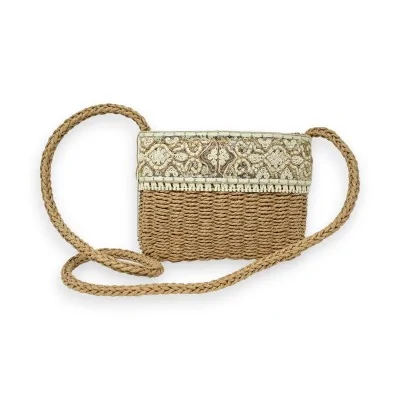
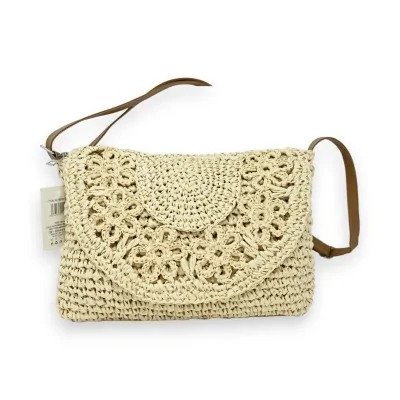
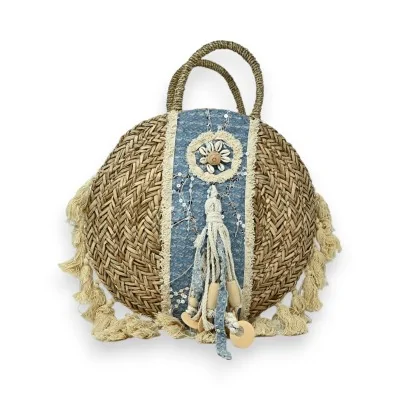
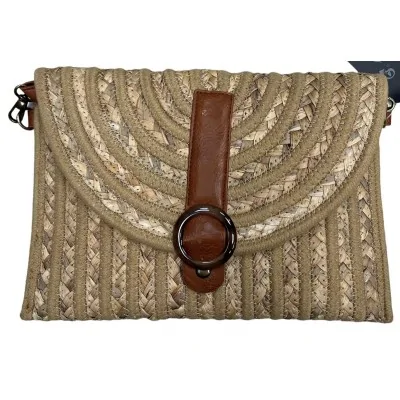
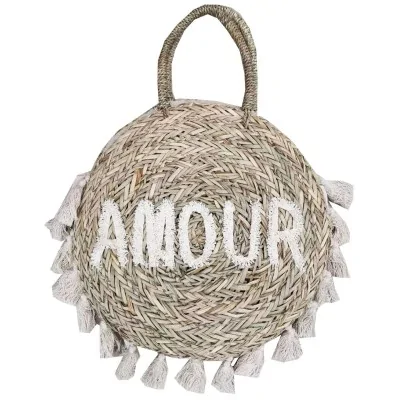
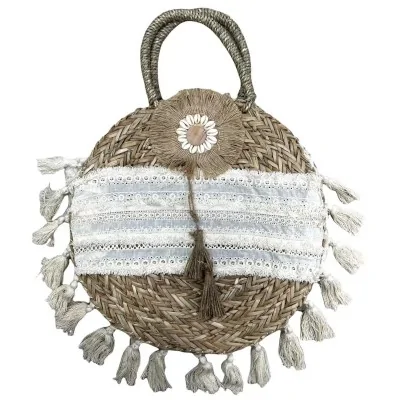
Straw runs on a short calendar. It turns up in spring, takes over July and August, then goes back in the wardrobe. The pieces gathered here follow that rhythm: pale, woven, often openwork, with the loose boho feel that suits a linen dress better than a winter coat. The shapes you can carry all year round sit in the wider women's bags section.
Size wins on the sand. A round or rectangular model with short handles swallows a towel without losing its shape, and an openwork weave lets sand fall straight through, which is half the appeal of a straw beach bag. The crossbody format takes over in town, because browsing a market stall or settling on a café terrace is easier with both hands free. Then come the dressier days. For a garden lunch or a summer wedding, an embroidered or gold-threaded model reads better than a very rustic weave. The compact round basket, the one you carry on the forearm, has a category of its own: see the round woven baskets.
The two words are often used interchangeably, yet the fibres behave differently. Straw is stiffer, shows its weave and holds its shape on its own. Raffia comes from palm leaves, drapes more softly, and turns up in tight weaves or crochet work. What you will mostly find in this selection is woven straw; check the composition on the model you choose before you decide.
Two bags can share the same weave and look nothing alike. Decoration does most of the work.
| Trim | Where you see it | Effect |
|---|---|---|
| Pom-poms | Hanging from the handles or the flap | Holiday mood, movement |
| Macramé | Knotted cord across the front panel | Raised texture |
| Embroidery | Floral or geometric thread motifs | Colour without extra bulk |
| Lace | Pale insert on round models | Softer, dressier |
| Gold or silver thread | Woven through the straw | Evening-ready shine |
| Faux-leather handles | Where you hold it | Firmer hold, less beachy |
Water and long hours in full sun are what straw dislikes. Caught in a shower? Let the bag dry flat in the open air, because a hairdryer or a radiator will buckle the weave. A barely damp cloth handles a surface mark; skip detergents, which dry the fibre out. Pad the bag with paper at the end of the season and store it in a fabric cover rather than a plastic bag, which traps moisture. Once autumn closes the straw season, bags in natural cork pick up where straw leaves off, on the same natural fibre and without the seasonal limit.
Size pays off at the beach: a 30 to 40 cm round model takes a towel and a swimsuit. For everyday use, a 20 to 25 cm crossbody is enough for a phone, a purse and sunglasses. Something smaller, 15 to 20 cm and often embroidered, works for a wedding or a dressed-up lunch without getting in the way.
With a tight weave, barely at all. With a loose weave, or where strands stand proud, silk and lace feel it first. Pick a model whose faux-leather handles take the friction if those are the fabrics you wear.
It can. Left in direct light between outings, straw loses its brightness and drifts towards a deeper, more golden tone. Stored flat, padded and away from the window, a straw bag keeps an even colour for several summers.