- -50%
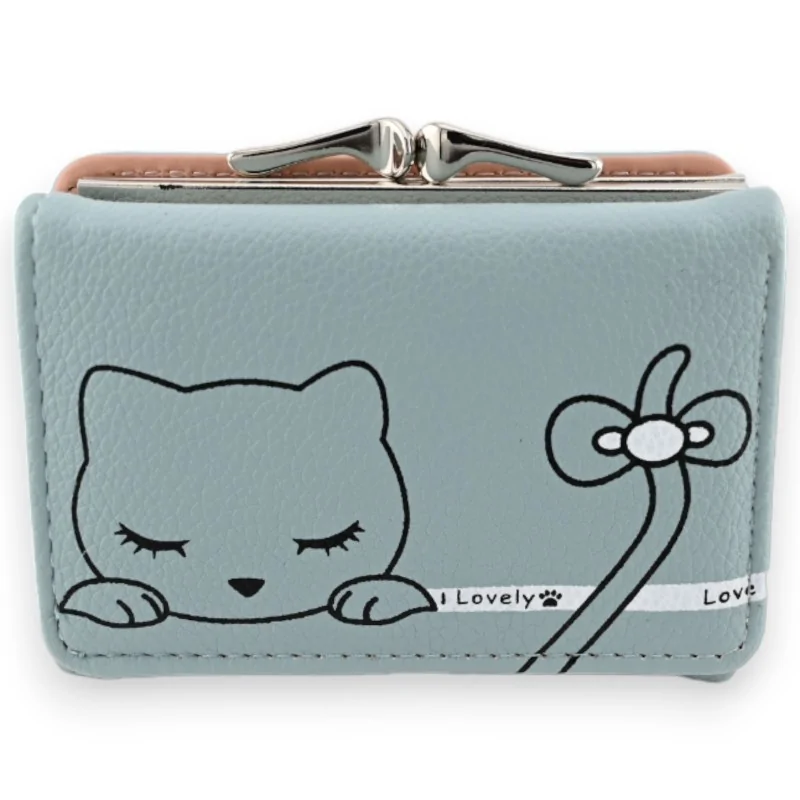
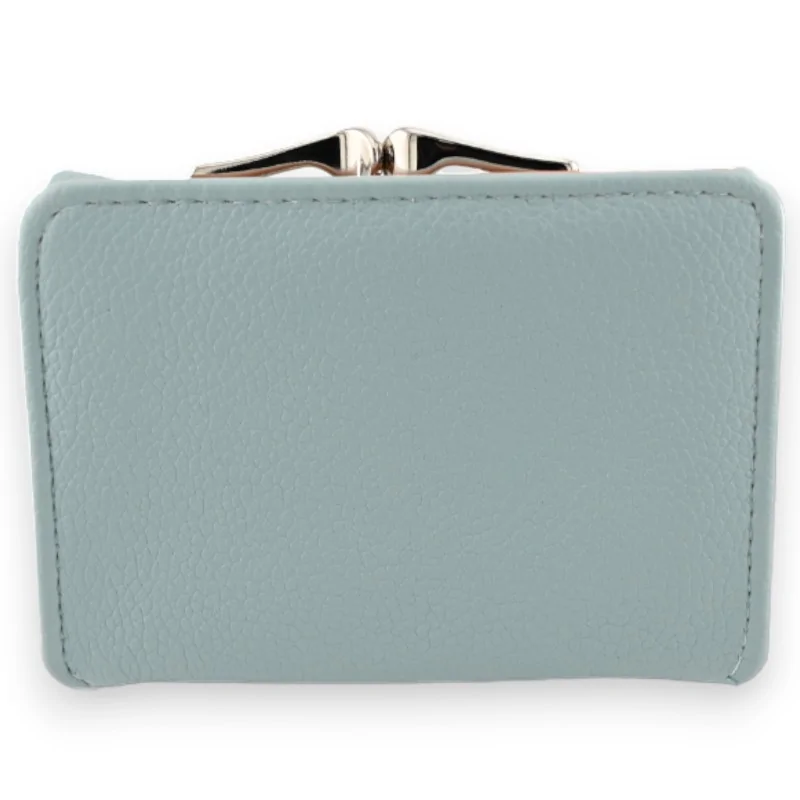
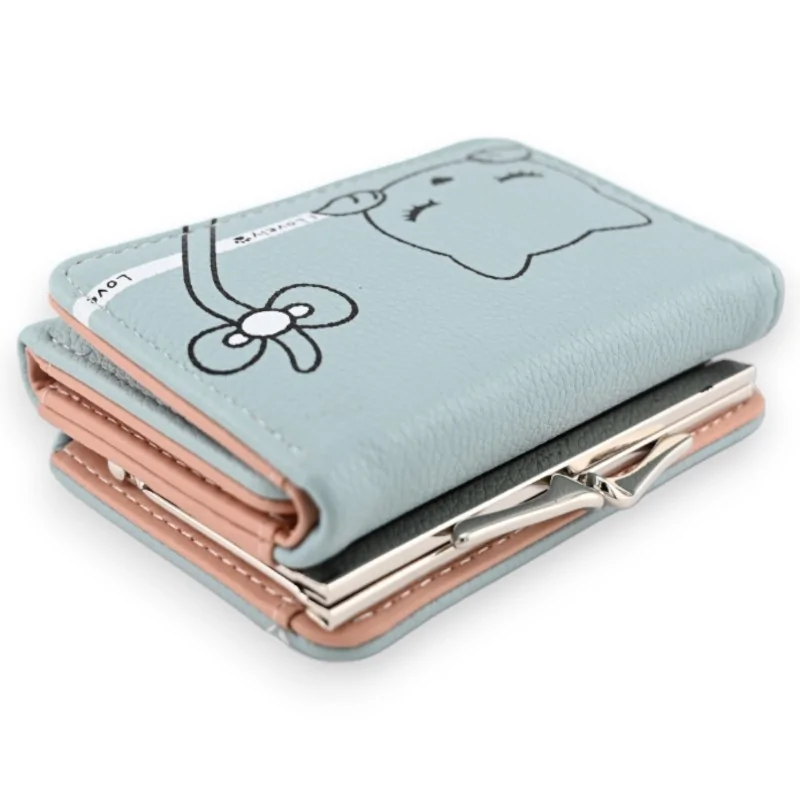
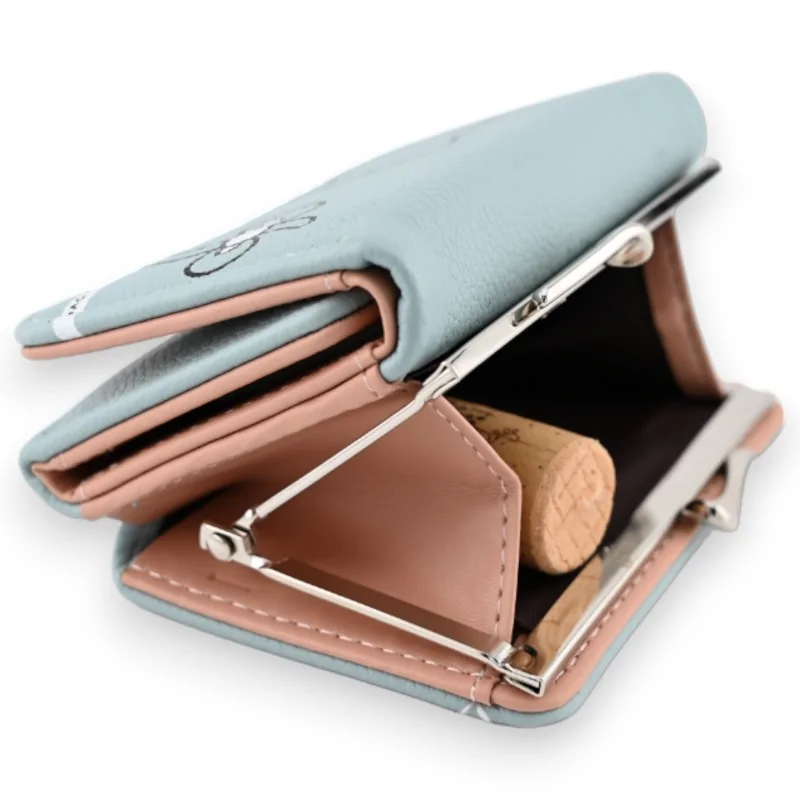



A small compact wallet in pale sky blue, closed at the top by a silver-tone clasp frame that runs the full width. The front carries a black line print, and a white printed band crosses the lower edge from side to side.
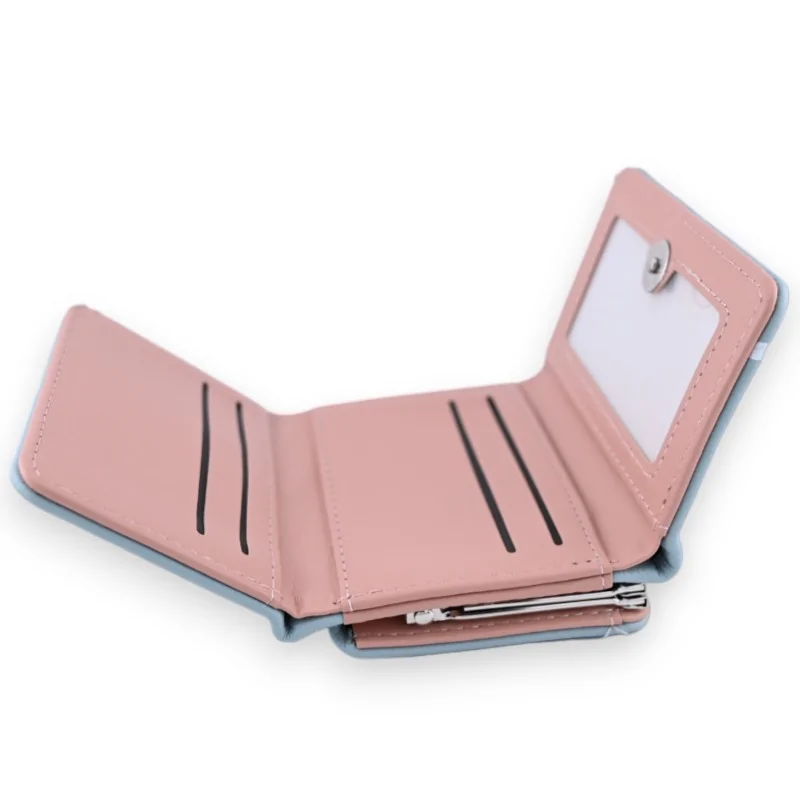
Inside, the lining turns dusty pink. There are four card slots, a clear window with a press stud, and a coin pouch that opens behind the metal frame. Nothing fastens with a zip, and nothing sits hidden under a flap.
Open the wallet and the first thing to notice is the panel on the far side: a window closed by a press stud, cut into the dusty pink lining. It is the only part of the interior that shuts on its own, so a travel card or a gym card stays put while the rest of the wallet is being handled. The stud matches the silver tone of the frame at the top, so inside and outside share a single metal finish.
The outer surface is not smooth. A fine grain across the pale blue breaks up the light and stops the panel reading as a flat block of colour, the kind of surface that shows every mark on a pale wallet. The same grain runs over the whole shell, so the wallet keeps one texture from edge to edge. Held under a hard light it reads as a mesh of small irregular cells rather than a printed pattern.
The interior is laid out in plain sight. Card slots sit in pairs on two facing panels, four in all; the note compartment runs the full length behind them; the coin pouch sits behind the metal frame, in a darker lining. No pocket hides behind another one, and nothing has to be lifted out of the way to reach what is underneath. This model is filed with the short wallet formats of the shop.
| Card slots | Four, in pairs on two facing panels |
|---|---|
| Clear window | One, closed by a round press stud |
| Coin pouch | Behind the metal frame, darker lining |
| Note compartment | Full length, behind the card slots |
| Fastening | Silver-tone clasp frame, no zip |
Closed, the wallet folds down to coat-pocket size and keeps its shape, because the frame holds the top edge straight instead of letting it roll over. That is the difference between a wallet that has to travel inside a bag and one that can be carried on its own.
The cards reached for every day belong in the outer pair of slots, where the thumb lands first. The window suits the card that is shown rather than handed over. Coins go behind the frame, in the pouch that keeps them away from the card slots and the notes. If change is better kept somewhere else entirely, the page that gathers the coin purses has formats built for nothing else.
Data sheet