- -50%
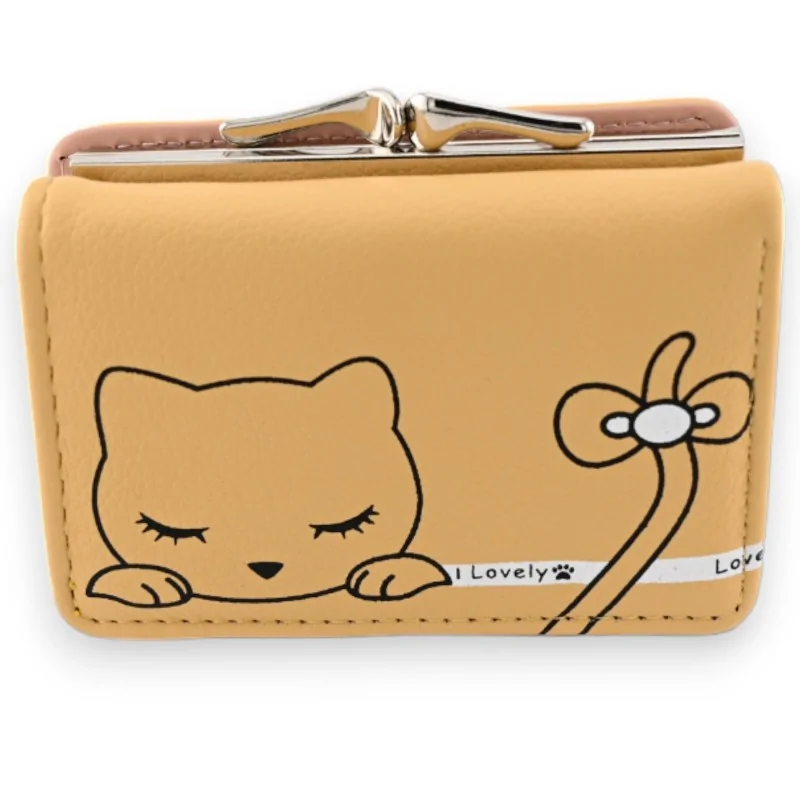
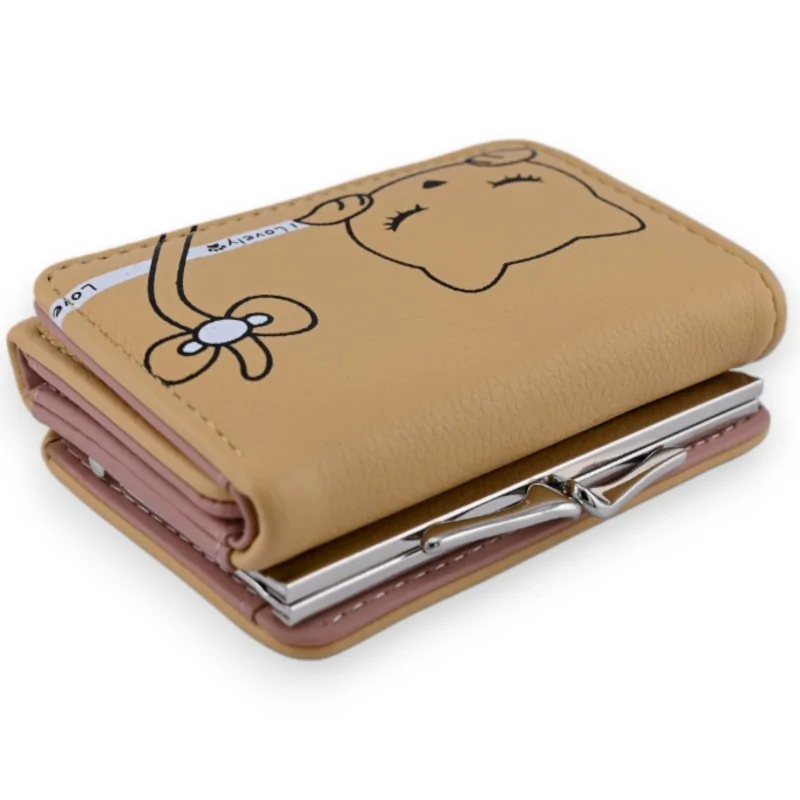
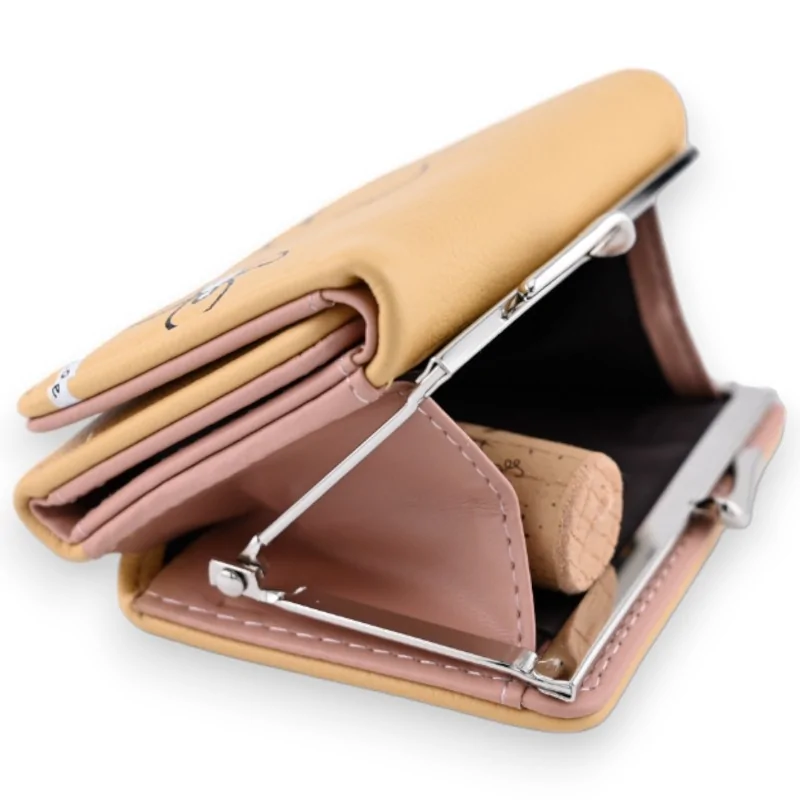



Set it down closed and it keeps its shape. The three panels fold into a short stack, the rounded old rose edges piling one above the other, and the whole thing stands on its own folded edge the way a small book does. It asks for the depth of a pocket rather than the length of one. Among the wallet formats filed next to it, this one is short and thick rather than long and flat, and the three-quarter photograph lets you count the layers from the side.
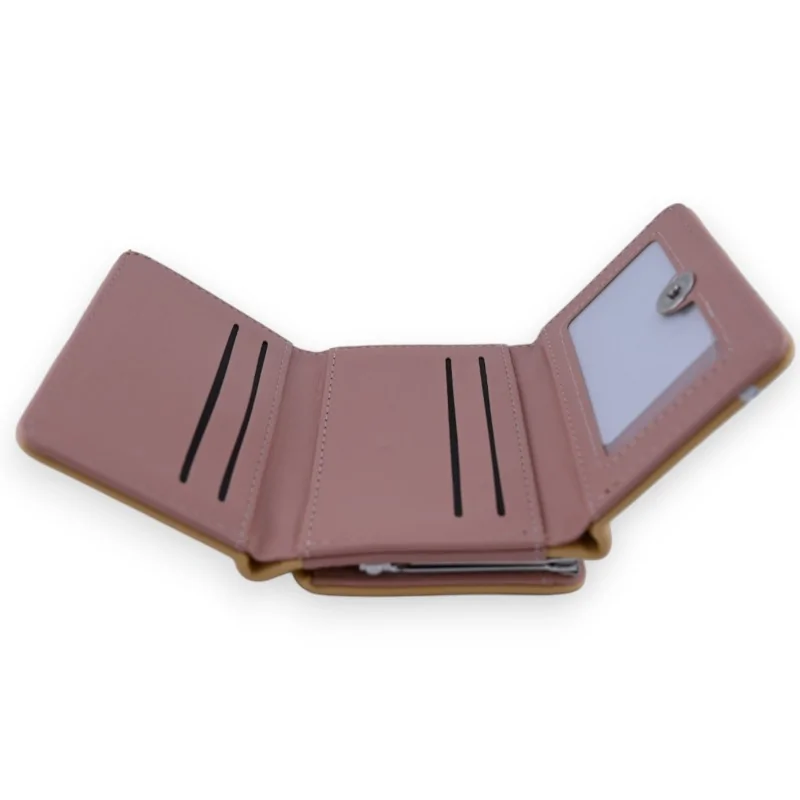
Open the wallet flat and the inside divides into three. Two card slots on the left panel, two more in the middle, and on the right a clear window with a press stud. The coin pocket sits behind the metal frame at the top, and the lining inside that pocket is noticeably darker than the panels around it. The slots are cut on the slant, so a card sits at a slight angle instead of flat against the panel, and the top corner stays easy to reach.
| Closure | Silver-coloured metal clasp frame along the top edge |
|---|---|
| Card slots | Four slanted slots, two panels |
| Window | One clear window with a press stud |
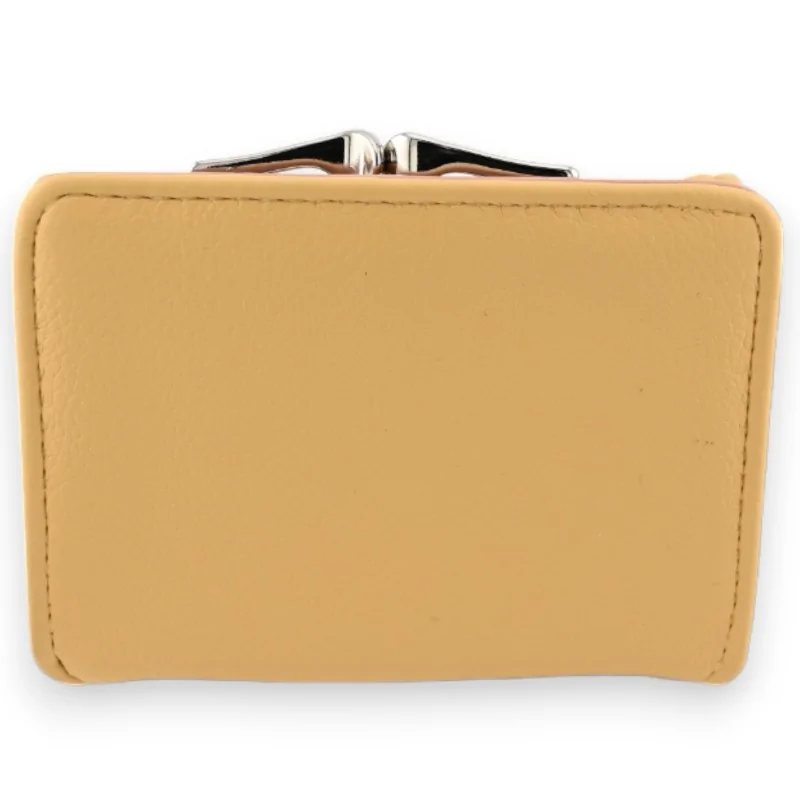
| Back | Plain mustard, stitched border, one small rivet |
| Folded shape | Three panels stacked, short and deep |
The thing worth watching is less the colour than what shares a bag with it. Keys rubbing against the front will mark a pale finish sooner than anything else will, so this one is better off in a lined pocket than loose at the bottom. The coin pocket comes second: fill it past the point where the frame shuts easily, the two arms stop meeting square, and the closing loses its crispness. Four cards and a little change is about what the shape takes without complaint, and that is worth knowing before the first outing rather than after it.
Look at the closed wallet head on and a thin band of old rose already shows above the mustard, just under the metal. That line is the only hint of what waits inside; the rest of the front stays yellow. Half open, the proportion reverses and the pink runs the length of every fold. The back stays plain mustard, a single line of stitching round the border and one small silver-coloured rivet near the spine. Set beside the pocket-sized pieces in the same department, this one leads with that contrast.
Two curved arms of silver-coloured metal run along the top edge, and they are the widest part of the whole thing: whatever pocket takes the frame will take the rest. Closing happens by feel rather than by sight, which is the practical difference between this and a zip, and it means the wallet can be shut one-handed while the other hand is busy. The frame is also what you meet first when you pick it up, cool against a finish that is otherwise soft.
Data sheet