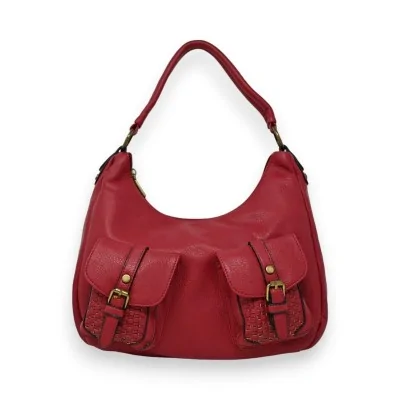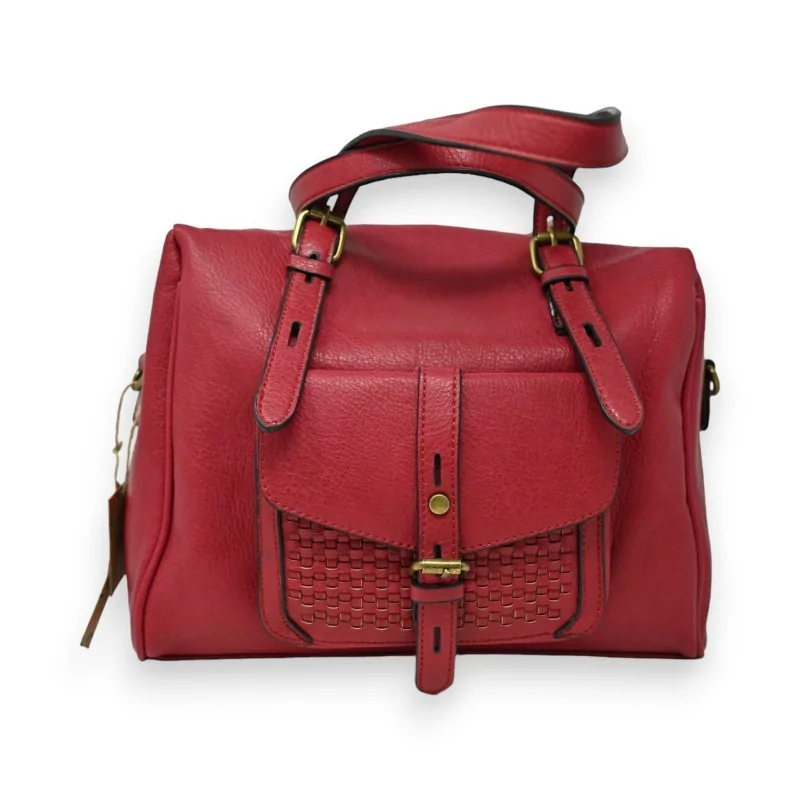
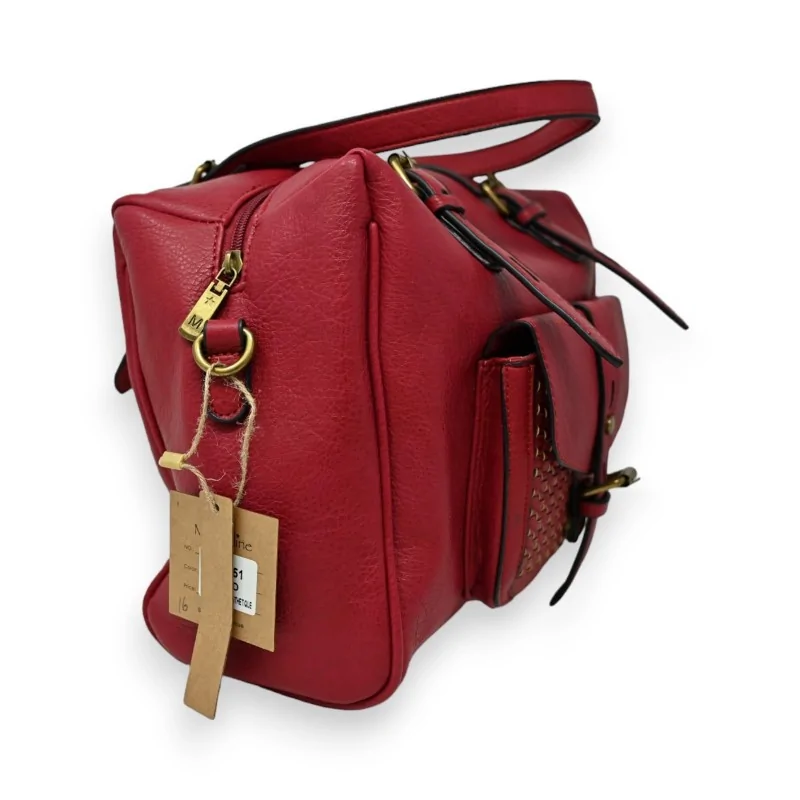



The Mandoline handbag opens along the top, with a zip whose brass-tone slider carries a small engraved M. Everywhere else the red stays plain, grainy and matt.
The shape is structured: a small bowling bag on a rectangular base. A short handle sits on top, a flat shoulder strap runs beside it, and a woven panel breaks up the front.
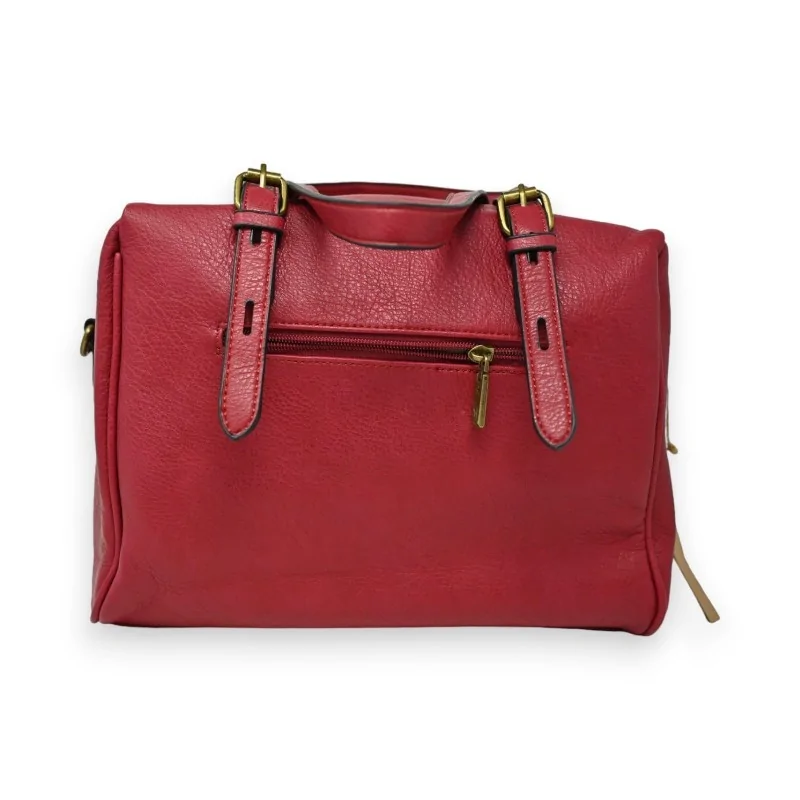
A zip with a brass-tone slider runs the whole width of the top, so the bag opens from edge to edge. That same tone returns on every piece of hardware: the buckles on the straps, the ring on the side gusset, the pull on the back pocket. Painted dark edges outline the straps and the flap, and the stitching stays visible along both.
Two straps drop from the top over the front and adjust on punched holes, each closed by a prong buckle. Two more sit on the back, framing a horizontal zip pocket for the things you pull out most often. On the gusset, a kraft tag hangs from a length of jute string.
The front pocket has a flap with a bracket-shaped lower edge. Its bottom half is faced with a woven chequerboard panel, the only pattern anywhere on the bag. A vertical strap crosses the flap, held at the top by a round stud and fastened halfway down by a rectangular buckle, with the end left hanging below.
| Brand | Mandoline |
|---|---|
| Colour | Red |
| Shape | Structured bowling bag, rectangular base |
| Fastening | Zip along the top |
| Carry | Short handle, flat shoulder strap |
| Front detail | Flap pocket with a woven panel |
Held by the short handle, it reads as a tidy, deliberate bag for an office day or an appointment. Move it to the shoulder strap and it turns into something you stop thinking about, which is what a Saturday of errands asks for. Evenings out are the one time when a smaller clutch usually wins. If you would rather compare silhouettes first, the shop gathers other handbags with a top handle and a shoulder strap.

Data sheet