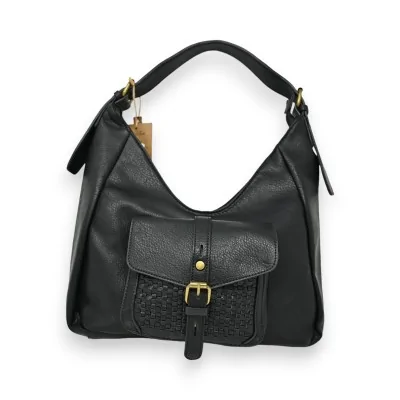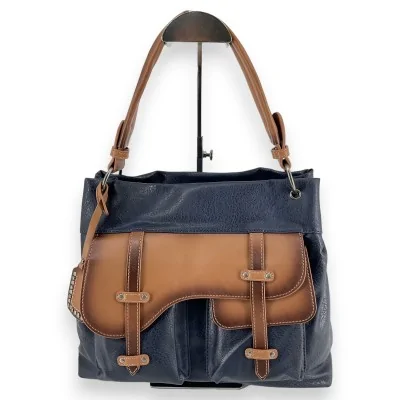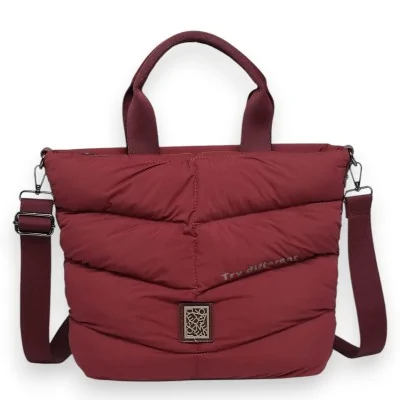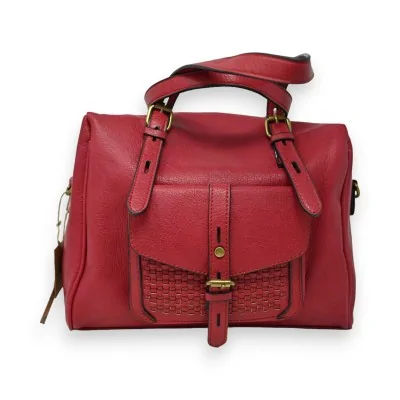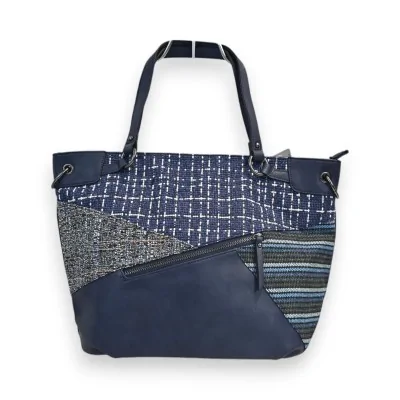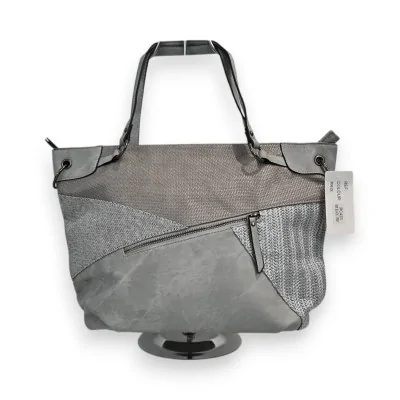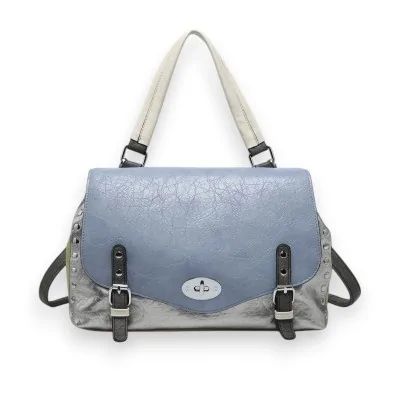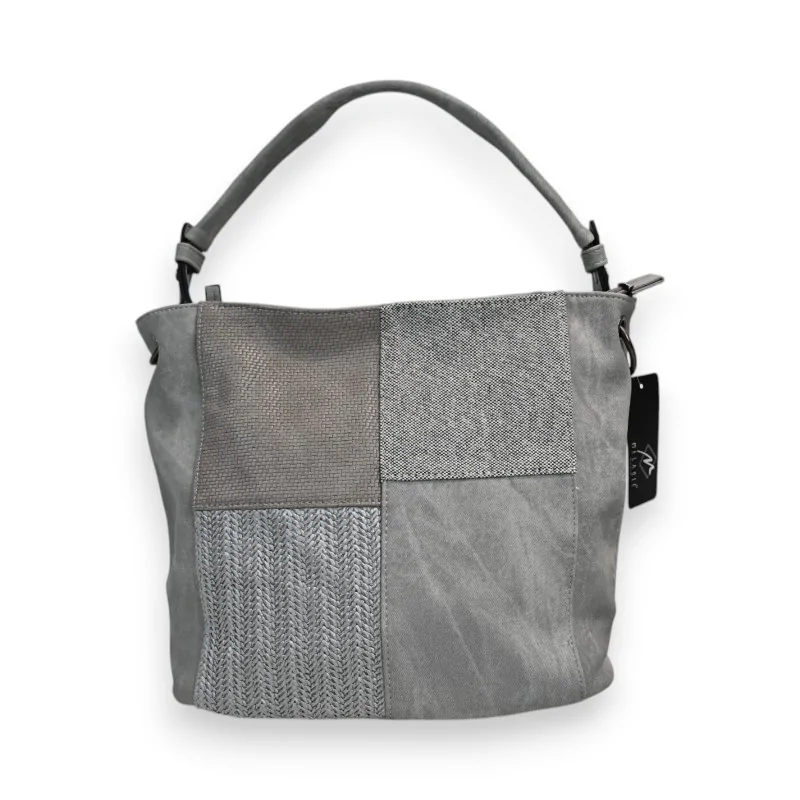
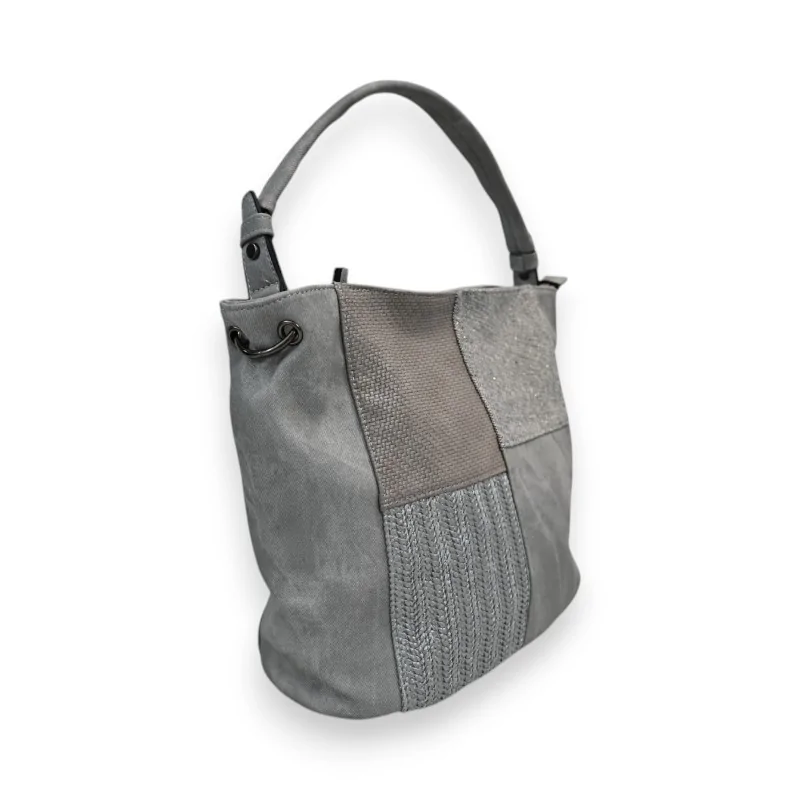
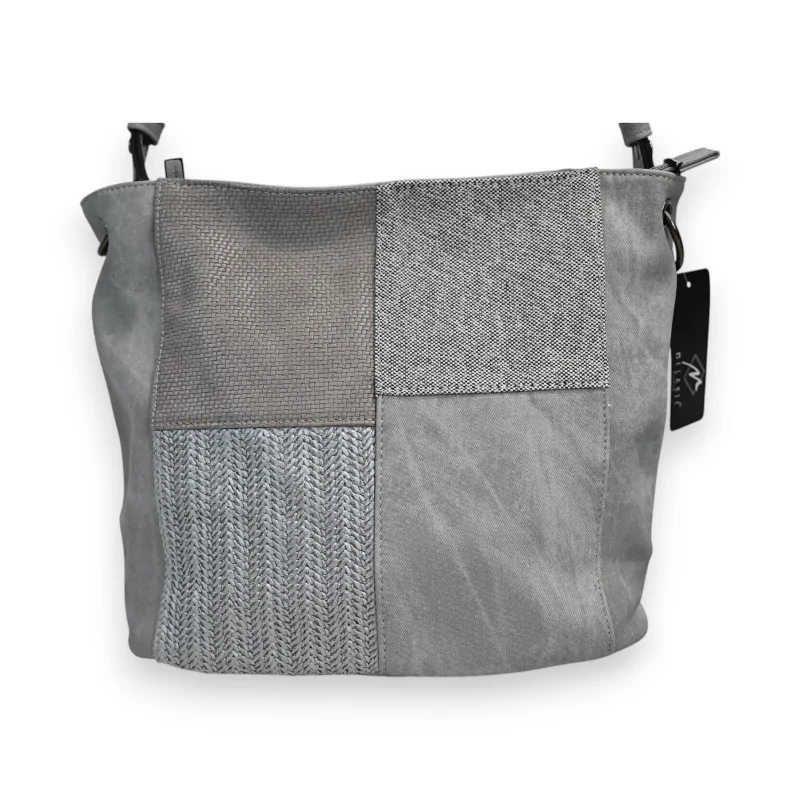



A gray handbag built out of panels rather than print. A washed plain canvas wraps the whole body, a pale flecked square sits high on the front and catches what light there is, a close-grained patch sits beside it, and a band of vertical braiding drops from there to the base. It measures 36x26cm, is lined in black, hangs from an adjustable handle or a removable strap, and keeps a zip pocket flat across the back for whatever you reach for most.
Nothing on this bag is printed. The front has been cut into panels and every one of them was given a different surface, which is why the shape reads almost plain in a photograph and quite busy in the hand. Half the front is left bare on purpose, so the assembled half is not fighting for room. The other panelled fronts on the same shelf take the same idea somewhere else.
The panels are not the same size and were never meant to be:
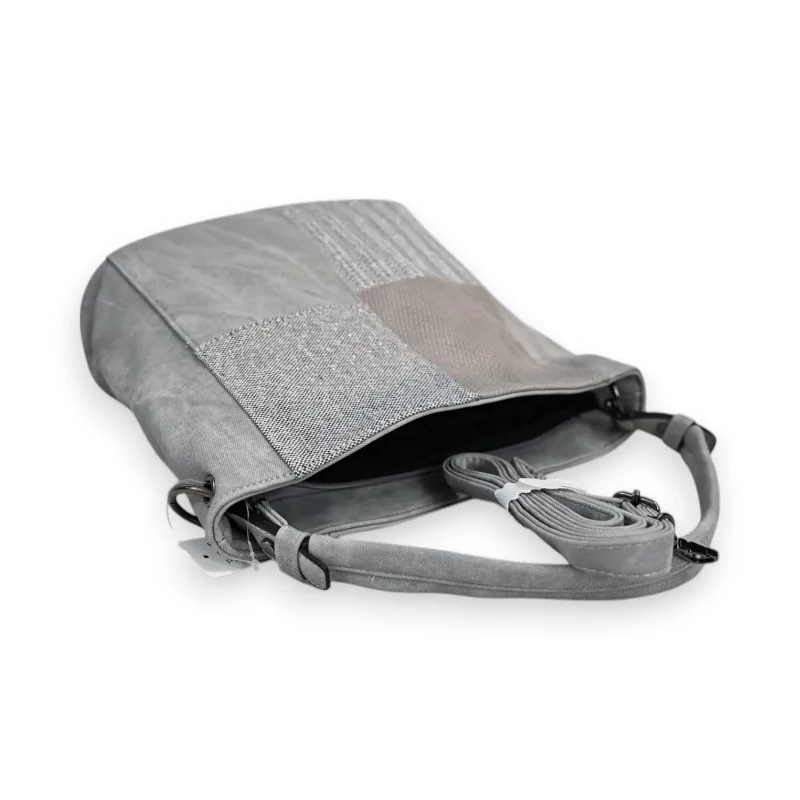
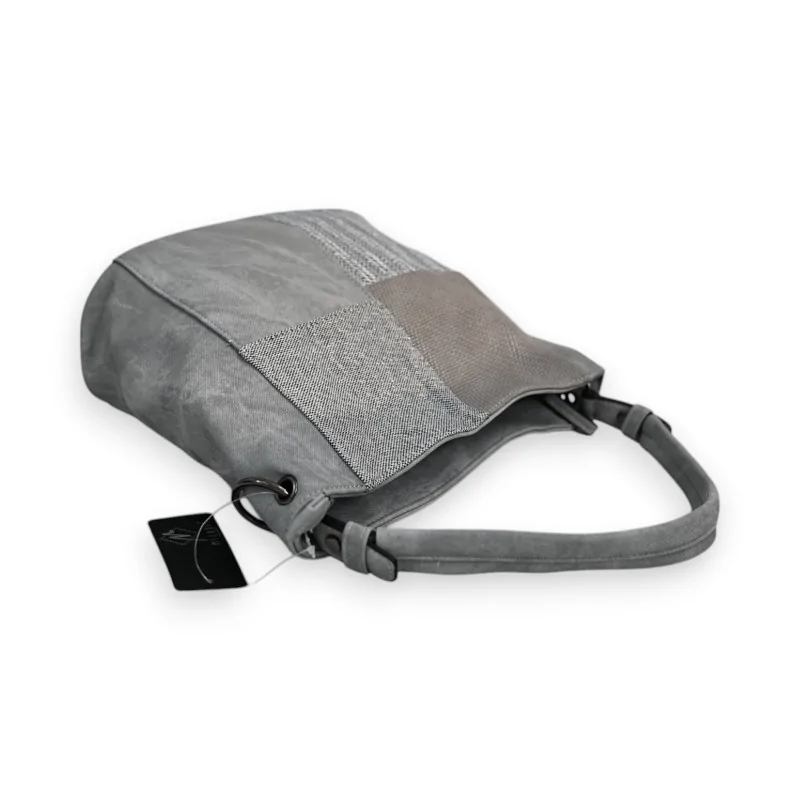
Two buckles on the sides do most of the work: take them in and the bag stays at the elbow, let them out and it goes over the shoulder. When both hands are needed, the removable strap clips onto the metal rings, and it coils away inside for the rest of the day. The canvas carries no stiffening at all, which is the whole reason it folds in on itself once you set it down and stands back up the moment somebody lifts it.
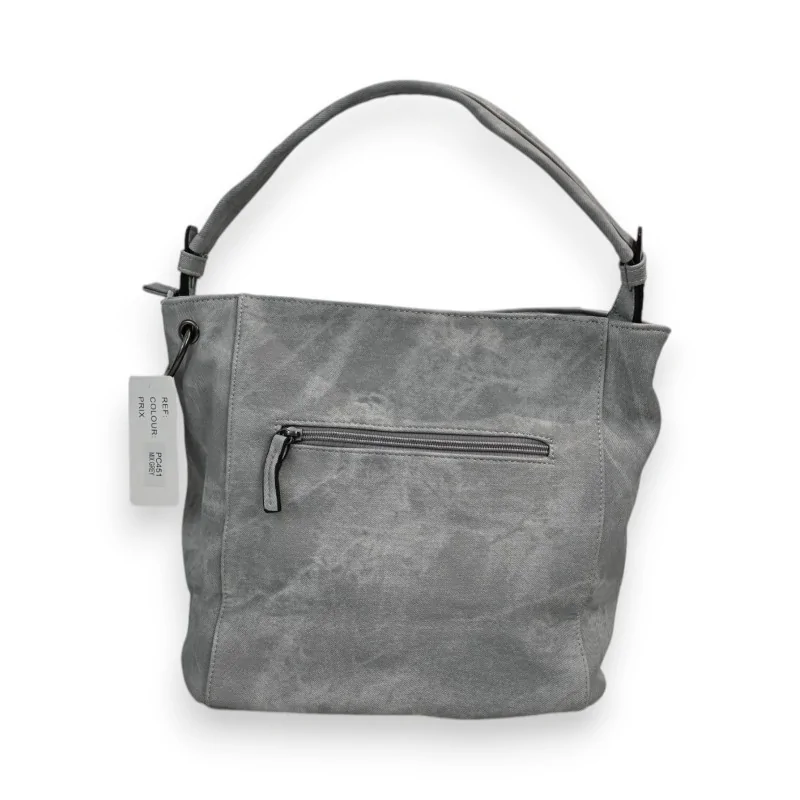
A zip pocket runs flat across the back panel, level with your hand, and it is the only thing interrupting an otherwise blank face. Cards and keys belong there rather than at the bottom of the bag. Deeper in, the black lining stops the base vanishing into shadow; one large compartment does most of the carrying, while the narrower ones down either side keep everything else from sliding into a heap. At 36x26cm this is a day bag rather than a tote, and it behaves like one. If you have not settled on a shape yet, look through the shapes filed one level up.

Data sheet