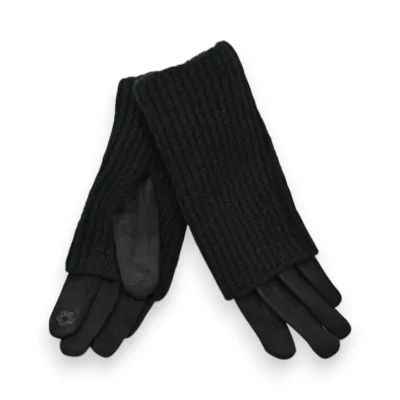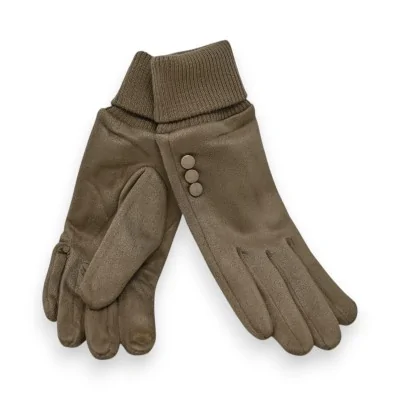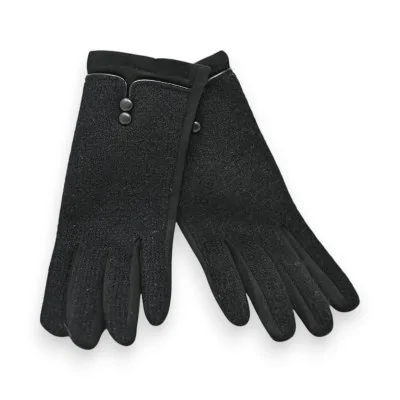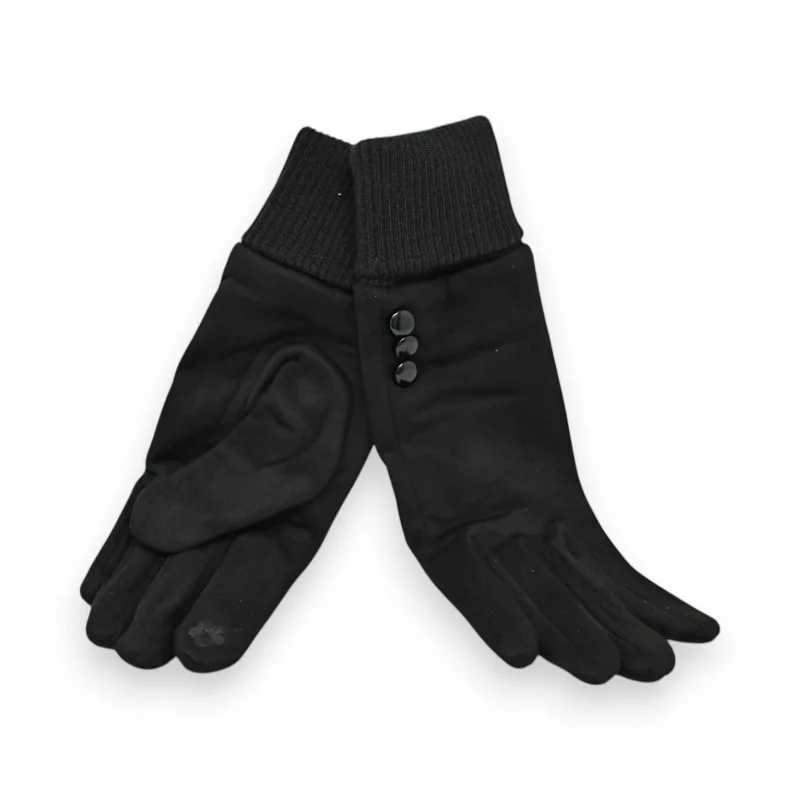
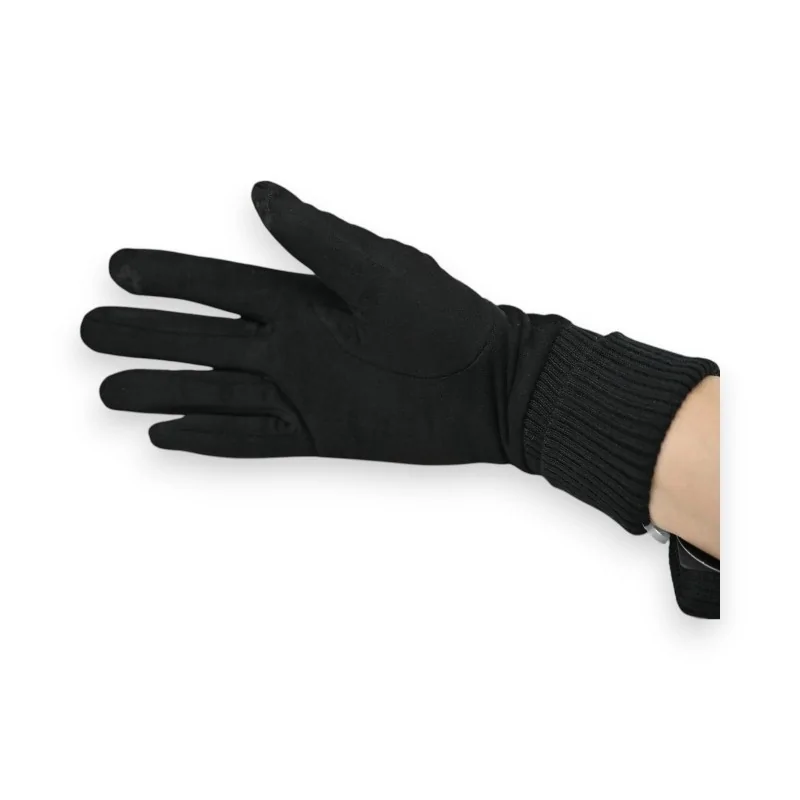
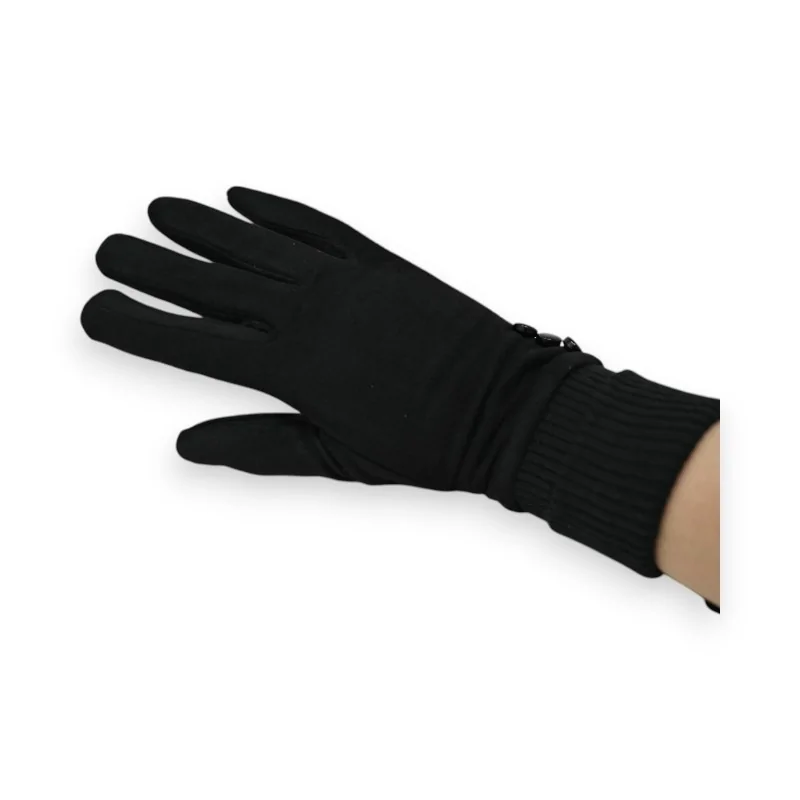
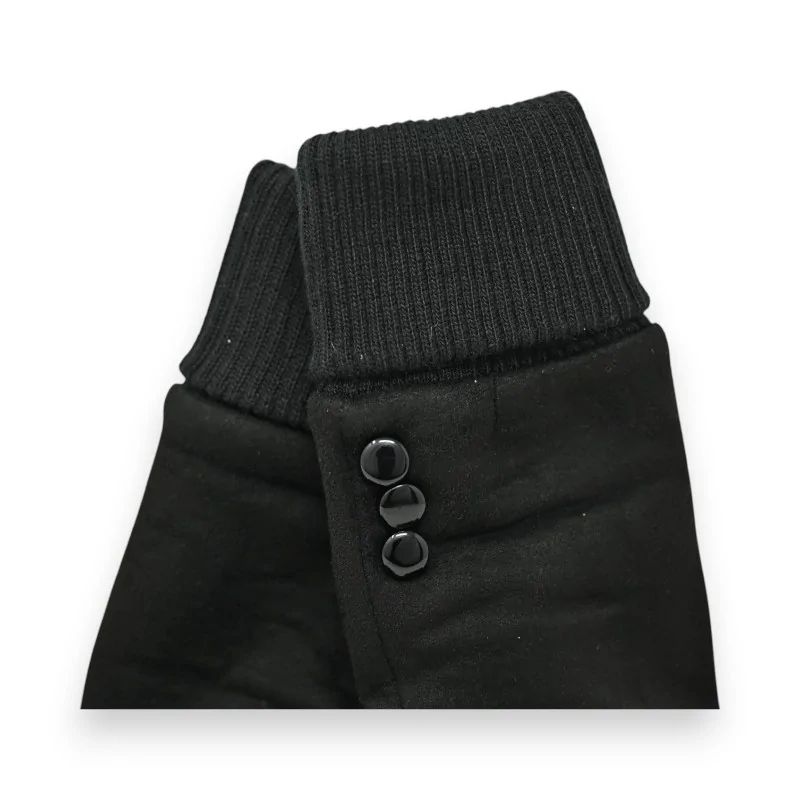
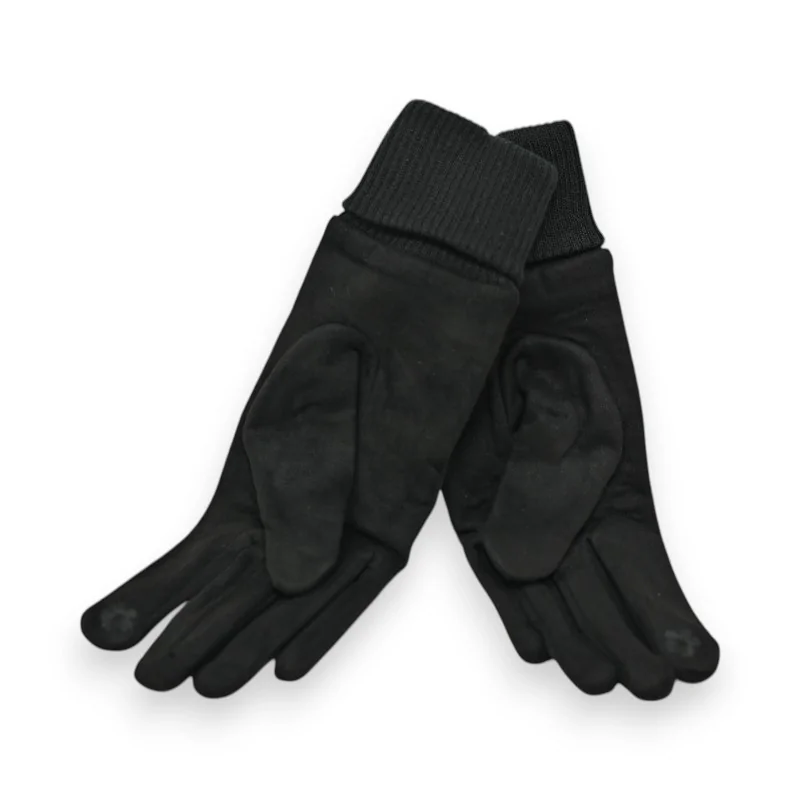
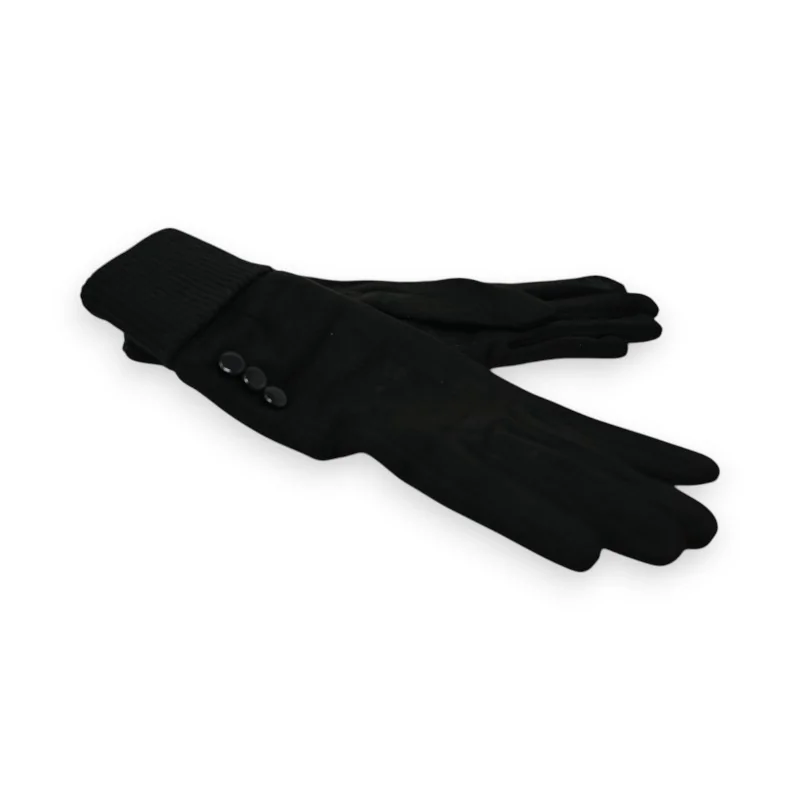



Pick this pair up and both faces feel the same. The back and the palm are cut from the same matte cloth, the stitching is narrow, and the colour does not change anywhere. What settles it is a short run of three round buttons, sitting just above the cuff on one side only. Buttons mean back, and once you know that you stop turning the glove over.
Most gloves give you a contrast to work from: a paler palm, a metal buckle, a print. Here the cloth is black, the knit is black and the buttons are black too, moulded rather than covered in another material. The knitted cuff is the one place where the surface changes, and even that shows up as texture rather than colour. At arm's length the pair is a silhouette, not a pattern.
In a coat pocket the three buttons do the work your eyes would normally do. Run a thumb across the cuff edge, feel the small row of domes standing proud of the cloth, and the glove is already the right way round. Nothing else on the pair stands up from the surface, so there is nothing else to mistake it for. The seam they follow is set on the diagonal, so it also tells you which glove is which. Among other one-size pairs to compare, that is a small thing that turns out to matter on a cold morning.
| Back of the hand | Three round buttons on a diagonal seam |
|---|---|
| Palm | Same matte cloth, no seam across it |
| Cuff | Ribbed knit, worn folded or pulled up |
| Thumb | Cut as a separate piece |
| Size | One size |
Closed fingers are warmer, but they put a layer between you and a screen, a key or a coin. Some people keep both kinds in the same coat for that reason. Warmth or handling: that is the choice, and it is worth looking at the cut-off models that leave the fingertips out before settling on one.
Data sheet