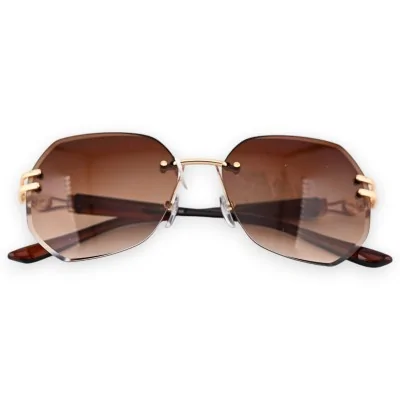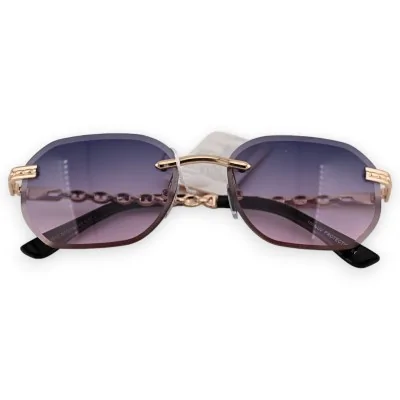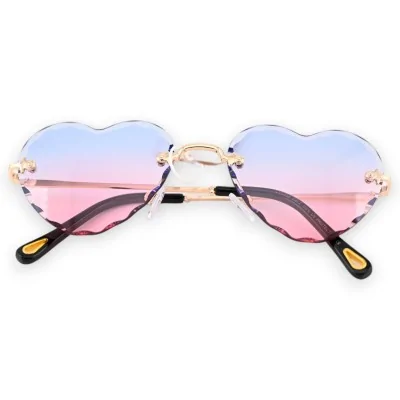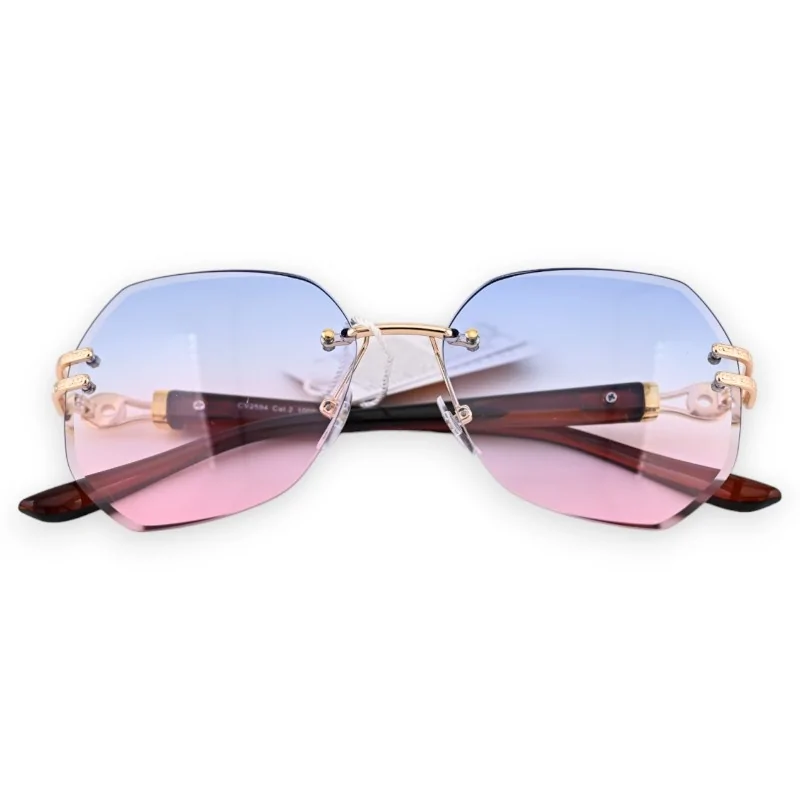
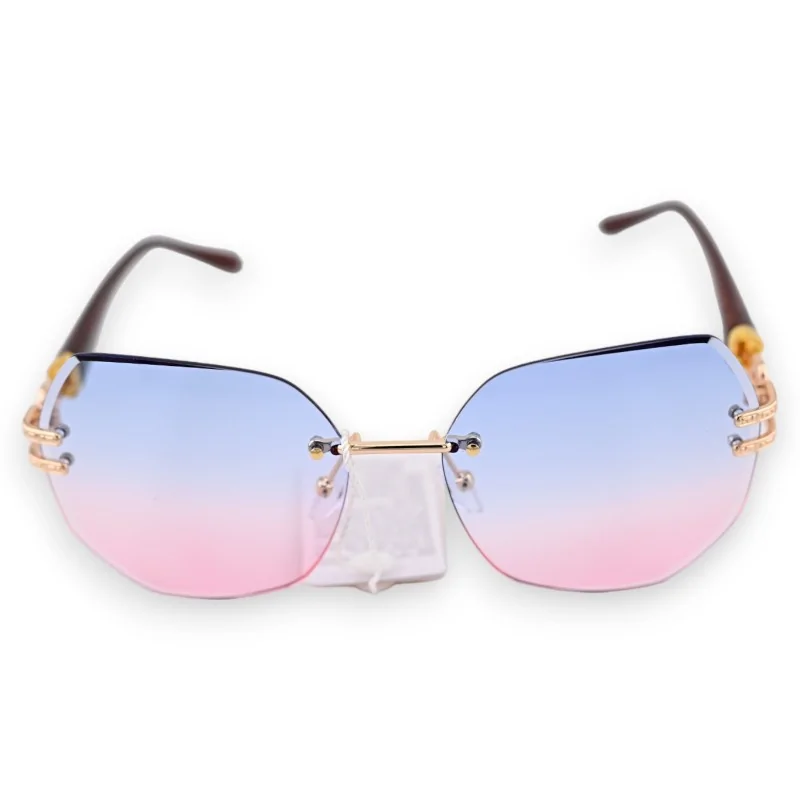
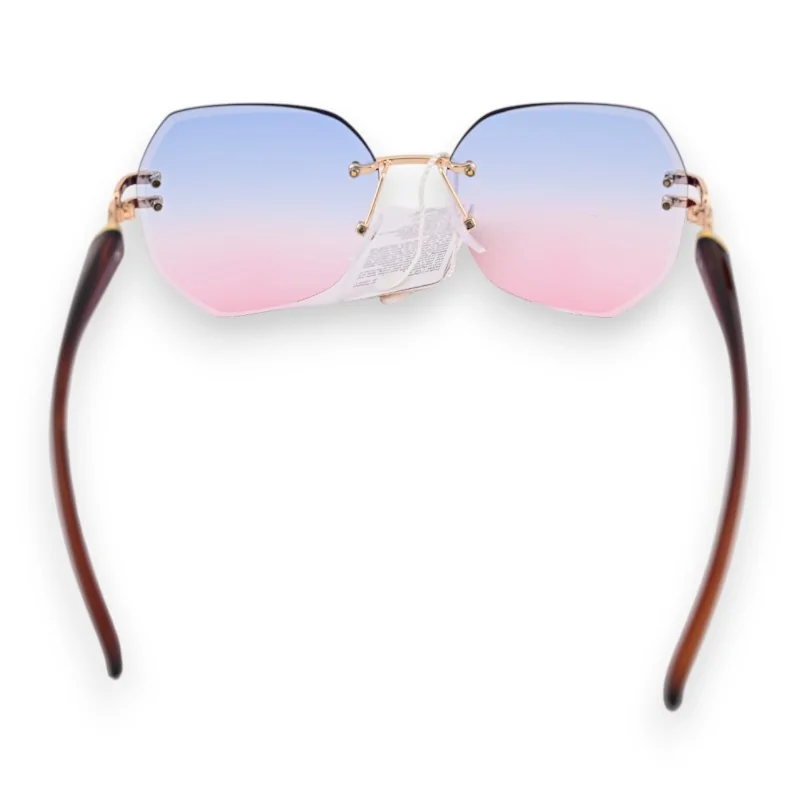



Two colours in a single lens. The tint starts pale blue at the brow and fades to a soft pink by the time it reaches the bottom edge, so you get the colour without committing to a coloured frame.
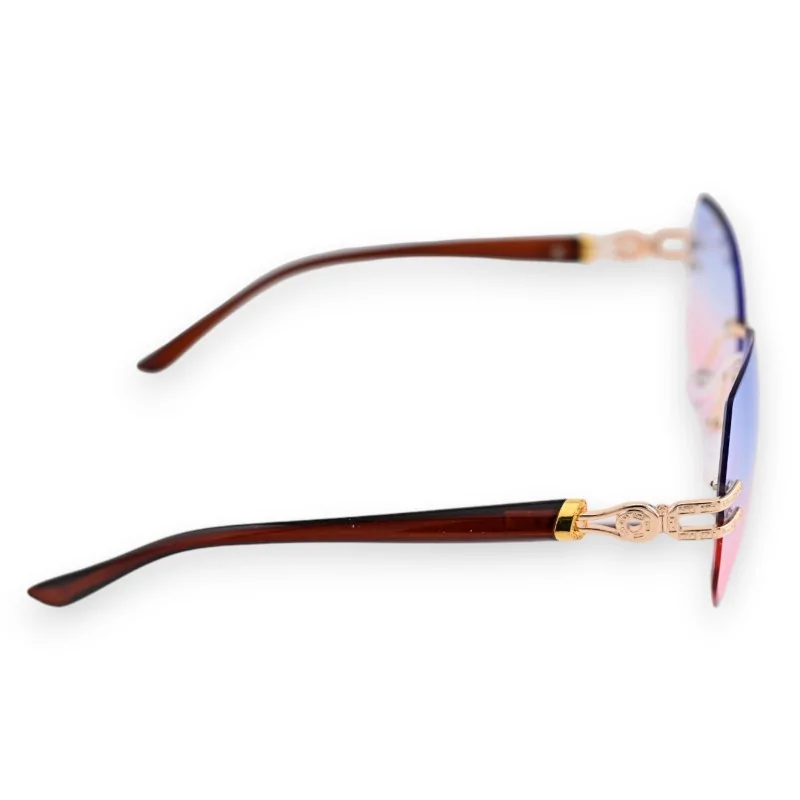
There is no rim holding the lens, which is why the outline looks the way it does: the glass itself is cut to a rounded polygonal shape and finished with a bevelled edge. The gold-tone bridge is flat and plain, the hinge pieces are openwork, and the arms are translucent brown, tapering towards the tip.
Because the colour sits in the glass rather than in the frame. A pink frame commits you to pink; here the pink sits only in the lower half of the lens, and it reads as a wash rather than a block. The blue at the top does the opposite job, cooling the whole thing down. Worth seeing what else comes with tinted lenses before you settle on one pair.
One styling note: a headscarf in one of the two lens colours lifts the whole thing, and a square scarf tied at the neck is the easiest version of that.
| Lenses | pale blue fading to soft pink, bevelled edge |
|---|---|
| Outline | rounded polygonal, rimless |
| Bridge | gold-coloured, flat and straight |
| Hinge pieces | openwork gold-coloured, engraved pattern |
| Arms | translucent brown, tapering to the tip |
| Measurements | not stated |
Clean from the middle of the lens outwards and leave the edge alone. Facets show scuffs sooner than a flat rim does, because each face throws light back at a slightly different angle. A dry cloth is enough, and the pair is better left lens-side up than face down on a table.
Data sheet