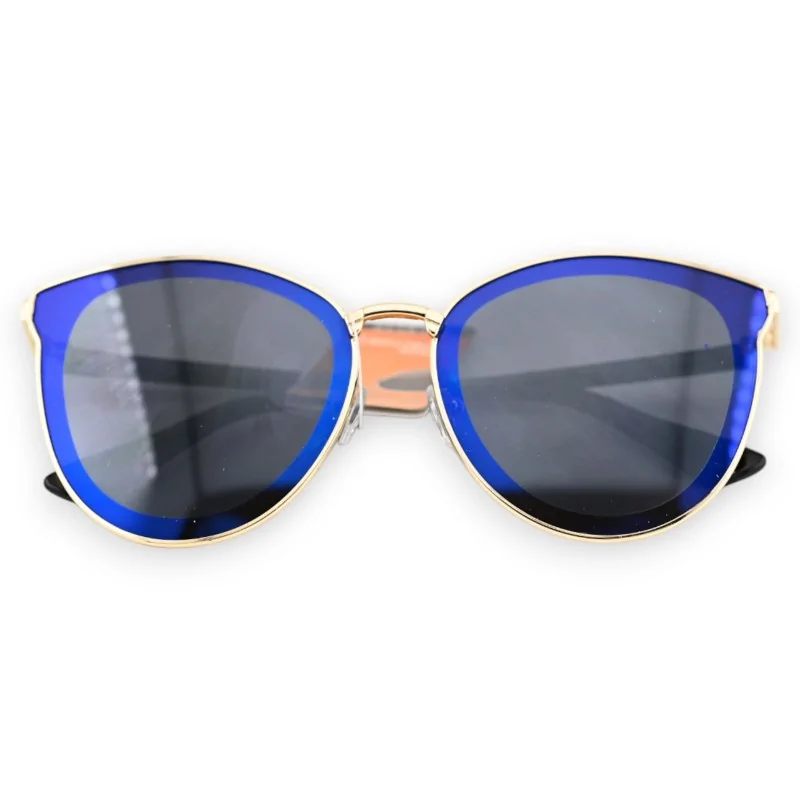
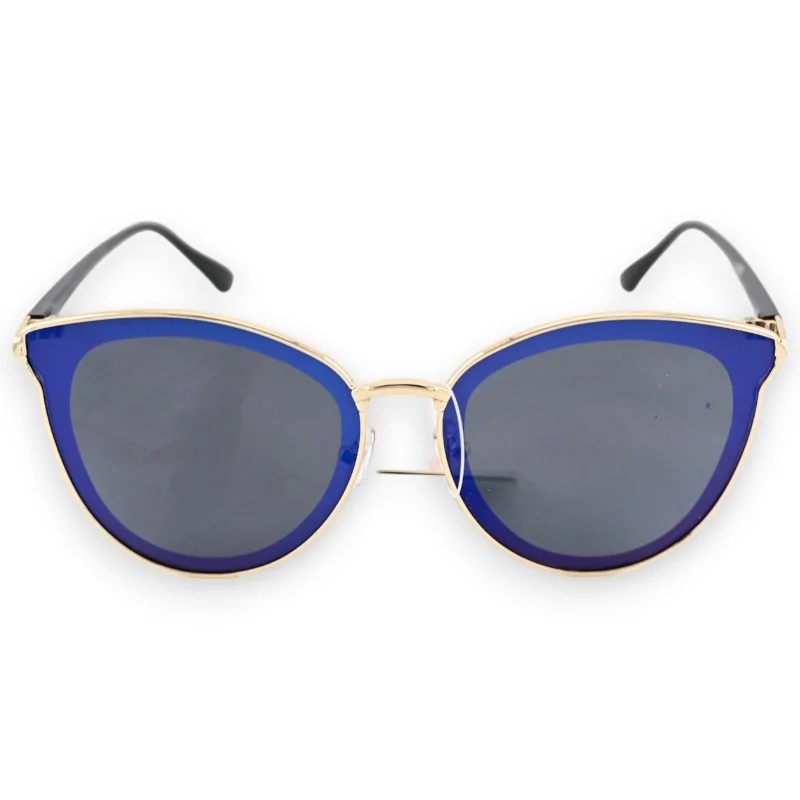
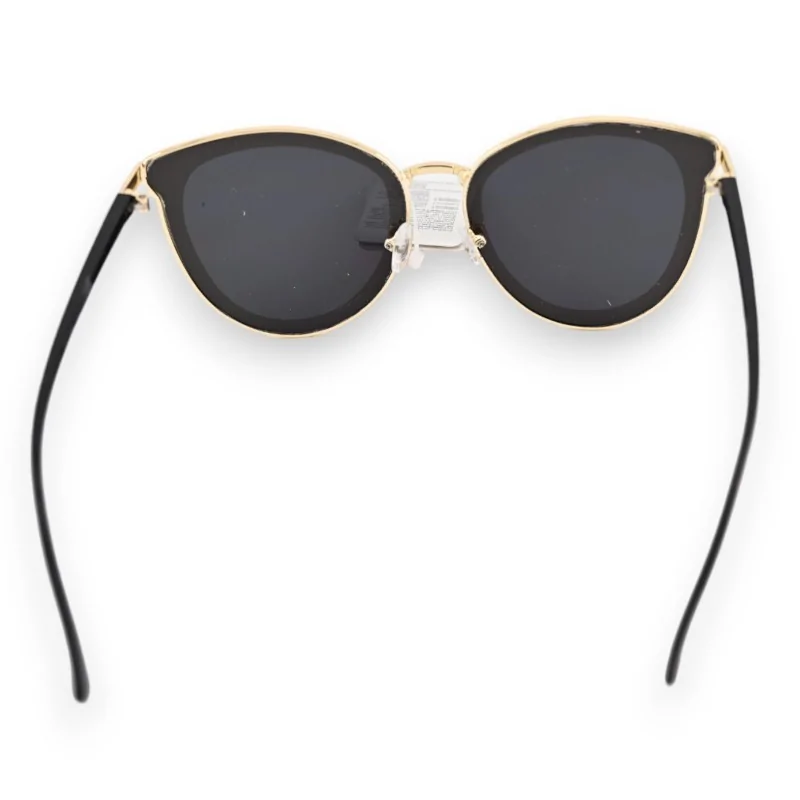



Only the rim of each lens carries the blue mirror; the centre stays a flat, deep grey, so the colour reads from the outside in. The outer corners lift towards the temples, the temple arms are thin and black, and two clear nose pads sit on small metal stems.
Although the frame reads as solid blue from across a room, the colour covers far less of the lens than you would expect. The blue mirror along the rim covers a narrow band and nothing more, while the middle of the lens keeps a deep grey. A thin gold-tone wire runs round each lens, a short double bar links the two sides, and that is the whole structure. The rest of the eyewear aisle leans on thick fronts; this pair gets by on a wire.
Head-on, the grey wins: the middle of each lens is the part you see through, and it stays neutral. Tilt the pair and the lifted outer corners catch the light first. The lens is also cut wider than the wire holding it, so a second outline appears just beyond the first, close enough to read as a double edge. Move under a streetlight and the band turns almost violet for a second before settling back to blue, and that is why the front never looks flat.
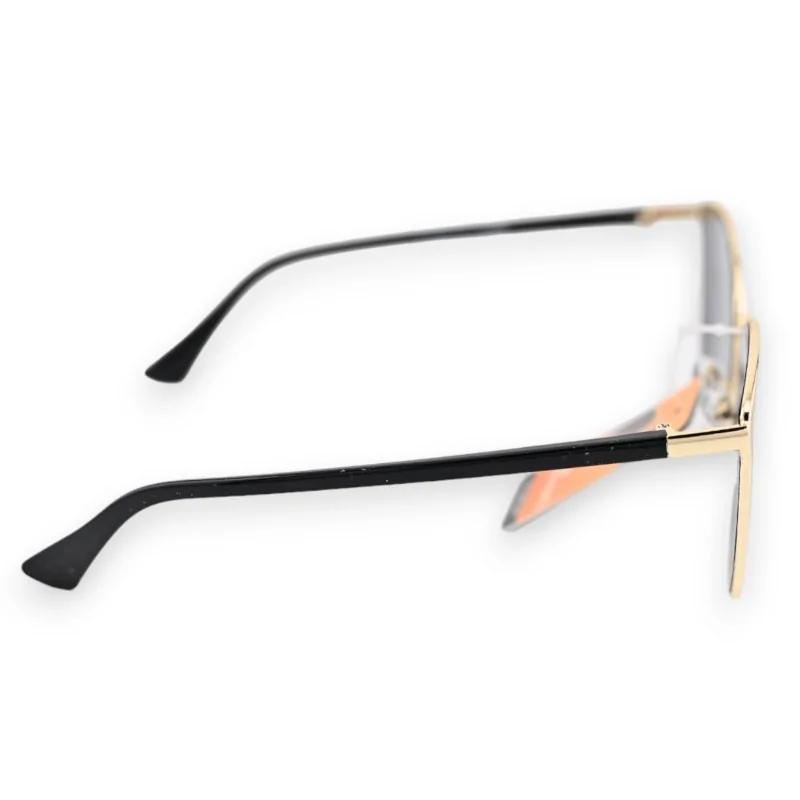
Side light through a car window is the least forgiving test there is, and it is where the thin black temple arms earn their keep: they sit low enough not to cut across the view. The rounded tips stop them digging in on a long drive. Keep a soft cloth in the door pocket, and if you want a few things to finish the look, they are a short detour away.
Data sheet