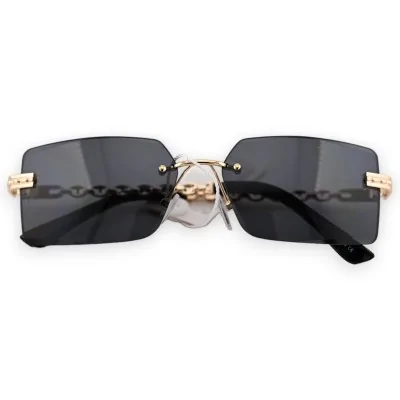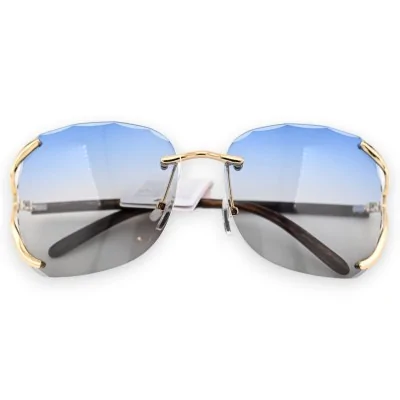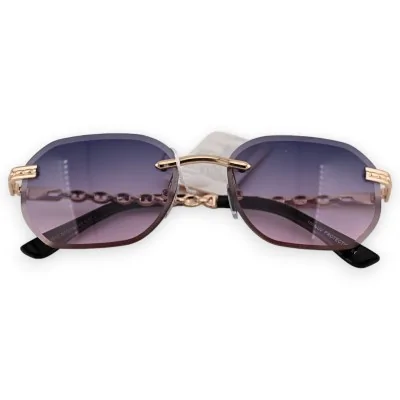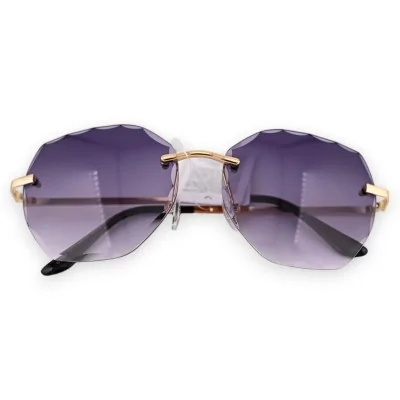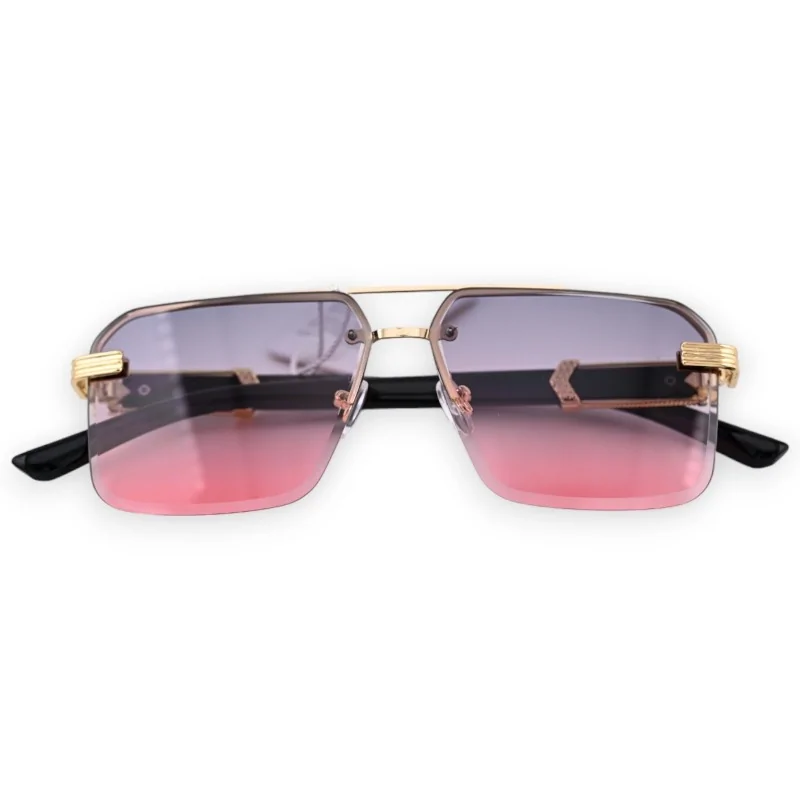
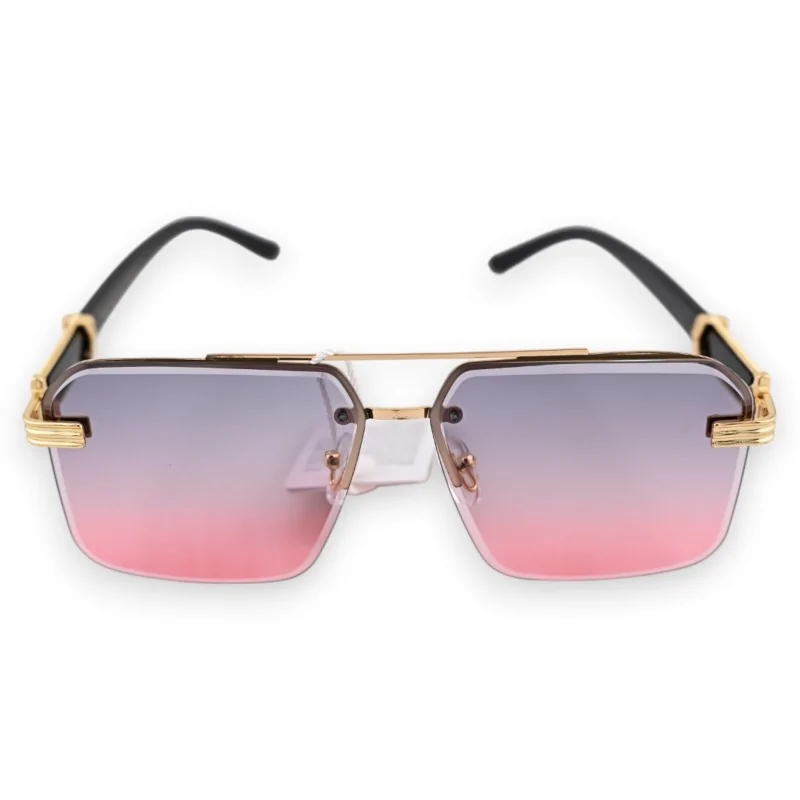



Nothing closes the bottom of the lenses. The gold rim runs along the top only, and each square lens is cut bare below, which is what gives these grey to pink gradient sunglasses their light outline.
Black temples, a straight gold bar over the brow and a second thin bar across the nose make up the rest of the front. The corners of the square are slightly rounded, so a wide shape never turns severe.
The tint shifts as it travels down the lens. Smoky grey sits across the top half, warms into pink lower down and fades almost to clear at the very bottom edge. The change happens gradually, with no visible line between one colour and the next. From straight on the two colours read as a single wash; tilt the pair and the grey takes over. If this cut suits you, the shelf holds other frames with a bare lower edge.
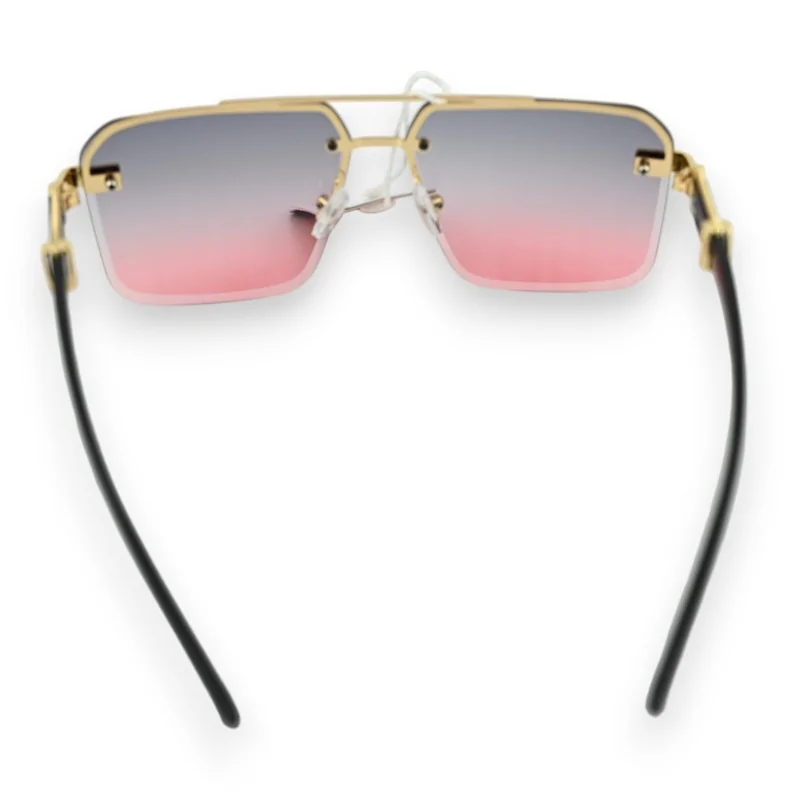
Turned round, the frame gives away how little there is to it. Very few parts, and each one visible at a glance:
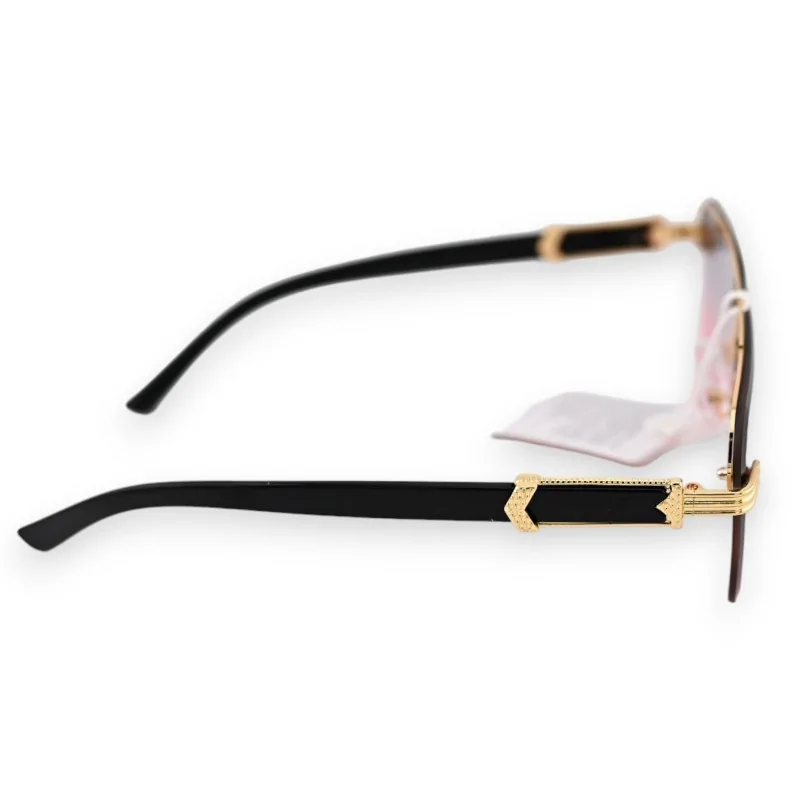
All the decoration sits on the first third of each arm. A gold chevron is set into the black just past the hinge, followed by a finely engraved edge, and a small ribbed gold block joins the arm to the front. After that the arm stays matt black the whole way. Fold the pair and those two blocks become the highest points, which is why the gold registers before the black does.
The shape belongs to the wide, flat family rather than the round one, so it reads as a statement rather than a discreet accessory. A front like this asks for a plain outfit: a black polo neck, a striped shirt, an unbelted raincoat. Hair pushed back keeps the top bar in view, and that bar is where most of the character sits, so nothing else needs to compete with it. Gold jewellery is the easy match, though the frame carries enough on its own that a bare neckline works just as well. If you are putting the rest of the look together, everything else filed under accessories runs from scarves to belts.
Data sheet