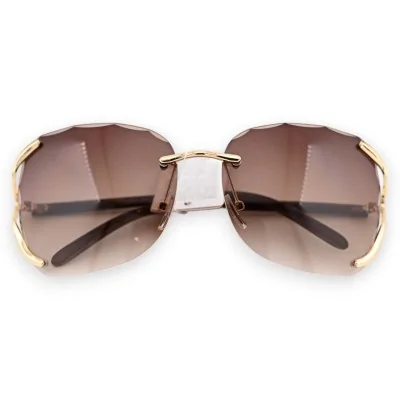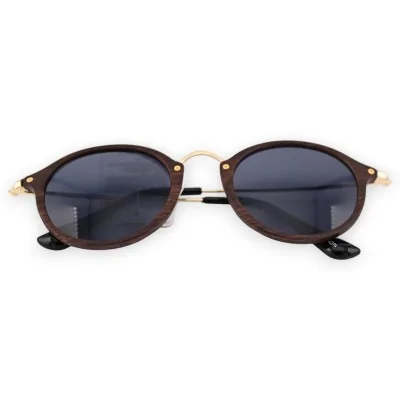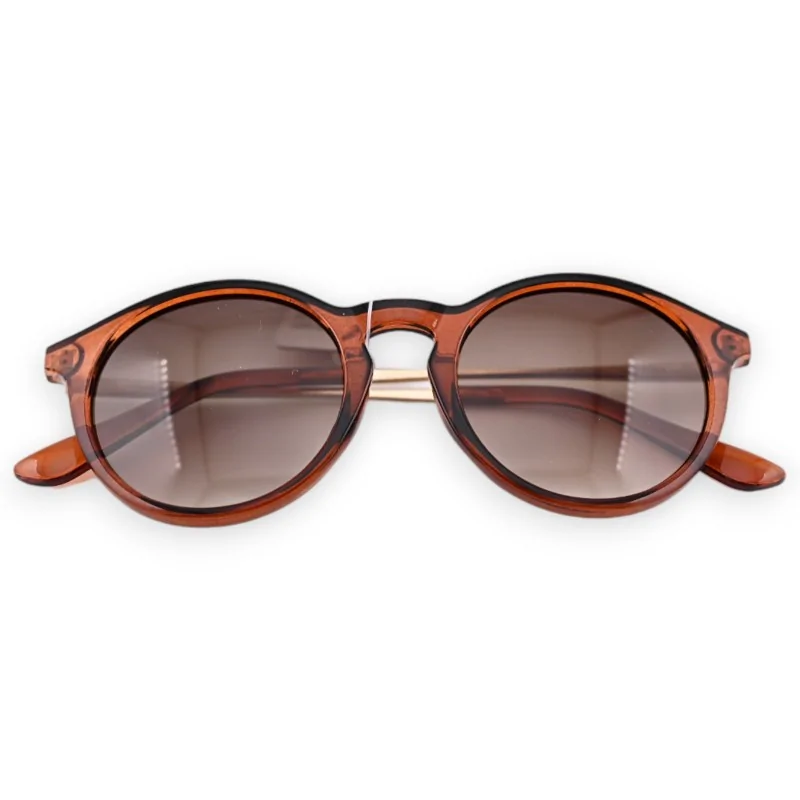


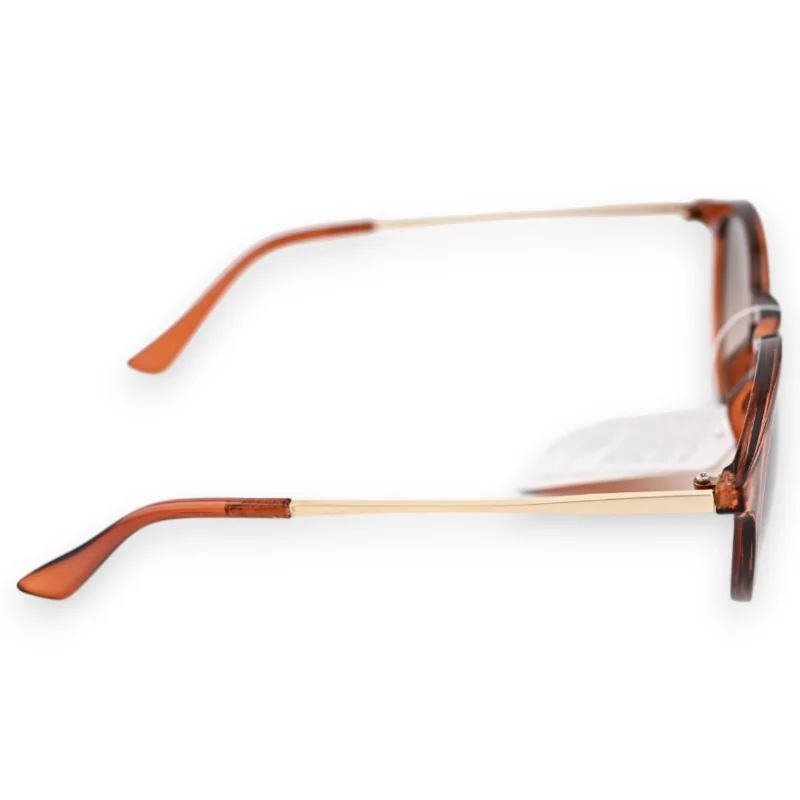



A small round rivet sits at the outer corner of each lens, right where the front hands over to the side. From that hinge run two flat gold-tone metal arms, each closed by a long brown plastic tip that turns gently downwards. So which material is really carrying this pair, the caramel plastic at the front or the metal behind it? Both, and the answer becomes obvious the first time you fold them shut on the tray of a train window seat.
The sides are not plastic. Each arm is a narrow band of gold-tone metal that leaves the hinge, runs flat for most of its length and only then gives way to a brown plastic end. Held up to the light, the pair reads as two bright lines closing on two darker points, which is not what an all-plastic front leads you to expect.
On the front, at the outer edge of each lens, a small round rivet sits flush in the caramel plastic. It is the one piece of hardware the front shows, and it lines the metal arm up with the rim rather than sitting on top of it. The bridge follows the same logic: a keyhole cut in the plastic, with a slim gold-tone bar crossing just above it.
Looked at in profile, the pair separates into three parts that the front view flattens into one.
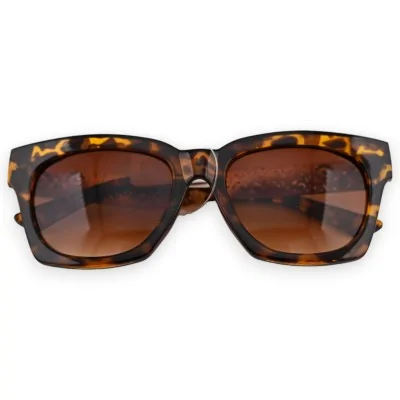
The lenses follow the frame: brown, graduated, firm across the top and much lighter by the time they reach the bottom of the rim.
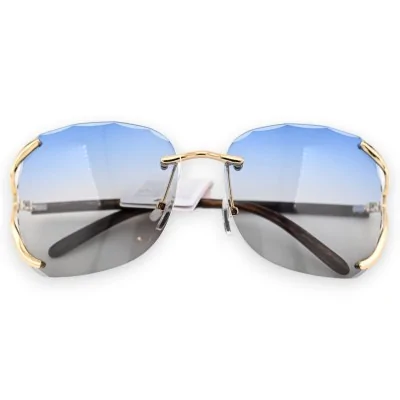
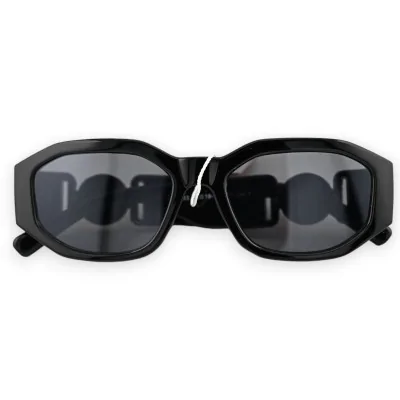
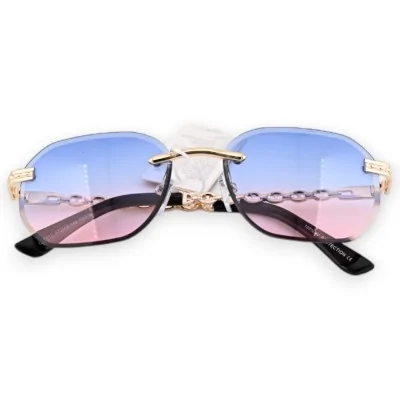
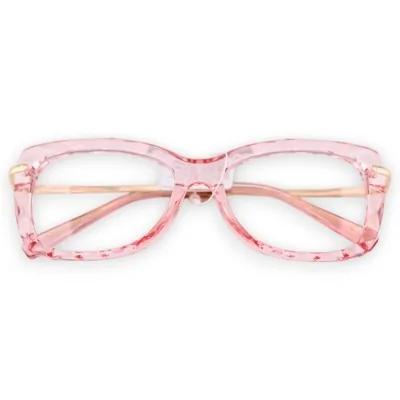
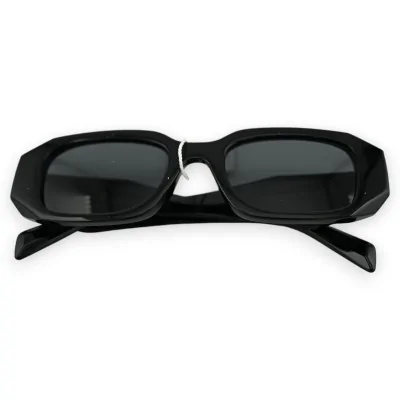
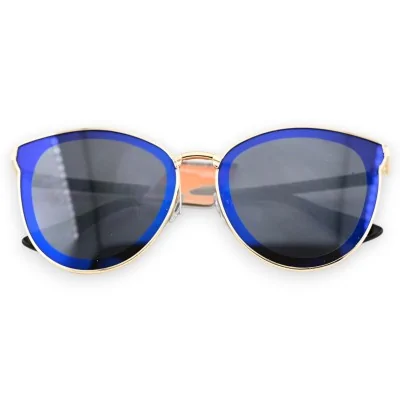
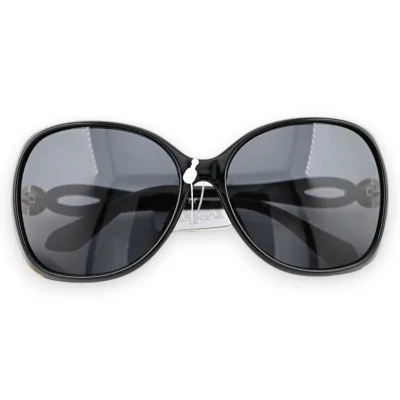
Colour decides most of this choice, so it helps to see the darker tints next to the lighter ones before settling on a single pair.
British afternoons being what they are, the folding umbrellas that share the same bag tend to come out on the same day as these.
Data sheet