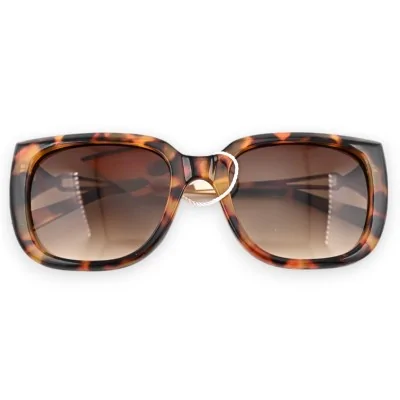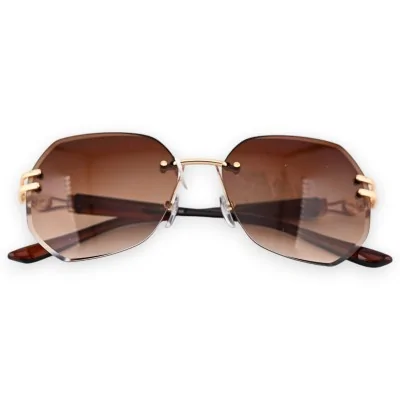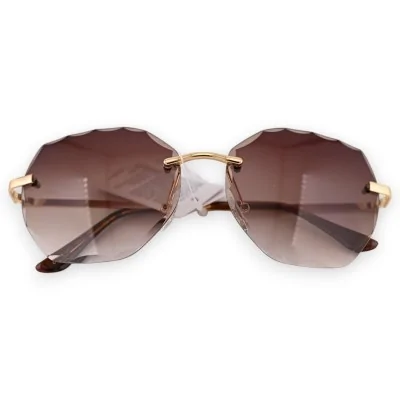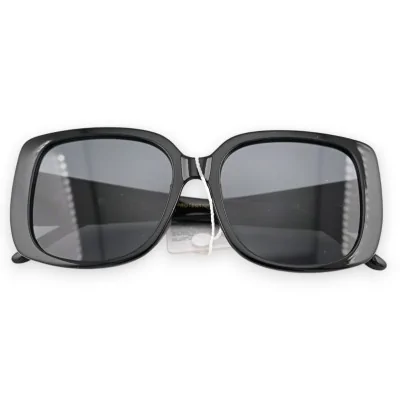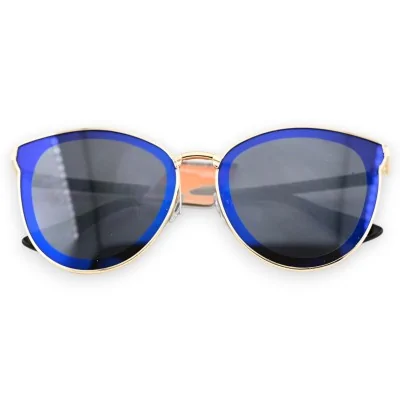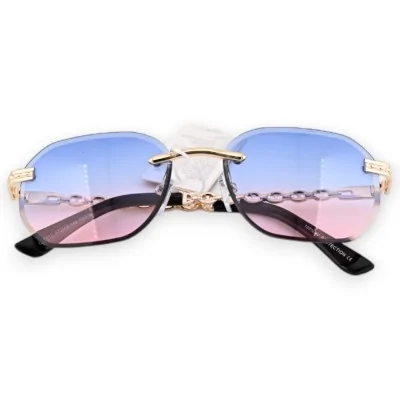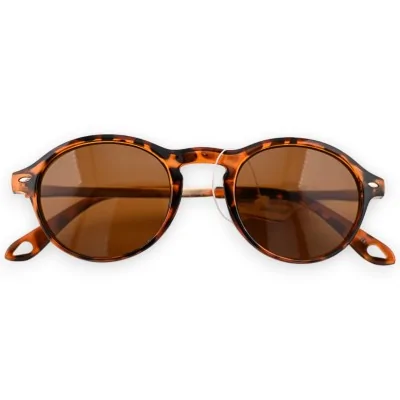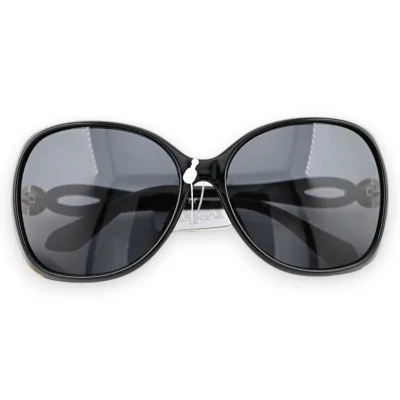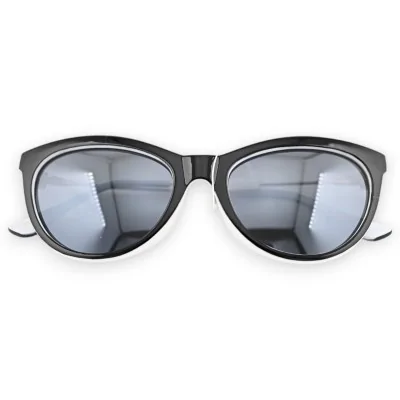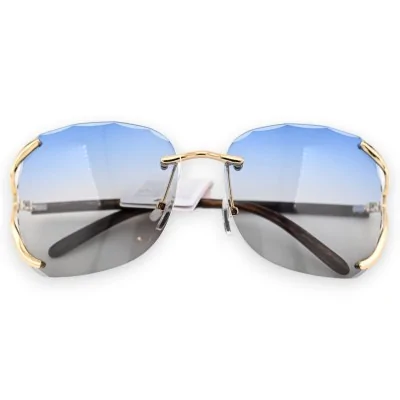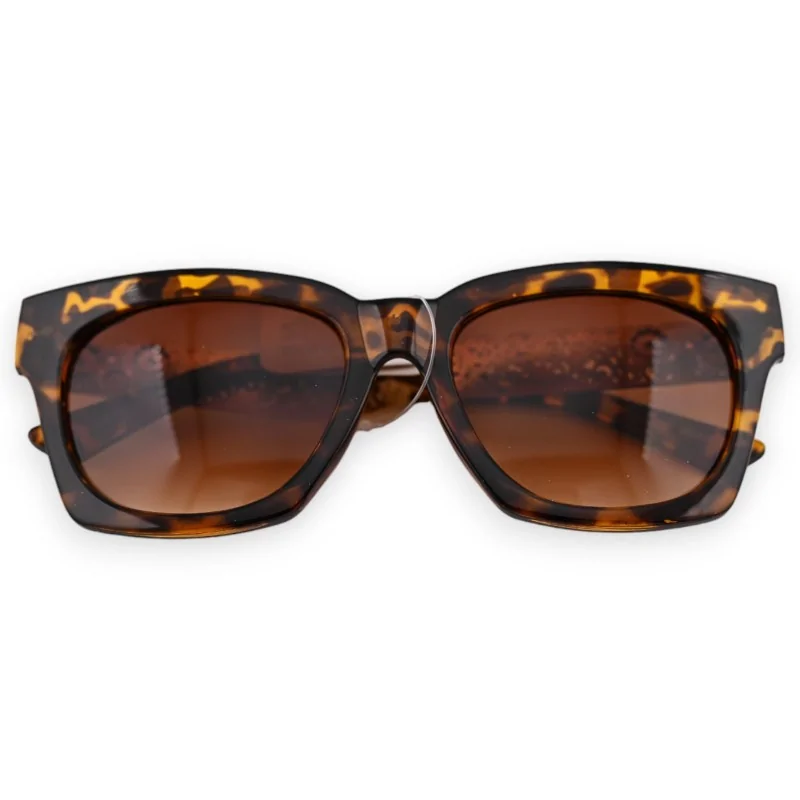
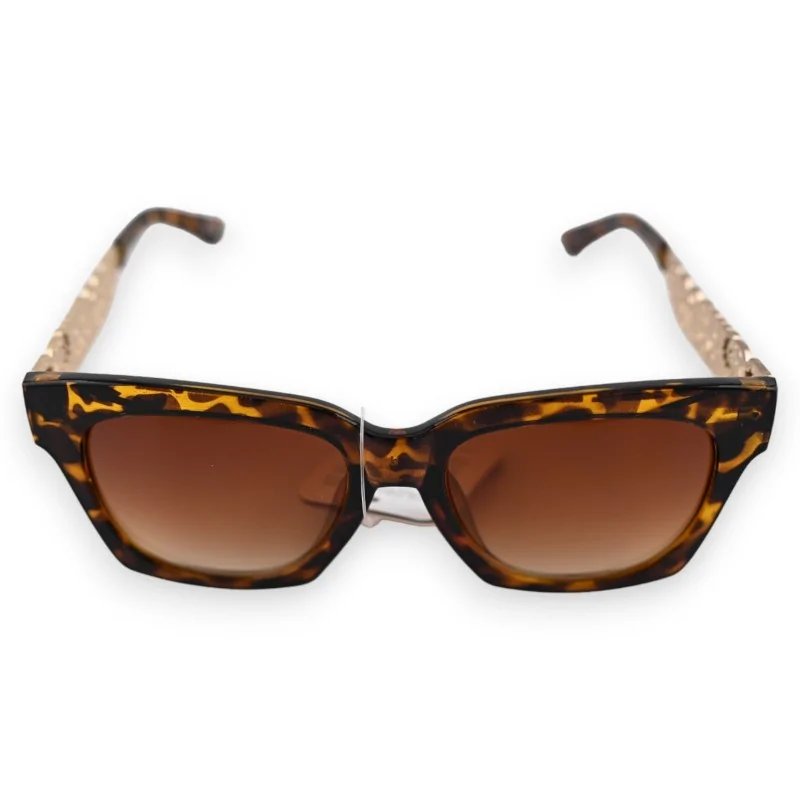



Face on, the top edge runs dead straight from one corner to the other, and it is the outer corners that come to a point, so the front reads as an angular butterfly rather than a rounded one. The print underneath works in two tones, amber patches outlined in dark brown, heaviest along the sides and the lower rim. Gold shows on both sides even from the front, because the front half of each arm is an openwork gold plate. The lenses stay in the same brown family and are deeper at the top than at the bottom.
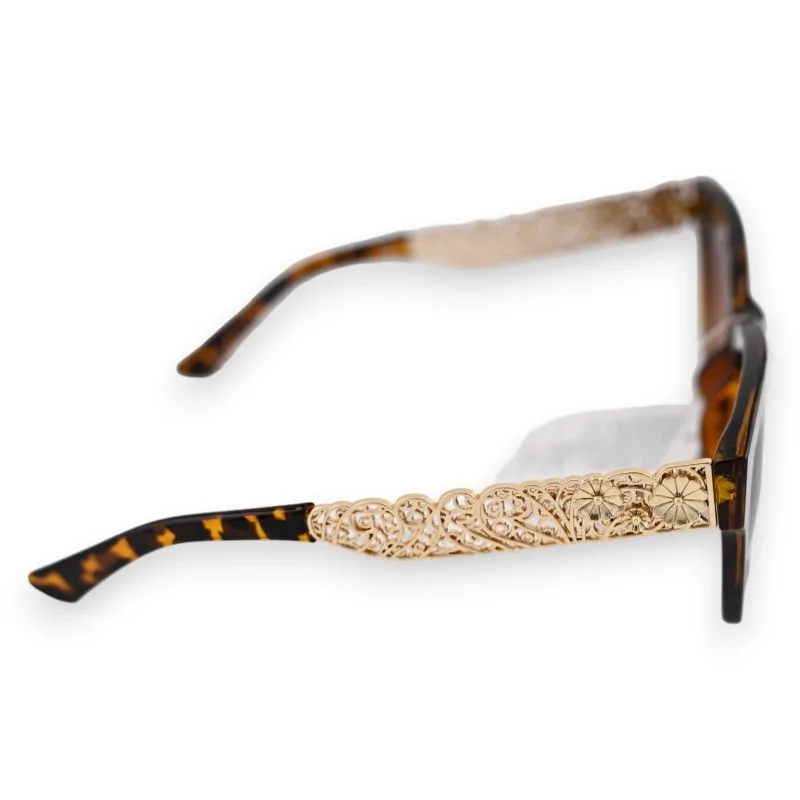
Two finishes meet on this pair and neither one gives way. The front is printed edge to edge, inside surface included, while each arm begins in gold, cut through with scrolls and small flower rosettes so that light passes behind the gold band. Held at eye level, the gold sits exactly where the frame is widest, level with the hinge. It is the part worth comparing with the other animal prints stocked alongside.
The upper rim does not curve. It travels flat across both lenses and dips only at the bridge, which leaves the top of the frame reading as a single dark bar. The lift happens at the ends: each outer corner rises to a point while the lower rim slopes back in towards the nose. Angular rather than soft, and the two edges pull in opposite directions, which is what stops the shape from reading as a plain rectangle.
One arm, three sections, front to back:
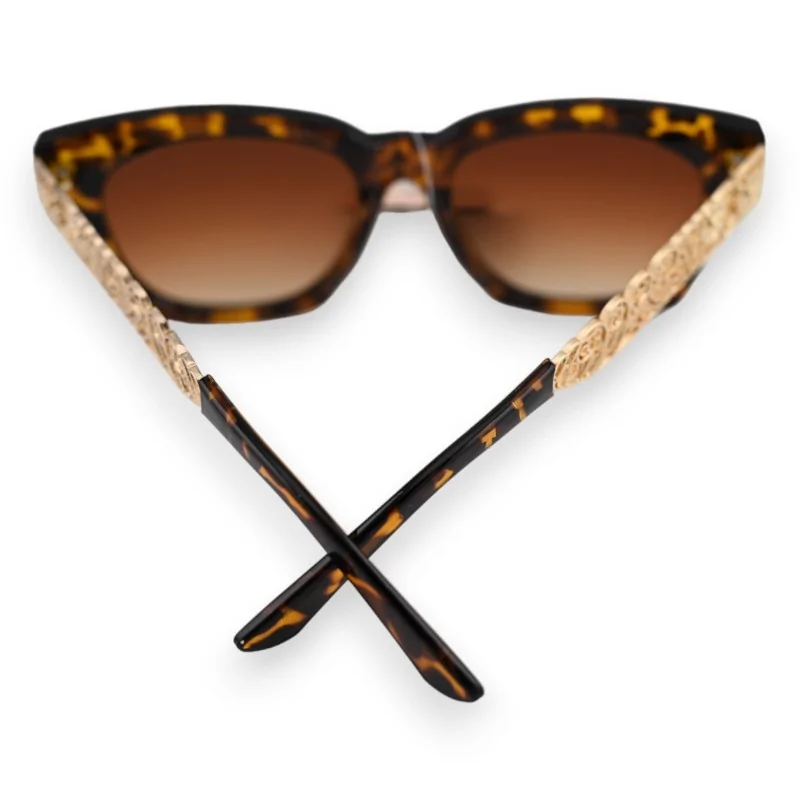
Seen from behind with the arms folded, the two tips cross and the print carries on across the inside of the frame.
Brown print behaves differently from a bright one: it sits close to the tones most bags and boots already use, so it reads as a warm neutral rather than a statement. Worn down, the dark brow line does most of the work and the amber only shows at the sides. Pushed up into the hair, the wide arms hold better than a thin wire, though a frame is never quite what we keep for holding a fringe back.
Data sheet