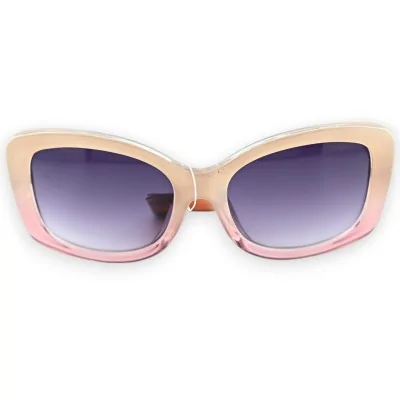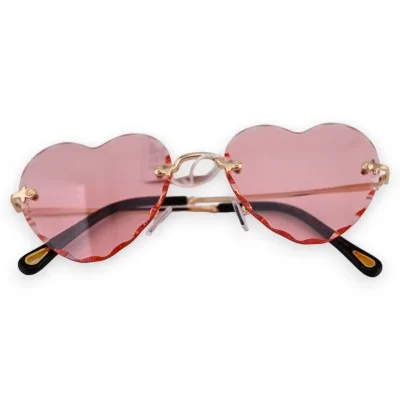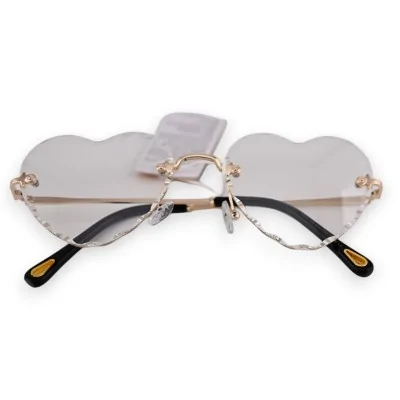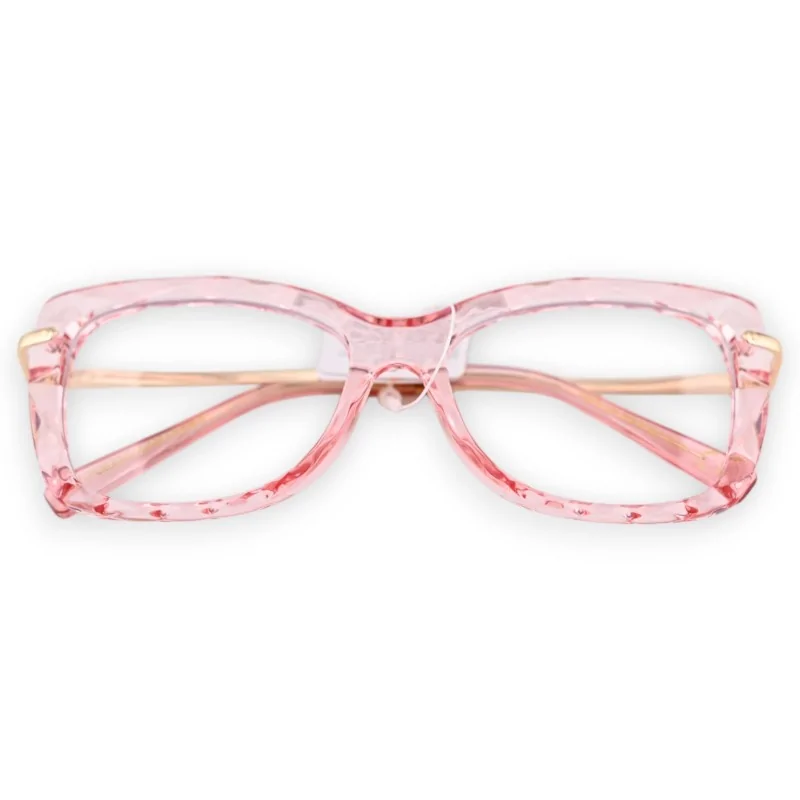
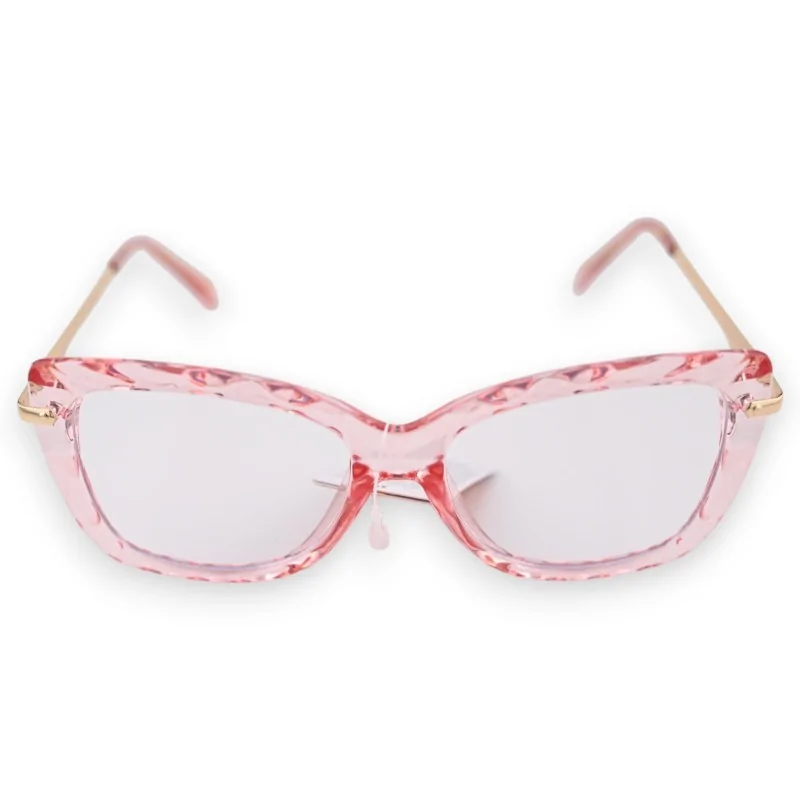
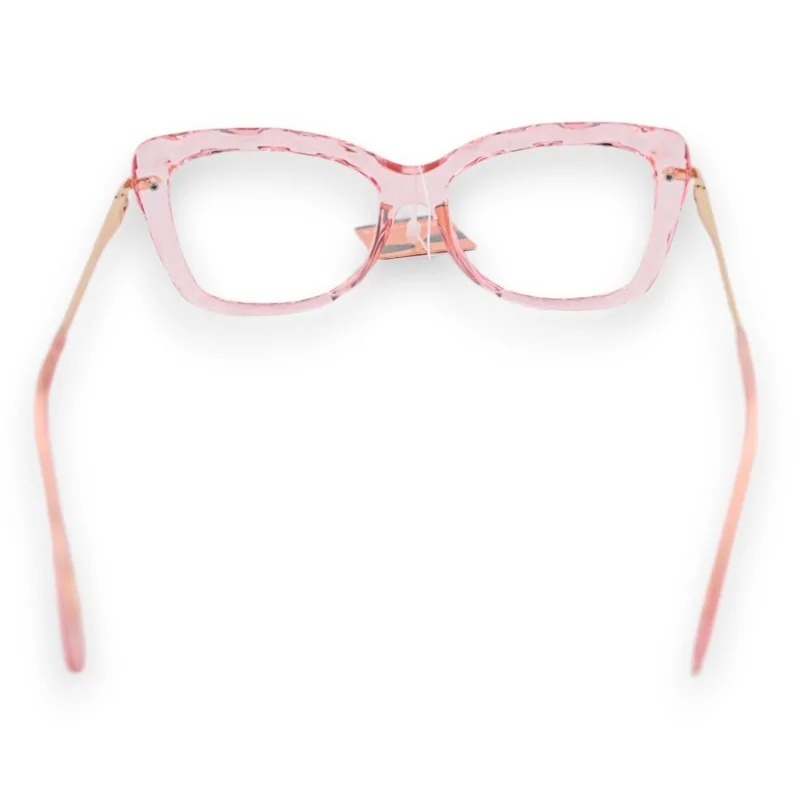



A pair of fashion glasses with a translucent pink front, cut into small facets rather than left flat, and outer corners that lift into a soft butterfly line.
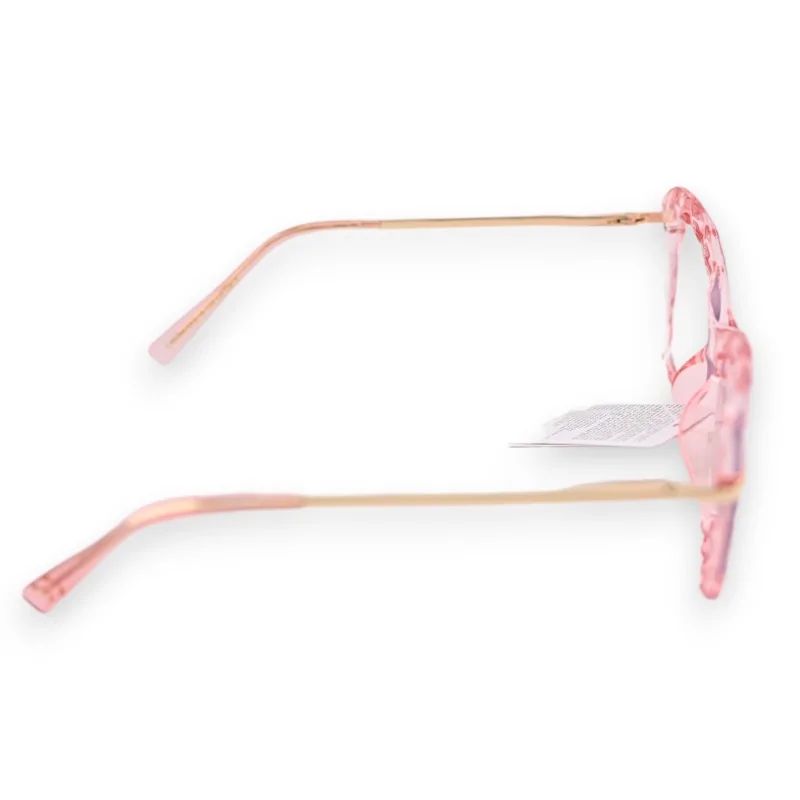
Each arm is built in two sections: a thin metal rod in a gold tone at the hinge, then a pink end piece that curves down behind the ear. The lenses are clear.
Why does a front this broad still look slim from the side? The arms answer that, because each one is made in two sections rather than cut from a single length. At the top corner of each rim sits a small gold-toned hinge plate, screwed straight through the front; from it runs a slim gold metal rod, narrow and almost flat, for most of the way back. That rod is all you see in profile, which is why the pair looks narrow from the side even though the front is wide. Set the same view against the frames with a flat front and the contrast shows at once.
The change happens just above the ear. The metal finishes and a translucent pink end piece takes over, broader than the rod and curved downwards, so the weight rests on a wider surface. The two materials are not blended into each other: the join stays visible, and the pink of the tip is the same pink as the front, which ties the two ends of the frame together without repeating the faceted surface. On a long train journey by the window, that is the section you end up noticing, because it is the one touching you. The lenses stay clear, which is why the pink here reads as a frame colour and never as a tint.
Worn with the hair loose, the arms barely register: they run under it and only the front is on show. Tie the hair back and the picture changes, because the gold rods then travel in full view along the side of the head, at exactly the height of whatever is holding the hair. That is the moment a tone starts to matter, and it is worth glancing at the clips and bands that share the shelf before settling on one. Nothing here asks to be matched, mind you: the pink is pale enough to sit behind a plain band without argument.
Data sheet