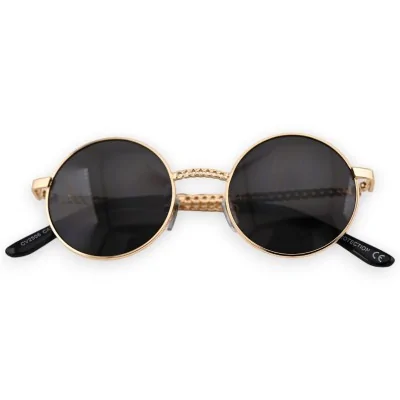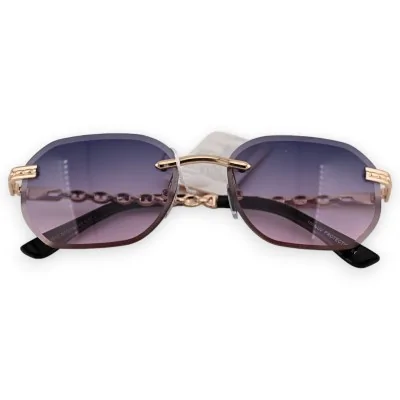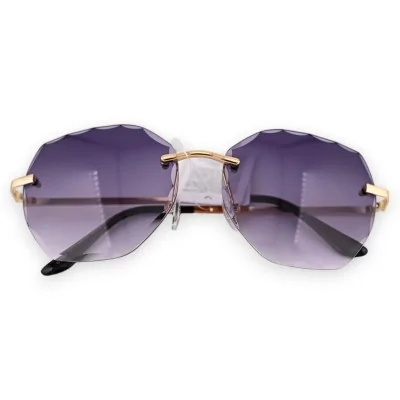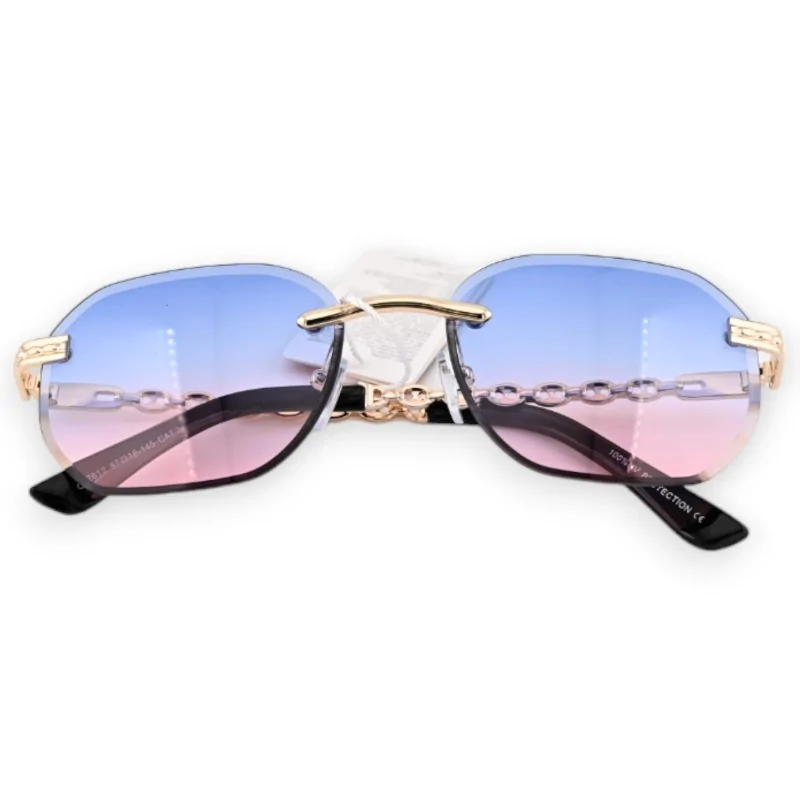
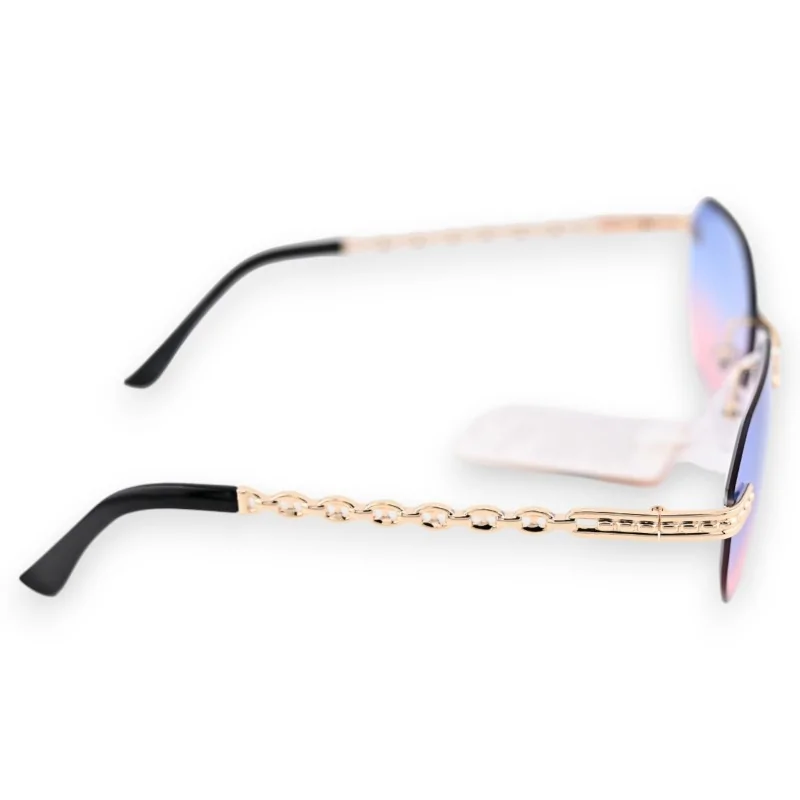
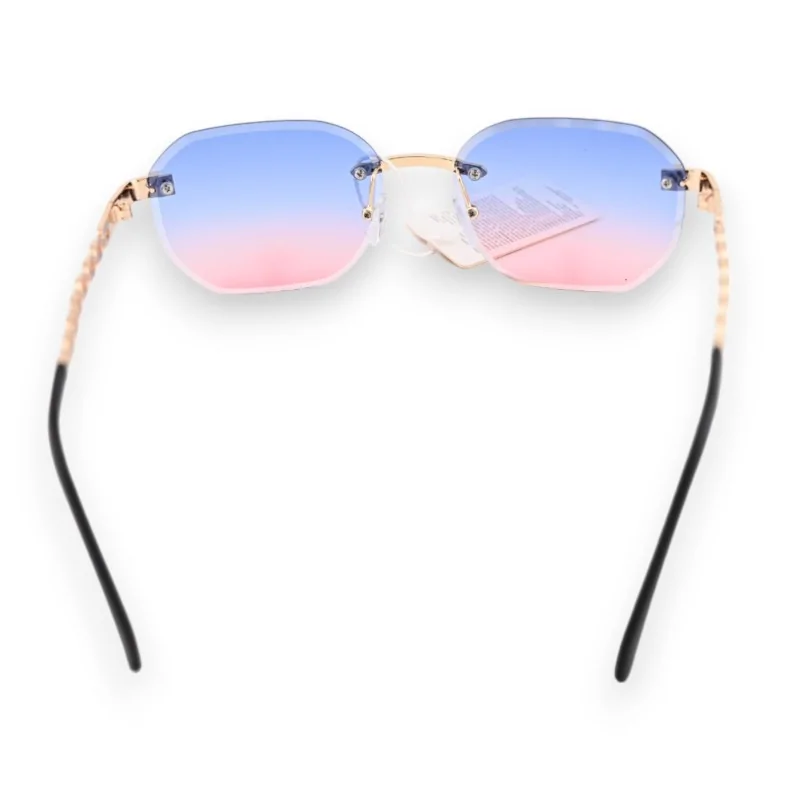



Each temple on these oval sunglasses is a length of gold-tone metal, punched into a run of small oval links and finished with a black tip.
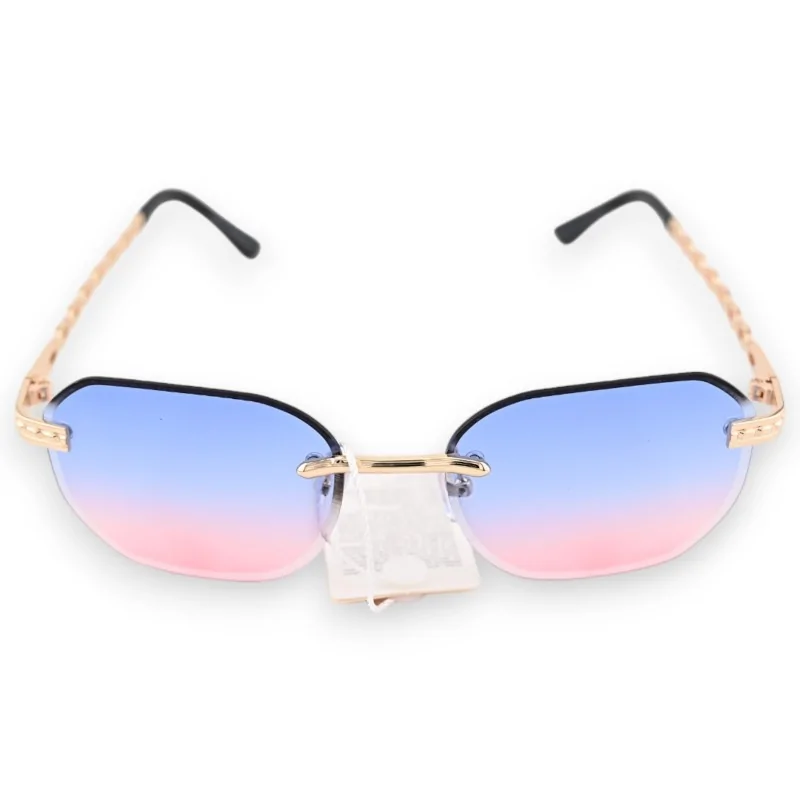
The lenses carry no rim at all: they are drilled and bolted on, so the fade from blue to pink runs unbroken to the bevelled edge.
Each temple is a flat strip of gold-tone metal, pierced along its length so that a row of small oval links stands out against the light. Where the arm meets the lens it widens into an engraved plate, the only solid section of the temple. The last stretch switches to glossy black, the part that sits behind the ear and breaks up the gold. Seen from the side, the effect is closer to a bracelet than to a plain frame arm.
There is no rim: each lens is drilled and bolted straight onto a flat gold-tone bridge, with two clear pads resting on the nose behind it. The outline you see is the cut of the glass itself, an oval with shallow facets and a bevelled edge that catches the light at an angle. If you would rather weigh that construction against a conventional build, the other lens tints in the same range sit side by side.
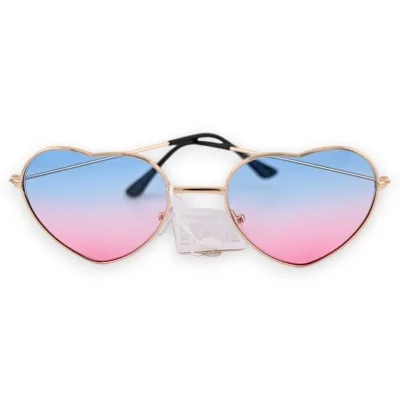
The colour starts deep blue at brow level, thins out across the middle of the lens and settles into a dusty pink at the bottom. No hard line separates the two: from the front the change reads as one continuous wash, and only the facets interrupt it. Tilt your head and the pink half takes over, which is why the glasses look warmer in a photograph taken from below.
Pale summer clothes take the gold best: unbleached linen, faded denim, a plain white shirt. The blue at the top of the lens answers a navy stripe without having to match it exactly. With hair pulled back the chain on the temple stays in view, so the glasses do the work of an earring. They travel well too, from a morning market to the water's edge, and they sit happily beside our scarves, brooches and hair pieces when an outfit is built one piece at a time.
Data sheet