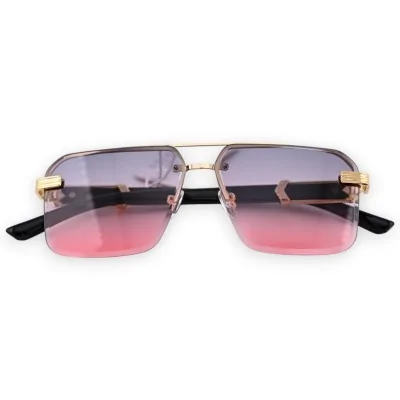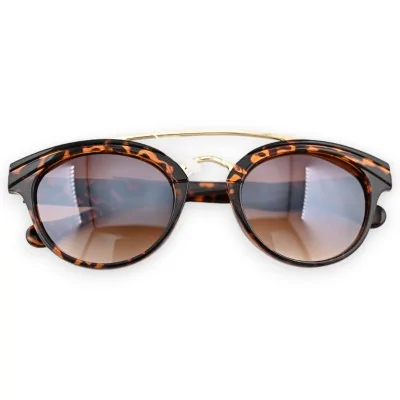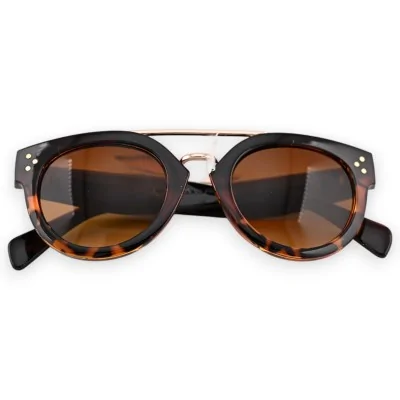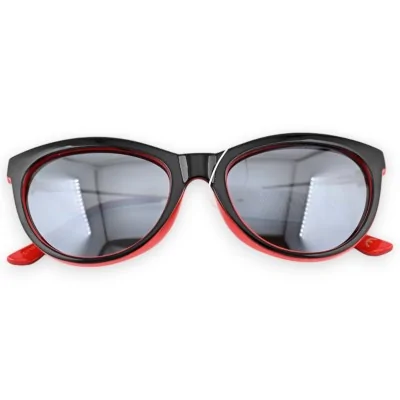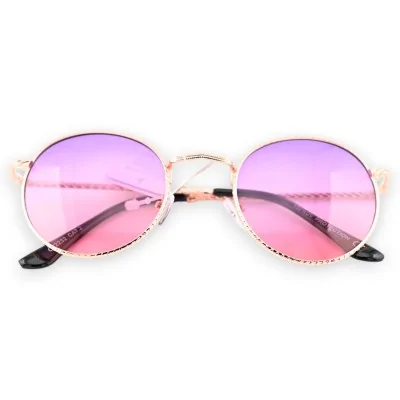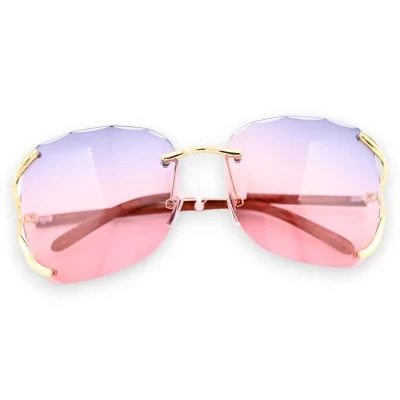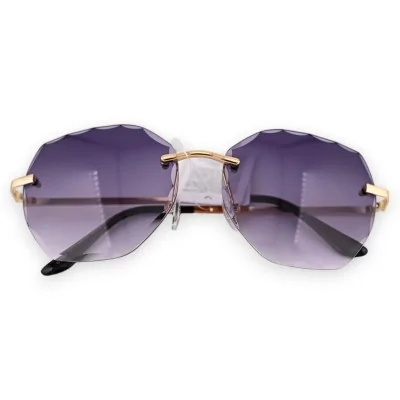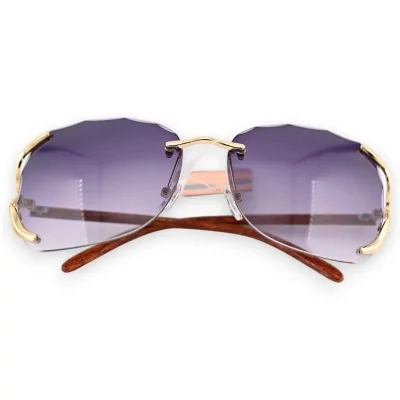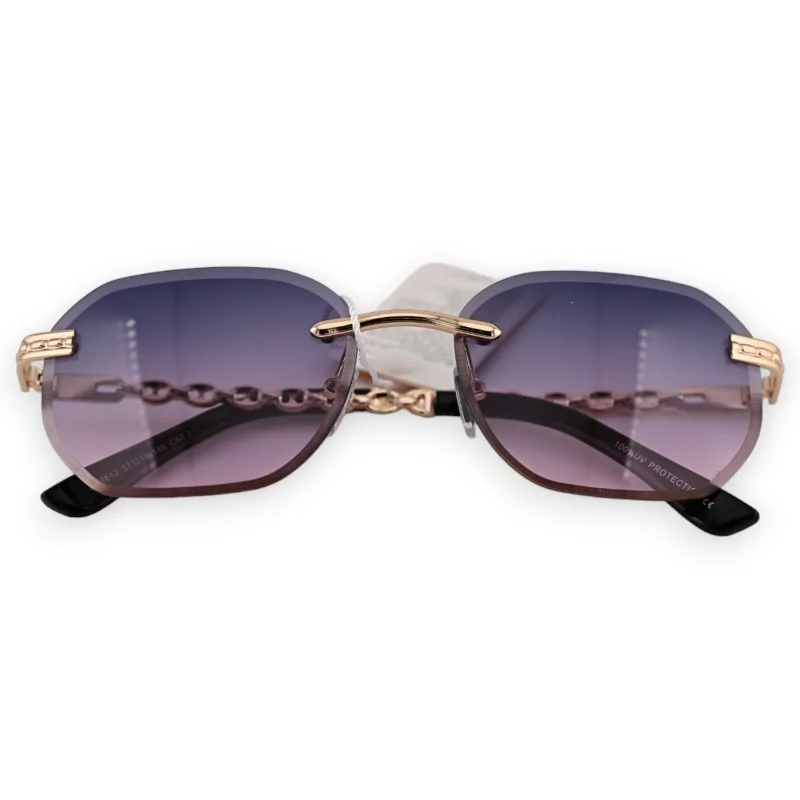
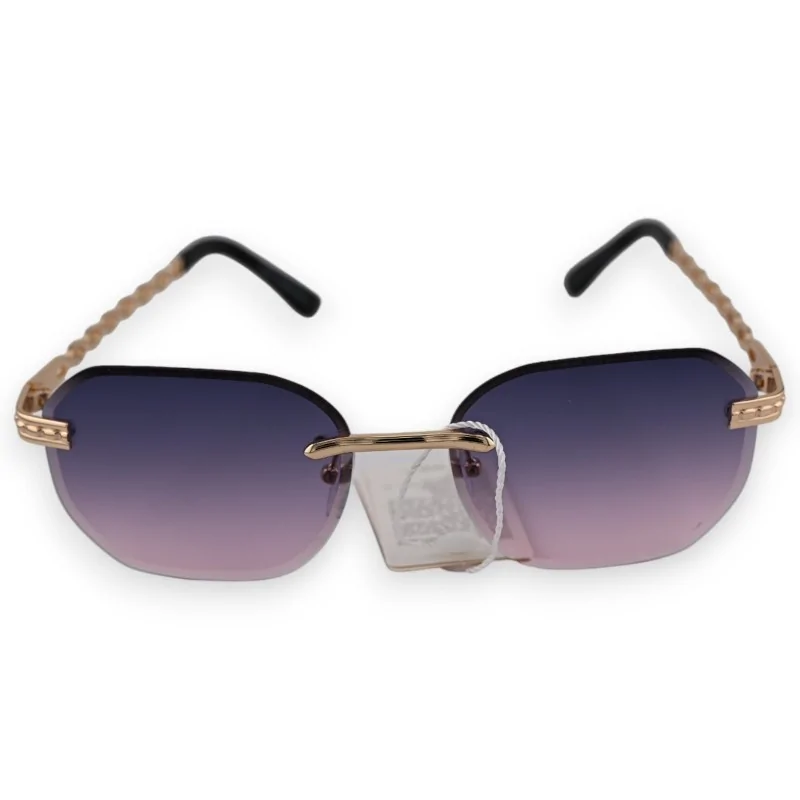



From the front, there is almost nothing but lens: two octagonal panes with softened corners, going from deep violet at the top to a pale pink along the bottom edge. The build is rimless, so no outline cuts across that colour.
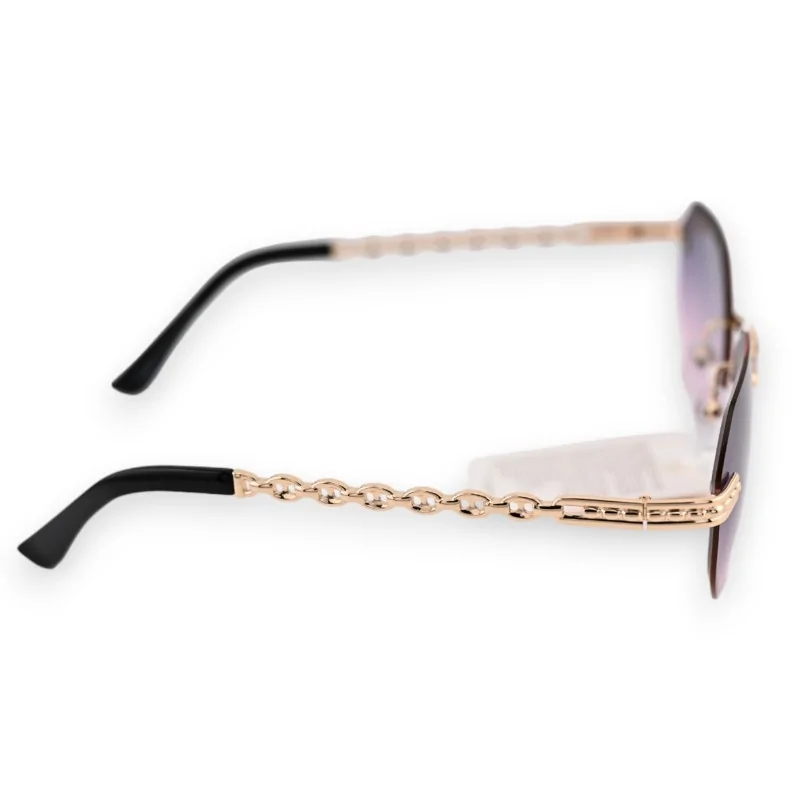
Gold turns up only in three places: the flat bridge, the two hinge clasps and the chain-link temples that run back towards the ears. The very tips are black.
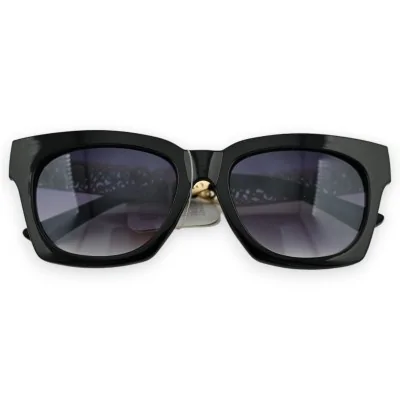
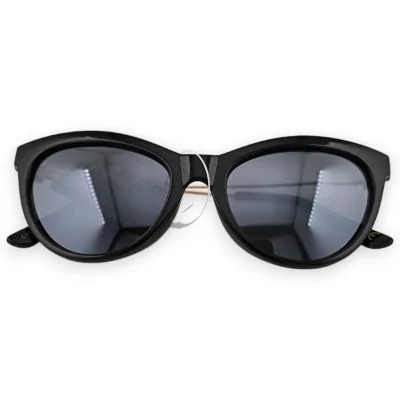
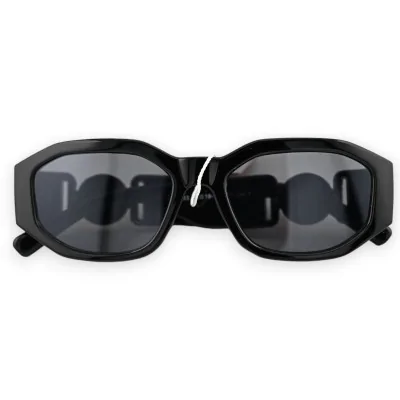
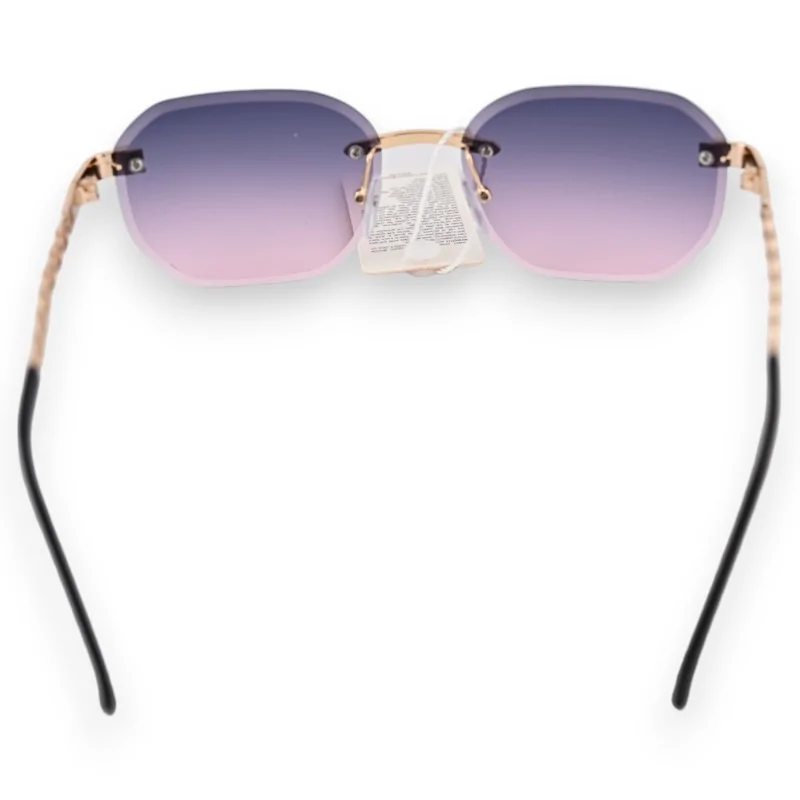
Four photographs cover this pair, and each one answers a different question. Folded on a table it reads as colour; opened up it reads as metalwork; turned sideways it reads as a chain. Taken together they explain a frame that has no rim at all, and so has to hold its lenses another way.
The table below keeps to what is visible in the photographs, nothing else.
| Front, arms folded | The full width of both lenses and the violet-to-pink shading, with the chain lying across them. |
|---|---|
| Front, arms open | The flat gold bridge, ruled with fine lines, and the two clasps that grip the lens at each hinge. |
| Side | One temple end to end: open gold links, then a long black tip. |
| Back | The screws at the hinges and the plain reverse of each lens, with no frame behind it. |
Because the shading runs top to bottom rather than side to side, the strongest colour sits closest to the brow and the lightest part falls over the cheek. That keeps the violet away from whatever you are wearing, and it is why the pair behaves well against white, stone or denim. Put it with a busy print and the balance tips the other way: something has to give way, and it is usually easier to quieten the outfit. If the shading is the part that appeals, other gradient lenses on the same shelf take it in different directions.
Data sheet