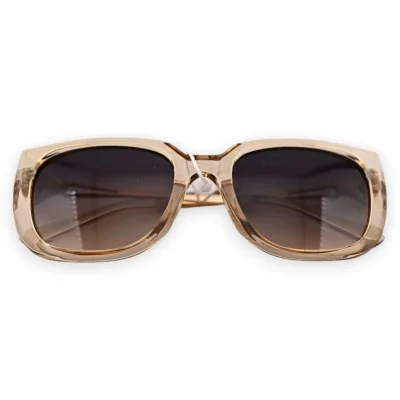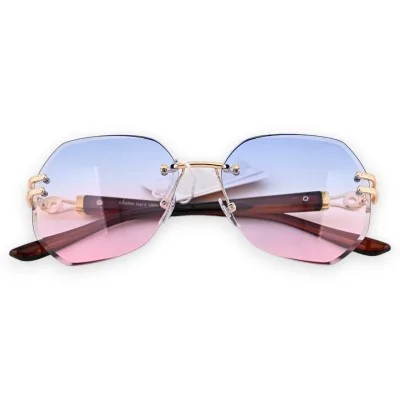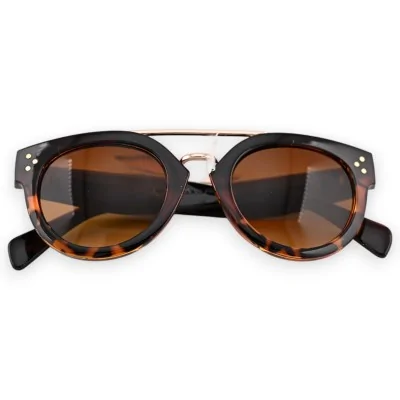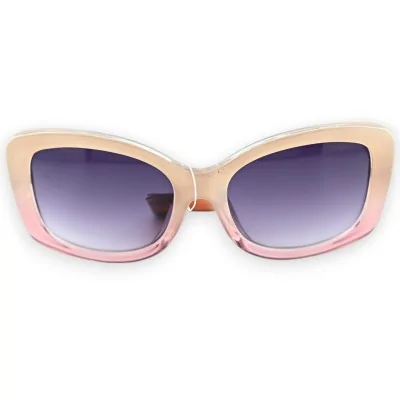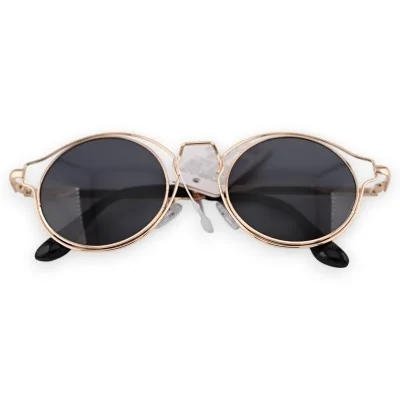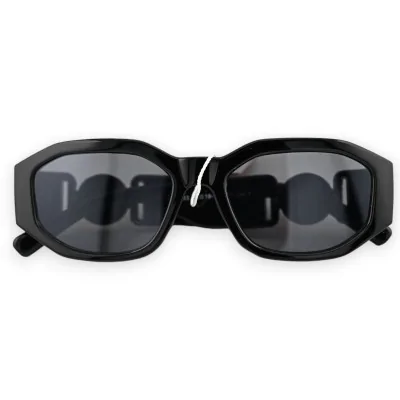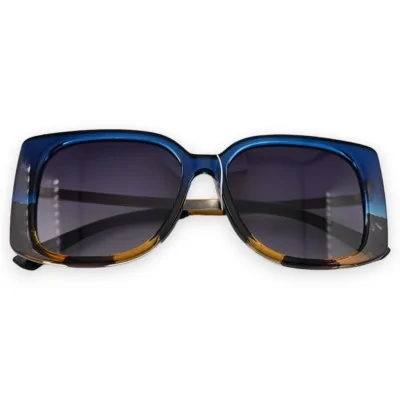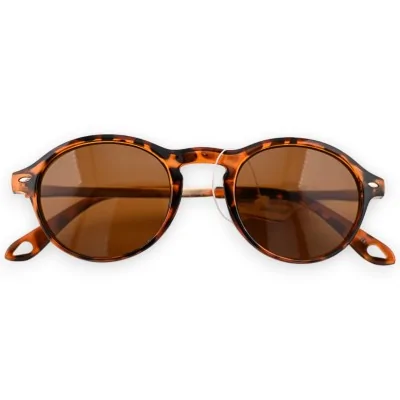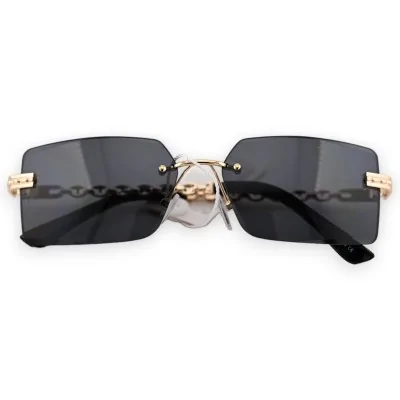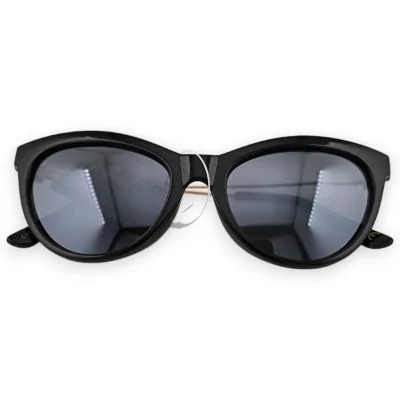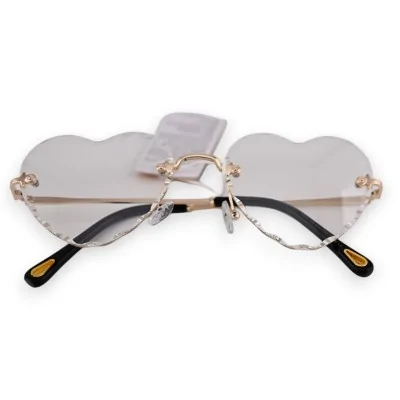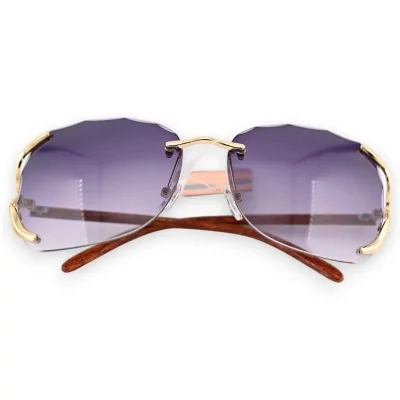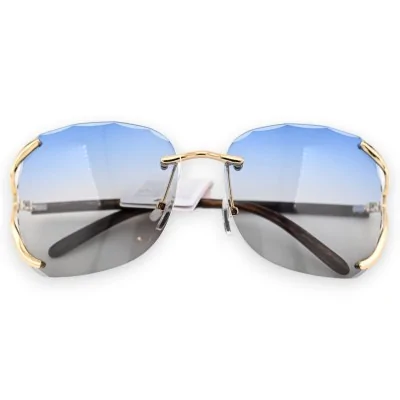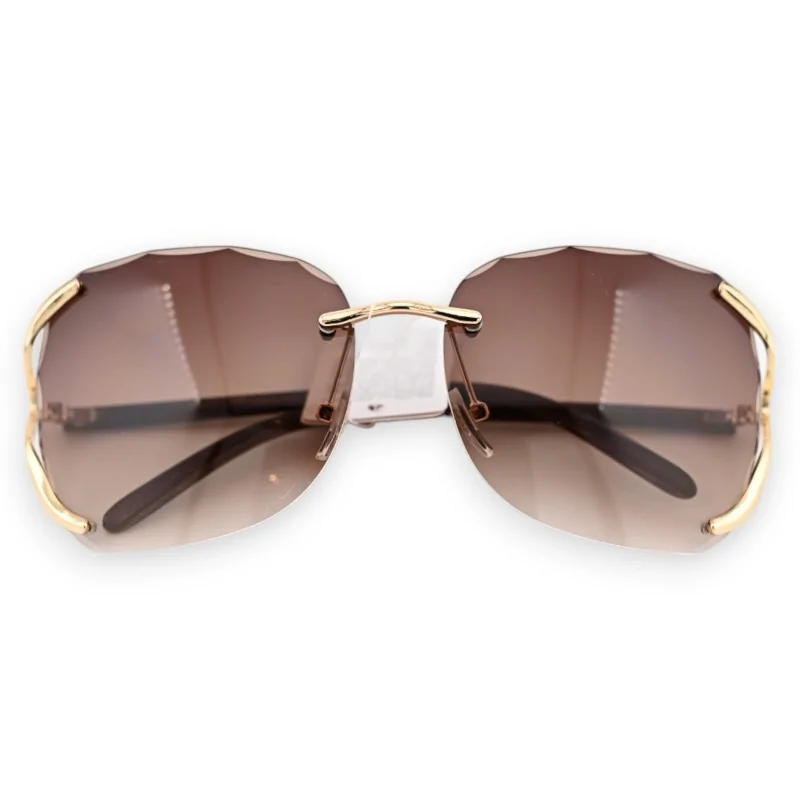
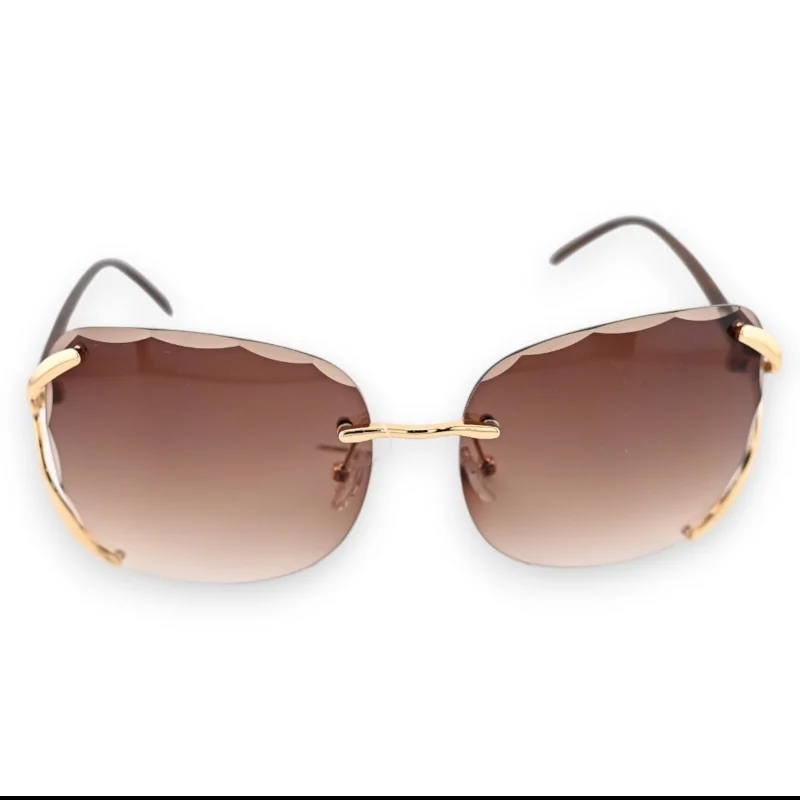
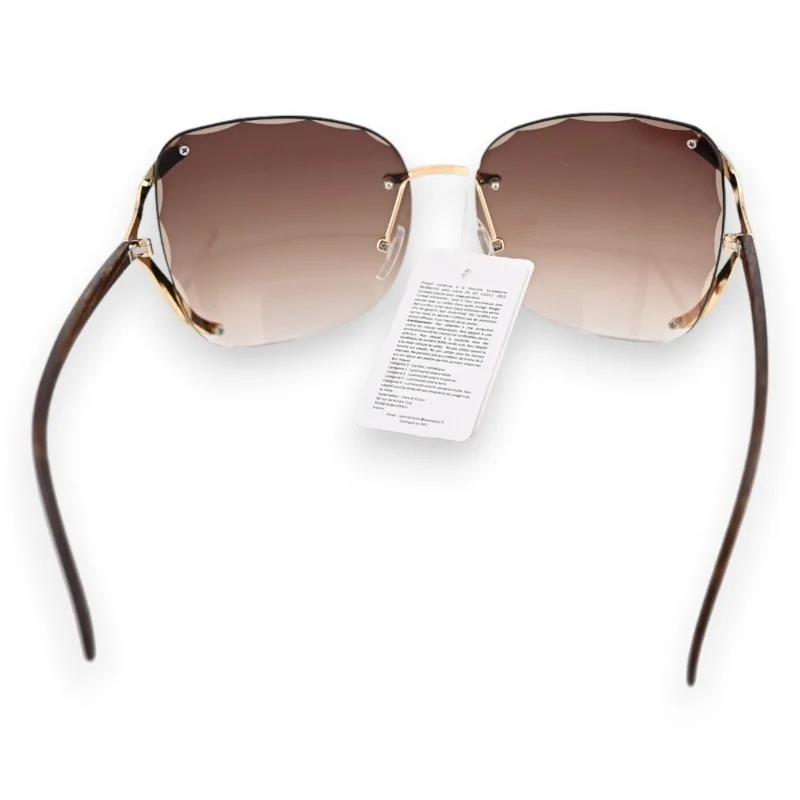
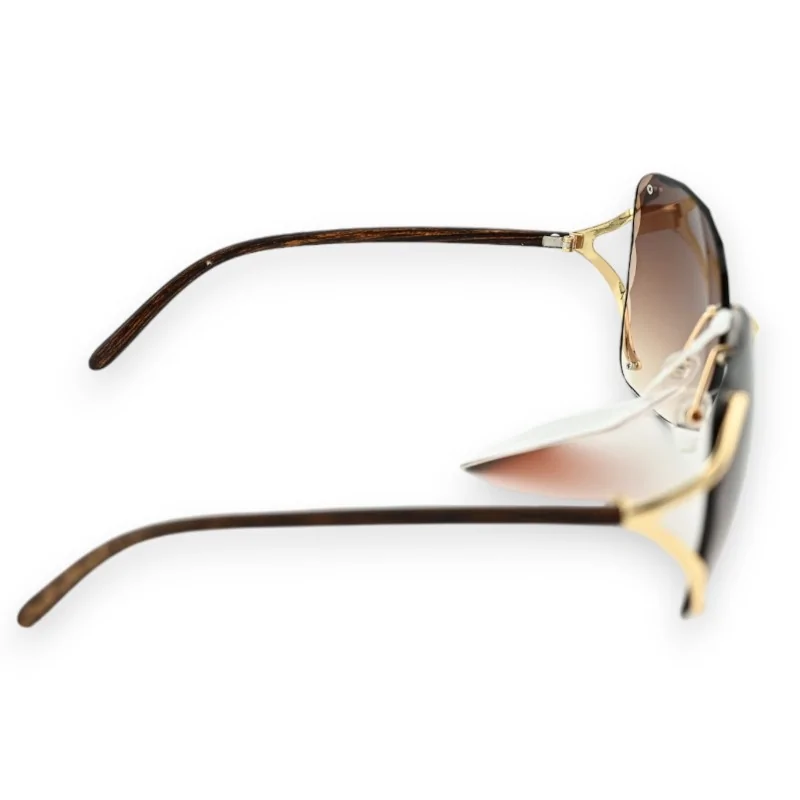



The widest point of this pair is not the hinge but the lens. Each one extends outwards past the arm, so the front reaches further than the temples suggest. The tint runs the other way: brown across the brow, fading to almost nothing at the base, and nothing frames it in.
Hold the pair side-on and the outline is easy to read. The arm runs straight back from the hinge while the lens continues outwards beyond that point. That overhang is what gives the front its width, and it is why the pair reaches the outer corner of the eye without a broad frame doing the work. For a sense of where this shape sits among the others, browse the full sunglasses line-up.
Without a rim gripping the edge, the lens is fixed at its corners instead. Four details make up the whole front:
A narrow front stops short at the temple and leaves a gap there. Here the lens reaches far enough to close it on its own, which is the practical side of an oversized shape. The cost is height: the lower edge sits well down the cheek, so the pair asks for a face that can take that scale rather than one it will swamp. It is worth judging that in a mirror at arm's length rather than up close, because scale reads differently at a distance.
Put them on and look at where the outer corner of the lens falls. On a narrow face it will sit past the temple; on a wider one it will line up with it. Neither is wrong, but it decides whether the pair reads as oversized or simply large. A front this size also leaves little room for a wide headband at the same time, so the other pieces usually stay quieter; the accessories aisle as a whole shows what still works alongside it.
Data sheet