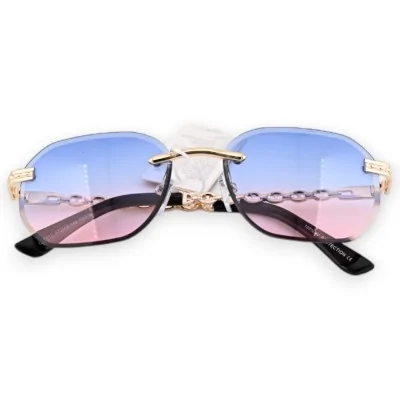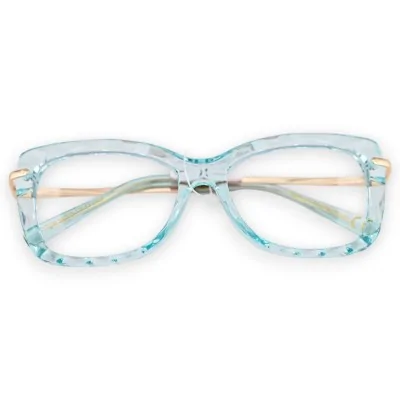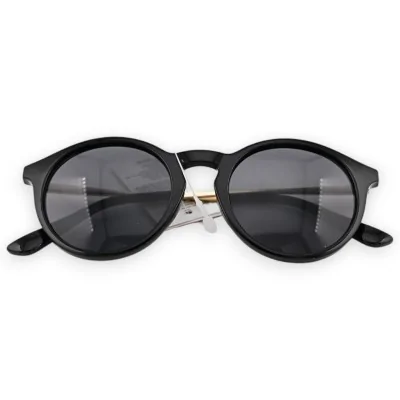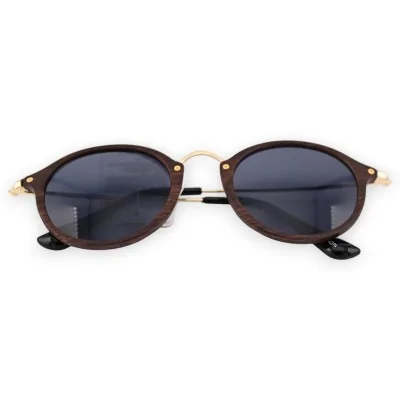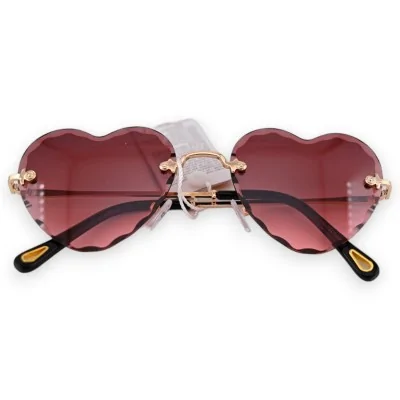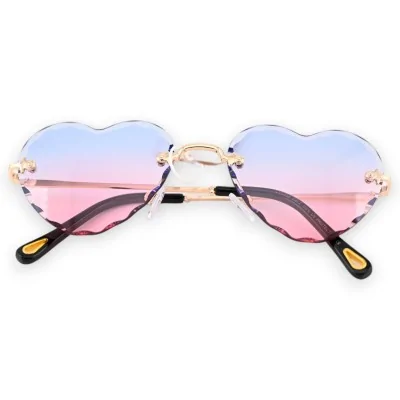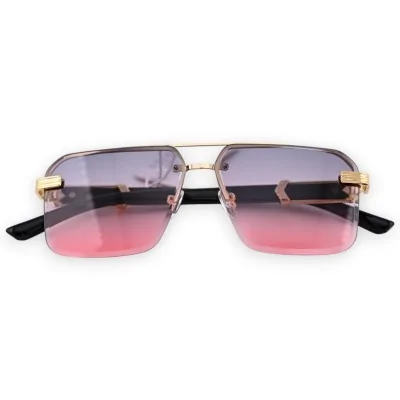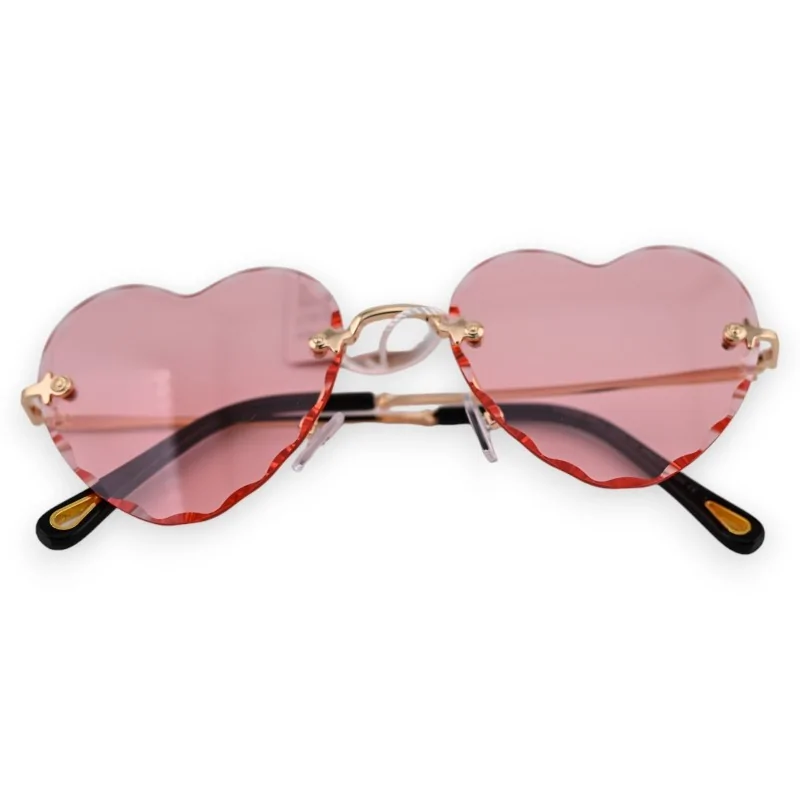
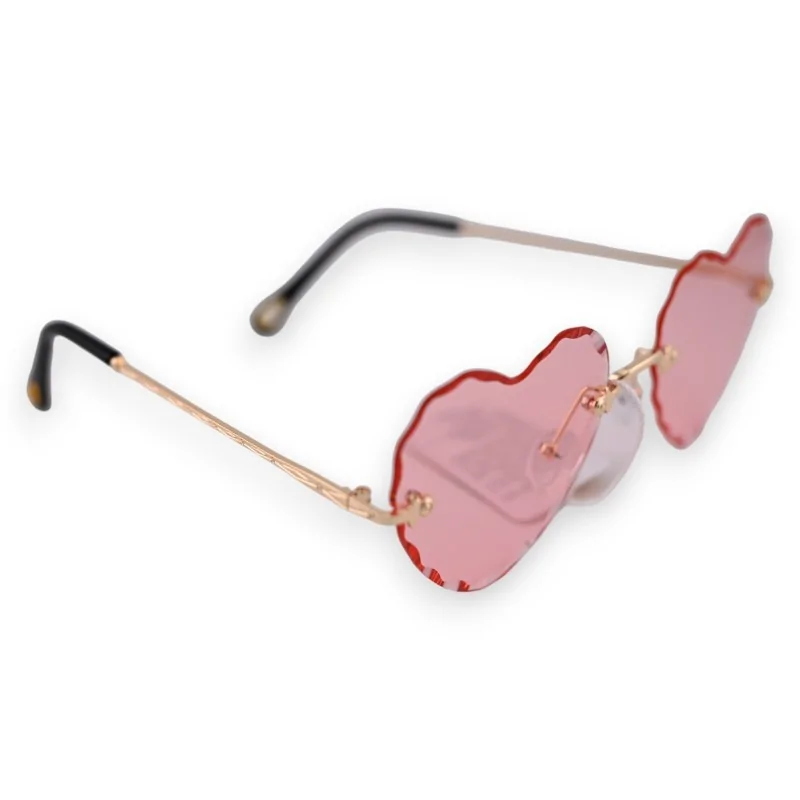
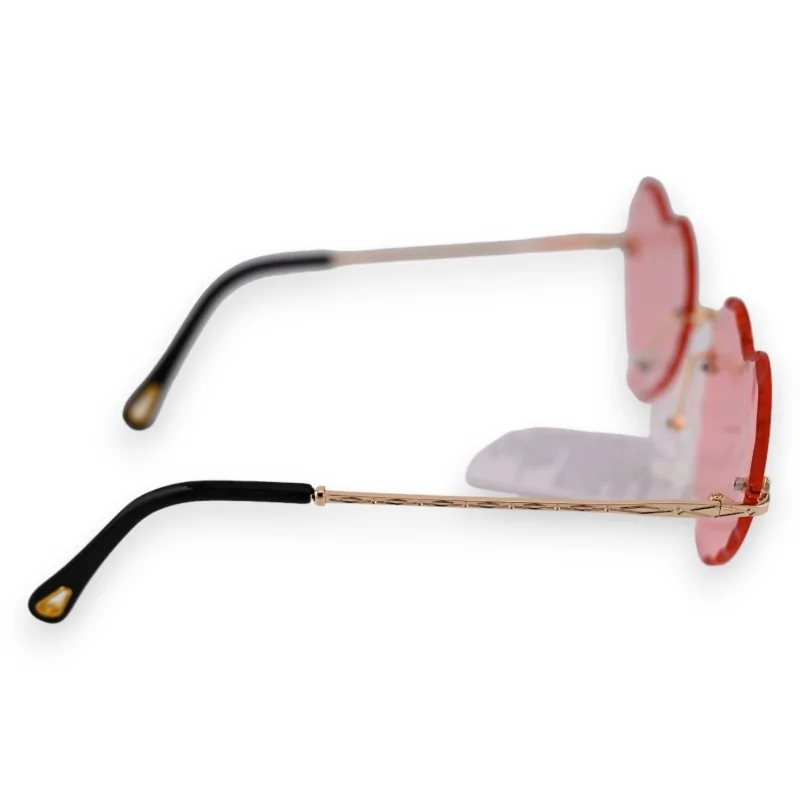
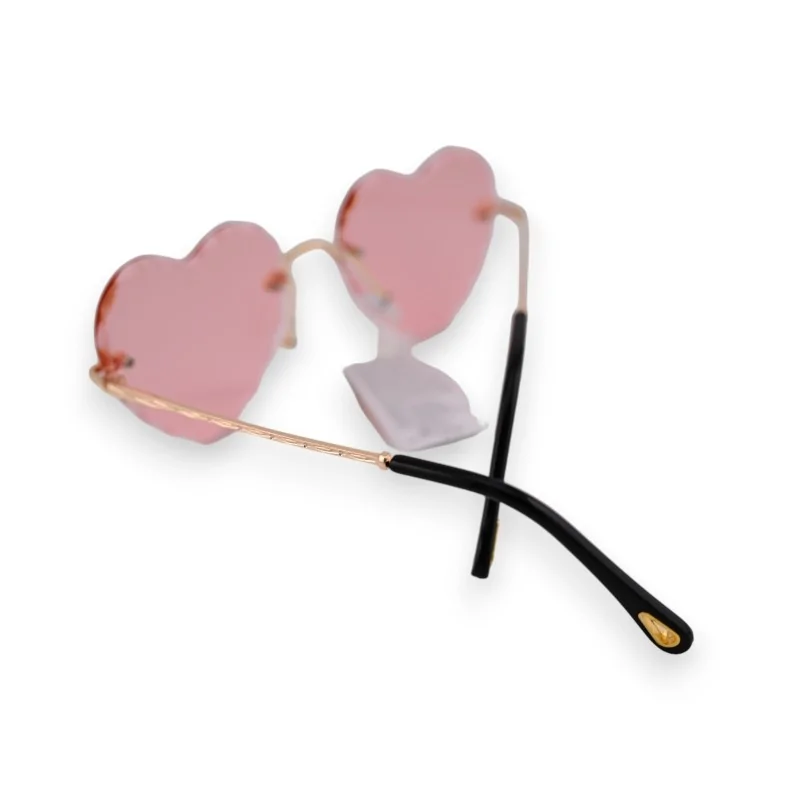



A rimless pair: the heart is cut straight into the pink glass, and its faceted edge does the job a frame would usually do. Slim gold arms, engraved over their front half, finish in black tips with a gold droplet set in.
Hold them up against the window and the two lenses stop being a solid block of colour. The tint is light enough to see straight through, so these read as a tinted pair rather than a dark one, and the heart is cut into the glass itself with no rim drawn around it. That makes them an obvious choice for a festival or a summer weekend, and a difficult one for anybody who wants eyewear nobody notices.
The colour is not printed on the surface; it runs through the thickness of the lens. Where the glass is thickest, along the bevelled and faceted outer edge, you are looking through more of that tint at once, so the border turns warm and almost orange while the centre stays pale pink. The same cut is what catches the light from across a room: each small facet picks up a different angle.
Everything decorative on this pair happens after the hinge. Each arm is slim and gold in colour, and its front half carries a chevron pattern cut into the metal, close enough to the temple to be seen by anyone standing beside you, and not only in photographs. Follow it back and the arm ends in a black tip with a small gold droplet set into it, sitting roughly where the arm tucks behind the ear. Small gold screws do the structural work, at the hinges and either side of the bridge, with two clear pads resting against the nose.
| Lens shape | Heart |
|---|---|
| Lens tint | Translucent pink, deeper along the edge |
| Construction | Rimless, lenses drilled and screwed |
| Arms | Gold-coloured, chevron engraving on the front half |
| Tips | Black, with an inset gold droplet |
Pushed up into the hair, the outline still reads as a heart, so it keeps working as an accessory even when it is not in use. Worn, it holds the top half of the face on its own, which is an argument for keeping the rest plain: a white vest, a denim jacket, nothing that needs explaining. The tint is the part worth a second thought. Pink glass is warm rather than neutral, so it settles easily beside oatmeal, tan and washed-out blue, and competes with a strong coral or orange. If you want to see how other outlines handle the same problem, the other heart-cut fronts on the shelf sit on one page.
With no rim, the lens is held at a few drilled points only, so those are the parts worth a glance now and then. Wipe the lenses with a soft cloth rather than a shirt hem, and keep the pressure away from the drilled holes. If a screw works loose you will feel it before you see it: the lens shifts slightly when you fold the arms, and a gentle turn with a small screwdriver settles it again. Store them folded with the lenses facing up, not pressed face down on a hard surface, because it is the cut edge that chips, not the face.
Data sheet