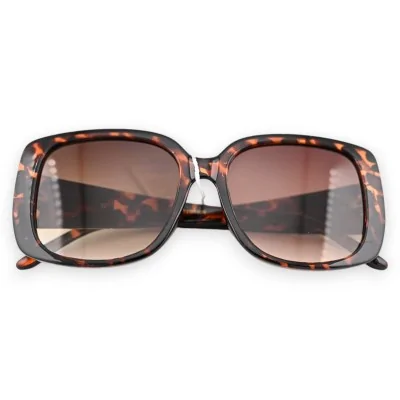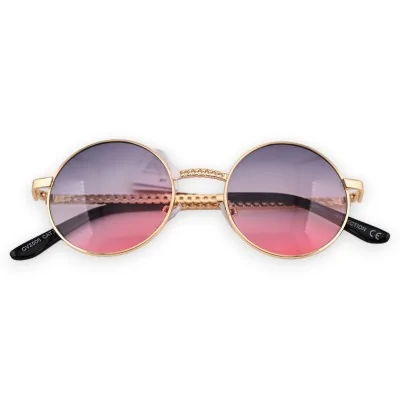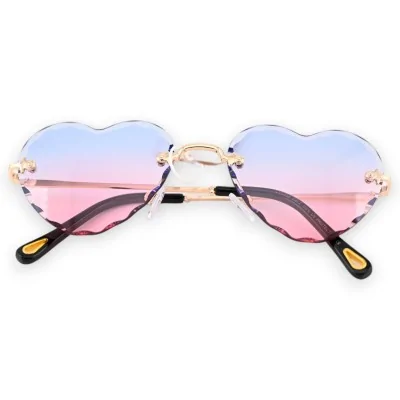
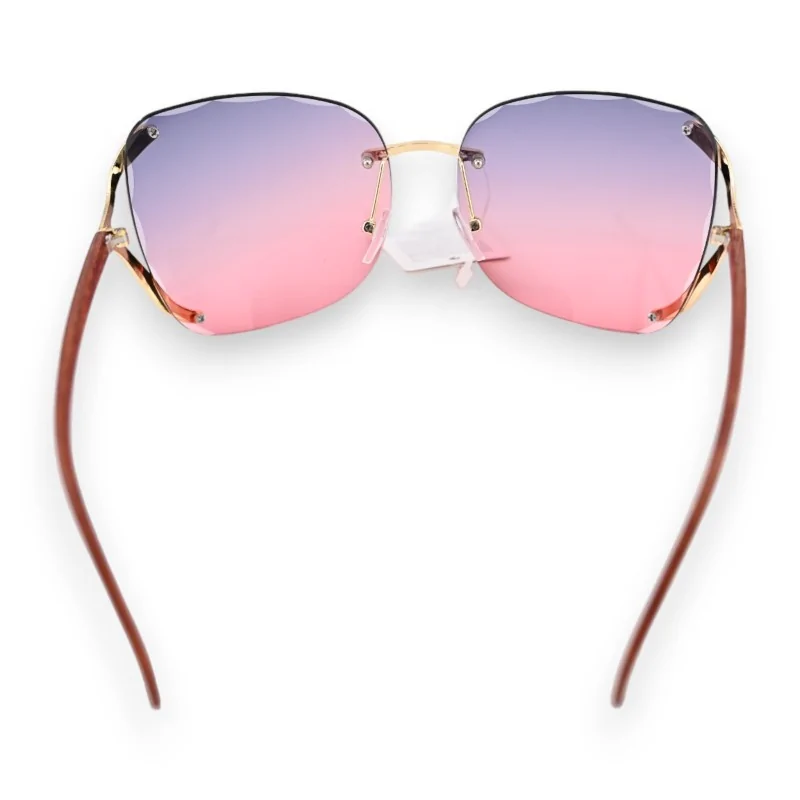



Nothing on the inside of this pair is gold. Every metal part sits on the front, so what the wearer sees is two long brown arms, a pair of pink pads and the back of the glass.
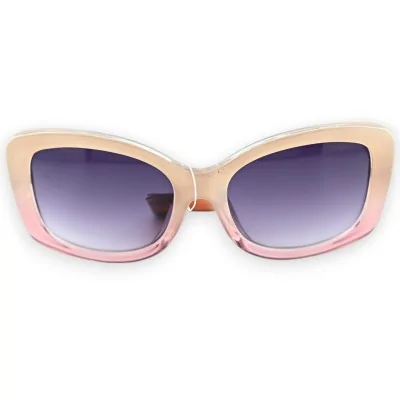
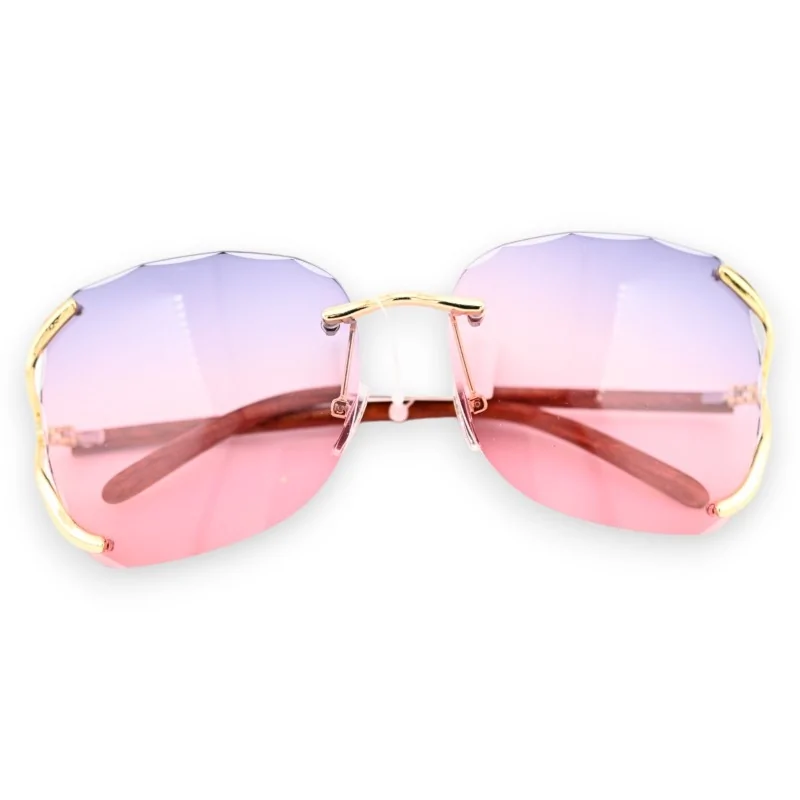
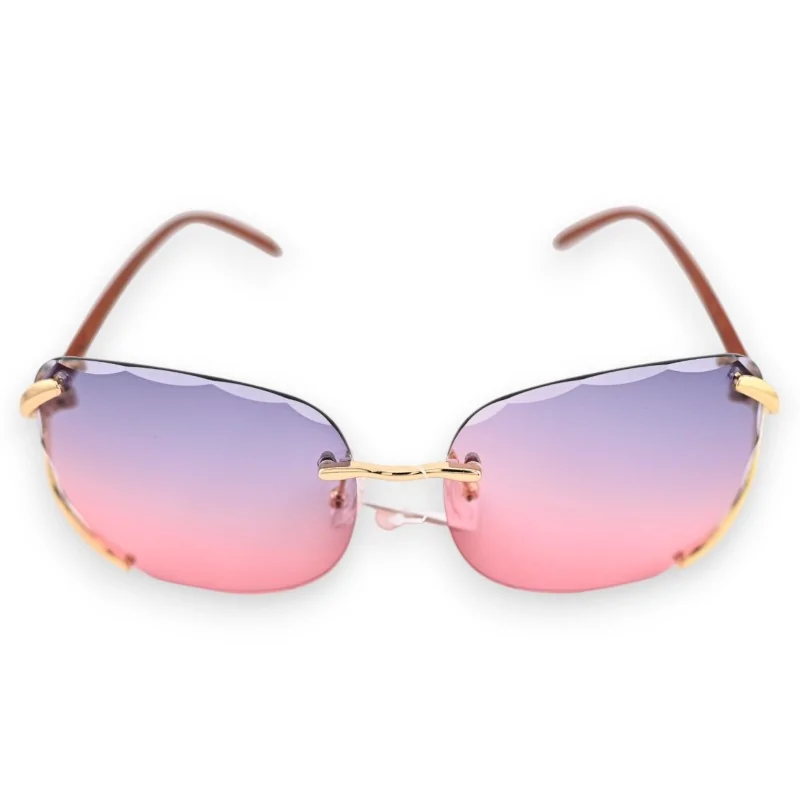
From the outside it reads differently: a bar across the bridge, a piece at each outer corner, and the lilac-to-pink gradient behind all of it.
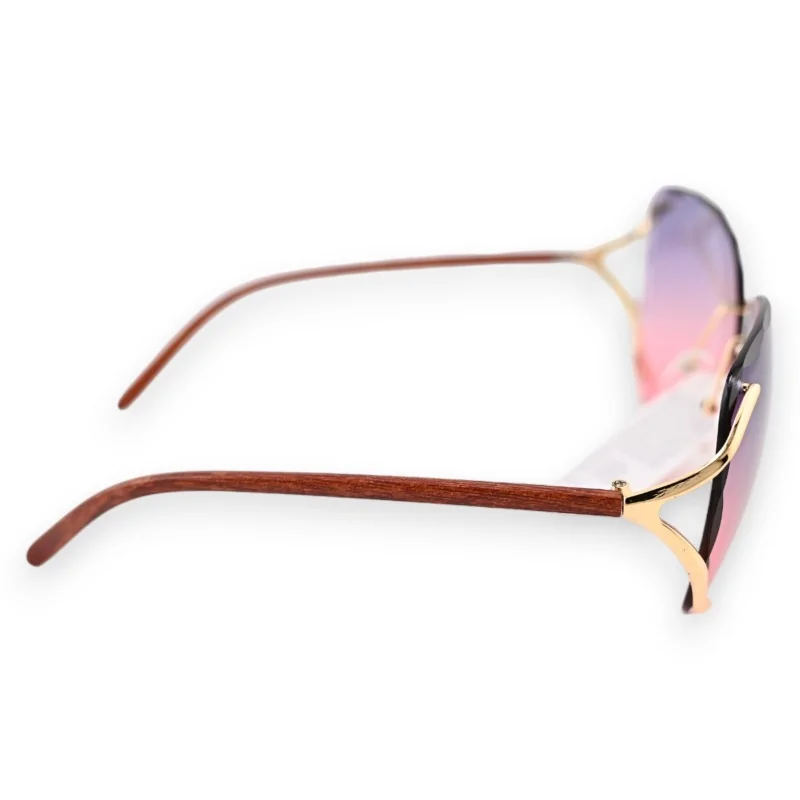
Pick the pair up and look at it from behind, the way you see it when you are wearing it. There is no gold in that view at all. The bridge bar, the corner pieces and the fittings that grip each lens are all set on the outward face, so the metal is a front-only feature. What is left on the inside is plain enough: two arms carrying a printed grain, the pads at the nose, and the reverse of the lenses. To see how other fronts handle the same split, look through the other tinted fronts in the range.
Sunglasses spend half their life on top of the head rather than on the nose, and that is the moment the inside becomes the outside. Most frames look much the same either way round. This one does not: pushed up, brown takes over and the gold is hidden against the hair. It is worth knowing before you match the pair to anything else, because the colour other people see depends on where the glasses happen to be.
A frame with two faces is easier to dress than it sounds, as long as you follow the brown rather than the gold, because the brown is the part that shows in both positions. Warm tones work all day; cool ones only while the pair is on the nose. That makes brown the safer thing to echo, and it is easiest to do somewhere the glasses will actually land. Have a look at the scrunchies that end up in the same spot.
Data sheet