A clear guide to carrying medication in hand luggage: UK rules, the 100 ml exemption, doctor's letters and controlled...


A clear guide to carrying medication in hand luggage: UK rules, the 100 ml exemption, doctor's letters and controlled...

UK rules, clinical age guidance, choosing a safe piercer, first studs and the full healing timeline for a child's ear...

Sizing in inches and centimetres, teeth spacing, spring strain and materials: how to pick a claw clip that actually...

What pin-up style is, how it differs from rockabilly, and how to build the silhouette from clothes you already own.
UK airports no longer share one liquids rule. Where the 2 litre allowance applies, where 100ml still stands, and how...





The magnetic brooch arrived in British wardrobes through two distinct doors. The first : the rise of cashmere, silk scarves, and fine knitwear that classic pins simply destroy. The second, more practical : the explicit demand from women dealing with arthritis or reduced finger mobility, for whom unscrewing a pin clasp is a daily struggle. The Able Label and Stitch Magnetic Jewellery built their British clientele on this second pillar, before the rest of the market followed. This article walks through both angles : how the magnet works, why arthritis sufferers were the early adopters, the six placements that work, and how to spot a quality piece on the British market.
The single biggest reason magnetic brooches reached a wider audience in the United Kingdom is accessibility. A study in Rheumatology Advances in Practice estimated that 10 million people in the UK live with daily hand mobility issues, mostly from osteoarthritis or rheumatoid arthritis. For them, the pin-and-clasp closure of a traditional brooch is not a minor inconvenience : it is a daily failure point.
The magnetic version solves this in two seconds. Place the piece on the fabric with one hand, slide the metal disc underneath with the other (or with the help of a dressing aid), the two attract and lock automatically. No fine finger work, no clasp to close, no risk of dropping pin parts. Stitch Magnetic Jewellery markets this directly to occupational therapists, and many NHS-registered dressing aid catalogues now list magnetic clasps among their recommended adaptive jewellery.
The brooch carries a small neodymium disc on its back (5 to 15 grams typically). A matching steel plate is supplied separately. The plate sits inside the garment, the brooch sits on top, the two attract through the fabric. Neodymium is the strongest permanent magnet available outside laboratory conditions, which is why even a small disc holds up to 4 mm of cloth without slipping.
The grip falls off above 4 mm, which is why a standard model will not work on a thick wool overcoat or denim. For those, manufacturers like Miss Milly UK sell reinforced double-magnet versions specifically labelled « heavy fabric ». Verify the maximum fabric thickness before ordering for a winter coat.

Once the mechanism is understood, the question becomes : where do you actually wear it ? Six placements cover almost every British wardrobe situation.
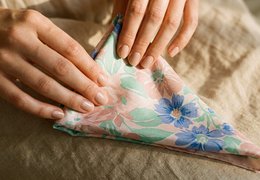
The first British use case. A pinhole in a Liberty silk scarf or in a vintage Jacqmar piece is irreparable. The magnetic brooch sits on the knot or at the centre of a draped square without touching the weave. Our companion piece on how to tie a square scarf in 8 styles covers the knots where the brooch holds best.
The wedding-guest fix : a dress neckline that plunges a little too far for the ceremony or the church. The magnetic brooch closes the gap without pulling on the silk or the chiffon, and reads as a deliberate styling detail rather than a safety measure.
A linen blazer or a tropical wool jacket warps under a classic pin shank. The magnet lets the brooch sit cleanly on the left lapel at chest pocket height. Removable in two seconds for dry cleaning.
The cashmere scarf is the worst victim of the classic pin : long thin yarns part irreversibly, and the hole grows with every wear. The magnetic brooch keeps the weave intact. British winter staple use case.
A way to personalise a plain leather tote (Mulberry, Cambridge Satchel, any neutral handle). The plate slides inside the lining of the strap, the brooch clips on top. The colour becomes a signature without any leather damage.
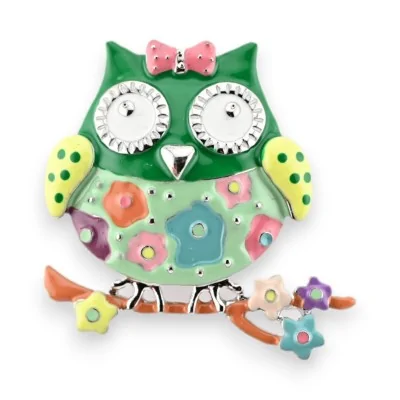
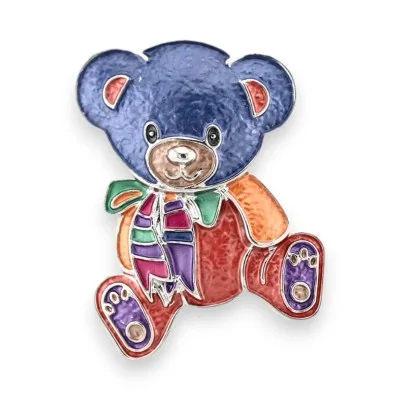
Fine knitwear distorts under a pin, and the mark stays visible after washing. The brooch sits on the placket at heart height and lifts off without trace. Format : 3 to 5 cm, an animal or floral motif to wake up a plain cardigan.

The British market is split between three quality tiers : Amazon listings (variable, often weak ferrite magnets sold as neodymium), specialist accessibility brands (The Able Label, Stitch Magnetic Jewellery, occupational-therapy-led offering), and editorial fashion brands (Miss Milly UK, The Scarf Seller). Three checks regardless of tier :
Weight — A genuine neodymium disc weighs 5 to 15 grams. Ultra-light listings under 3 grams are weak ferrite and will slip on any garment heavier than silk. Plate size — should match the brooch face area. A 6 cm brooch with a 1.5 cm plate will tilt at any movement. Felt cover — the plate should ship with a felt or microsuede backing, otherwise it will leave pressure marks on cashmere over repeated use.
The British Heart Foundation publishes clear guidance : permanent magnets should be kept at least 15 cm (6 inches) from a pacemaker or implanted cardioverter defibrillator. A magnetic brooch worn on a lapel or scarf is generally outside this radius for most adults, but a brooch worn close to the chest pocket of a fine shirt can be borderline. If you wear an implanted cardiac device, place the brooch on a scarf, sleeve, or bag handle rather than directly over the chest, and check with your cardiology team if uncertain.
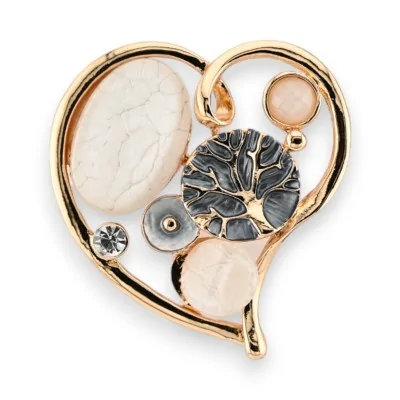
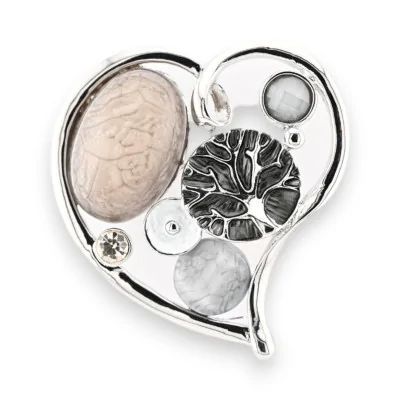
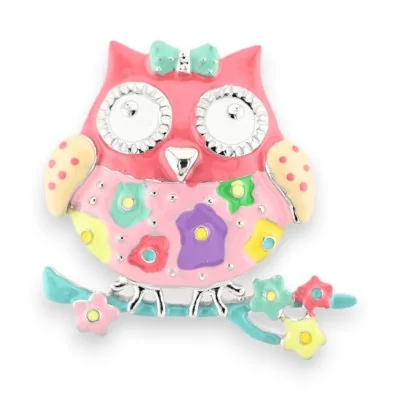
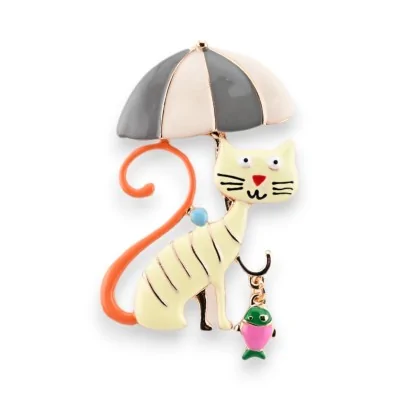
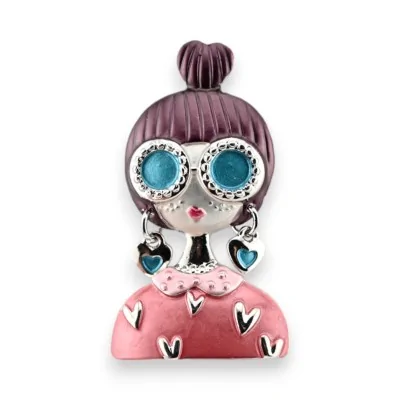
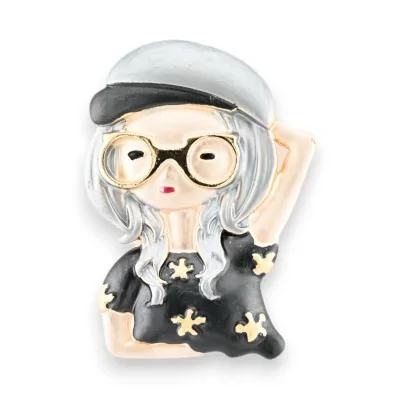
At Mode Tendance we curate a magnetic brooch selection built around animal motifs (cats, bees, owls), floral and symbolic pieces (tree of life, heart), in 3 to 6 cm formats suited to fine fabrics. Our magnetic brooch collection includes over one hundred designs sorted by motif, and our brooch range offers classic pin models for sturdier fabrics.
They work reliably on fabrics up to 4 mm thick when fitted with a genuine neodymium disc. The marketing gimmick exists at the cheap end where weak ferrite magnets are sold under the same name : these slip after a few movements. Check disc weight (5 to 15 g) and plate size before ordering.
A decorative jewellery piece held in place by a magnet on the back and a small steel plate placed inside the garment. The two attract through the fabric. No pin, no hole, no damage to silk, cashmere or fine linen.
This is exactly why the accessibility market adopted them first. Place the brooch face on the fabric where you want it. Slip the plate inside the garment, sliding it up from the hem until it meets the magnet through the fabric : the snap is unmistakable. A dressing aid or even the back of a comb can help guide the plate if hand mobility is limited.
The British Heart Foundation recommends keeping any permanent magnet at least 15 cm from a pacemaker or ICD. Worn on a lapel at chest height, the distance can be marginal. Safer placements for pacemaker wearers : scarf, shawl, handbag handle, or sleeve cuff. Ask your cardiology team in case of doubt.
For accessibility-led pieces, The Able Label and Stitch Magnetic Jewellery are the references most often recommended by occupational therapists. For editorial fashion pieces, Miss Milly UK and The Scarf Seller offer reliable neodymium clasps with proper plates. Avoid generic Amazon listings without explicit magnet specifications.
 Hoop Earring Trends 2026: 8 Looks to Wear Now
 Autumn/Winter 2026 jewellery trends: 7 pieces to adopt
 Bee in the House: Meaning, Symbolism and Superstition
 Labradorite vs moonstone: how to tell them apart
 What it means when a butterfly comes into your house
 How to cleanse and charge crystals: the complete guide
 Which side to wear a brooch: the rule explained
 Bee symbolism: meaning, the Manchester worker bee and spiritual sense