A clear guide to carrying medication in hand luggage: UK rules, the 100 ml exemption, doctor's letters and controlled...


A clear guide to carrying medication in hand luggage: UK rules, the 100 ml exemption, doctor's letters and controlled...

UK rules, clinical age guidance, choosing a safe piercer, first studs and the full healing timeline for a child's ear...

Sizing in inches and centimetres, teeth spacing, spring strain and materials: how to pick a claw clip that actually...

What pin-up style is, how it differs from rockabilly, and how to build the silhouette from clothes you already own.

UK airports no longer share one liquids rule. Where the 2 litre allowance applies, where 100ml still stands, and how...






Most winter coat advice starts with the coat itself. It should start with what goes under it, because that is what decides whether you look sharp or padded. Each coat type has its own volume, its own collar and its own tolerance for knitwear, and the layers that work under a tailored overcoat will ruin the line of a puffer. This guide takes the four coats British winters actually call for, one by one.
A tailored wool winter coat is cut close through the shoulder and chest, so it takes one mid layer at most: a fine merino knit, a shirt, or a thin polo neck. Add a chunky cable jumper and the coat pulls across the back, the lapels gape and the whole thing reads as a size too small.
The trick is to buy warmth in the fibre, not in the bulk. A fine merino or cashmere layer traps as much air as a thick acrylic one at a fraction of the thickness. Choose a thin high-warmth knit over a chunky jumper and the overcoat keeps the clean shoulder line it was cut for.
A puffer winter coat already carries the volume, so everything under it should be flat. A base layer, a light fleece or a sweatshirt is the ceiling; anything more and the sleeves stop bending. The visible part of the outfit moves to the bottom half: slim trousers, straight jeans, a clean boot.
Length matters more than anyone admits. A cropped puffer over wide trousers works because the eye reads two clear blocks. A long puffer over the same trousers turns the silhouette into a single rectangle. If you own only one, the mid-thigh cut is the one that goes with most outfits.

The mid-thigh puffer is the most versatile cut, because it sits above the widest part of the leg and leaves the trousers visible. A cropped puffer needs a high waist below it; a full-length one needs a slim trouser and a boot with a clean line.
A teddy winter coat is soft, matte and wide, so it needs a hard edge somewhere else in the outfit. Straight denim, a leather boot, a structured bag: one firm element is enough to stop the look sliding into loungewear. Under it, a ribbed knit or a plain jumper is plenty.
Colour does the rest of the work. Teddy fabric is pale by nature and reflects a lot of light, which enlarges whatever it covers. Wearing darker trousers and boots than the coat rebalances the volume immediately, and keeps the fluffy texture as the feature rather than the whole story.
A trench is a rain layer rather than a winter coat, so winter wear means treating it as an outer shell over a real mid layer: a quilted gilet, a fine wool cardigan, or a thin down liner if the coat allows it. Belted rather than buttoned, it keeps a waist and hides the bulk underneath.
The collar is where a winter trench earns its keep. Turned up, with a soft square scarf folded flat inside it, the coat covers the neck as well as a wool one. A trench needs a mid layer to work below ten degrees, and that layer should be flat, not fluffy.

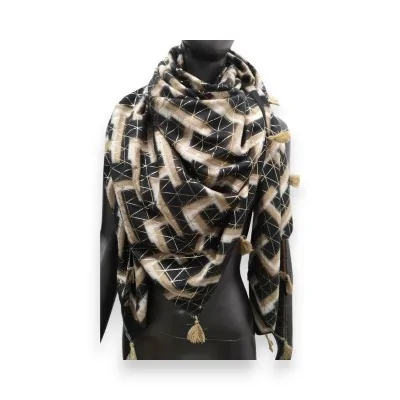
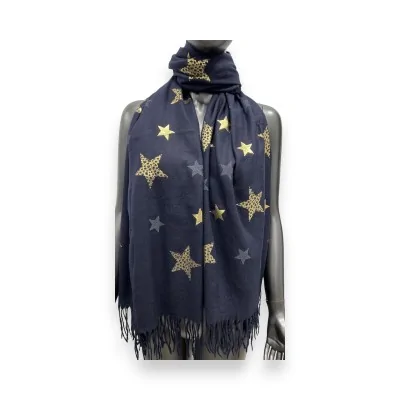
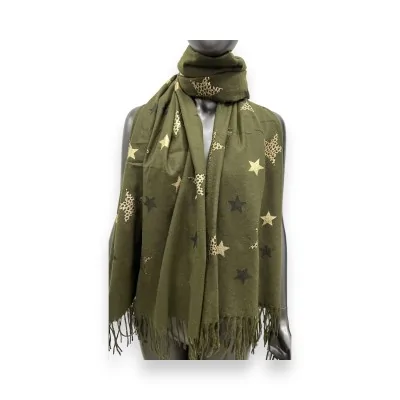
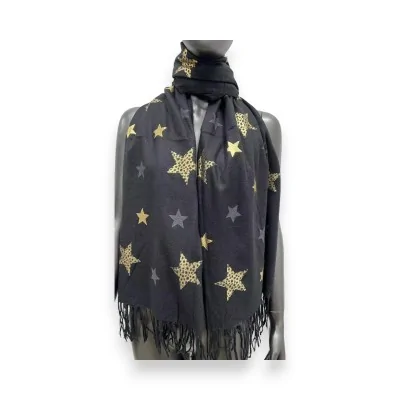
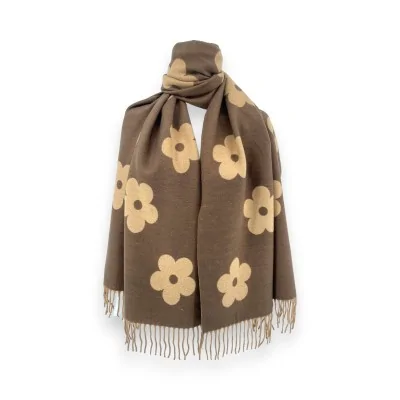
A scarf knotted in a thick ball at the throat shortens the neck and pushes the winter coat collar out of shape. Folded into a triangle and tucked flat under the lapels, the same piece adds a layer of still air at the neck, keeps the collar line and gives the outfit its only pattern.
On a plain coat, the accessory becomes the whole point of interest, which is the moment to use a print. Our four-sided scarves fold several ways, so one piece changes the look of the same coat. If you are choosing a fibre, our comparison of warm wools sets out what merino, cashmere and alpaca actually deliver in the cold, and a knitted headband covers the ears when the collar is already busy.
A wool winter coat keeps its line if it is brushed after wear and hung on a wide, shaped hanger. A thin wire hanger dents the shoulder within weeks, and that dent never fully comes out. Between wears, the coat needs air rather than a zipped garment bag, which traps moisture in the fibre.
For cleaning, read the label: care symbols are standardised under ISO 3758 and tell you whether dry cleaning is required. Air a wool coat overnight instead of cleaning it. Wool sheds odour on its own, and every dry-cleaning cycle wears the fibre down a little more.
Under a tailored wool winter coat, wear one thin mid layer: a fine merino knit, a shirt or a light polo neck. Under a puffer, keep everything flat, since the jacket already provides the volume. The rule is that warmth should come from the quality of the fibre, not from the thickness of the jumper.
A trench alone is not warm enough below about ten degrees, because it is designed as a rain shell rather than an insulating layer. It works in winter over a quilted gilet, a fine wool cardigan or a removable liner, with the collar turned up and a scarf folded flat inside it.
A knee-length winter coat suits the widest range of outfits, because it works over trousers, jeans, skirts and dresses without cutting the leg in an awkward place. A mid-calf hem is the hardest length to wear, as it splits the body into two near-equal halves and shortens the whole silhouette.
Worn open, a coat creates two vertical lines that lengthen the body and let the outfit show, which is the most flattering option when the weather allows. Belted, it defines a waist and suits wide or oversized cuts. Buttoned without a belt, it reads as a rectangle, best kept for shorter coats.
Check the shoulder seam: it should sit a few centimetres beyond your shoulder joint, not halfway down the arm. A thick jumper should fit underneath without the back pulling, and the coat should not slide backwards as you walk. An oversized cut is still constructed; a coat that is simply too big is not.
Sources: ISO 3758 (textile care labelling code); The Woolmark Company, wool care guidance; product and fibre information from our scarf and headband ranges.
Mode Tendance, fashion and accessories editorial team. Published on 14 July 2026.
 How to knit a headband: a step-by-step beginner tutorial
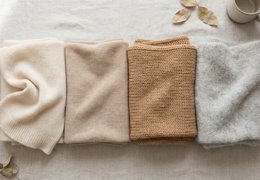 Cashmere, merino, lambswool and alpaca: the warm fibres compared
 Which side to wear a brooch: the rule explained
 How to Wash a Beanie Without Shrinking It
 How to knit fingerless mitts: easy tutorial for beginners
 How to style a brown watch: colours, outfits and dress codes
 Touchscreen gloves vs warm gloves: how to choose for your daily use