A clear guide to carrying medication in hand luggage: UK rules, the 100 ml exemption, doctor's letters and controlled...
€9.90


A clear guide to carrying medication in hand luggage: UK rules, the 100 ml exemption, doctor's letters and controlled...

UK rules, clinical age guidance, choosing a safe piercer, first studs and the full healing timeline for a child's ear...

Sizing in inches and centimetres, teeth spacing, spring strain and materials: how to pick a claw clip that actually...

What pin-up style is, how it differs from rockabilly, and how to build the silhouette from clothes you already own.
UK airports no longer share one liquids rule. Where the 2 litre allowance applies, where 100ml still stands, and how...

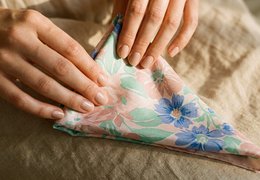




A bee slips through the window, and suddenly it is circling your living room. Is it just the season, or does it mean something? Across British and European folklore, a bee visiting the home has long been read as a sign, and almost always a good one. Here is what the old beliefs say, how Feng Shui reads it, and what to do when it happens.
A bee in the house is traditionally seen as a positive omen: good news on the way, a welcome visitor, or a small stroke of luck and prosperity. As the insect of work, honey and community, the bee carries a symbolism of abundance that folklore extends to any home it enters. Practically, its arrival usually means flowers, a hive or a nest are nearby. In almost every European tradition the reading stays favourable, provided you do not harm the bee.
British and Irish folklore is unusually consistent here: a bee entering the home foretells good news or the arrival of a stranger who will become a friend. A few beliefs are worth knowing:
These are popular beliefs rather than proven facts, kept alive because the bee has been respected since antiquity. The old rural custom of "telling the bees" family news shows how closely people once tied the insect to the household.

In Feng Shui, a bee entering the home is associated with industriousness, wealth and the productive flow of energy, or chi. Because the bee gathers, builds and stores, it is treated as a messenger of abundance arriving in your space. The advice that follows is gentle: welcome the visit, let the bee find its way out, and take the moment as a nudge to tend your own "hive", meaning your work, your finances and your home. The bee is read as a symbol of incoming prosperity, never as something to fear.
For most traditions the answer is clearly good luck, with only two conditions attached. First, the bee should leave unharmed; a bee that dies indoors, or is swatted, is the one case folklore turns negative. Second, a single visiting bee is welcomed, while a whole swarm settling in a wall is a practical matter rather than an omen. If you want a simple rule: a calm bee that comes and goes is a blessing, and the kindest response is to help it back outside.
Faced with a bee in the house, the safe approach is to open a window or door wide and let the bee fly out towards the light on its own, without swatting or trapping it. If it tires, cover it gently with a glass, slide a sheet of paper underneath, and release it outdoors on a flower. Never crush a bee found indoors: bees are vital pollinators and increasingly protected. For a full swarm inside a chimney or cavity, do not attempt removal yourself; call a local beekeeper who will collect the colony alive.

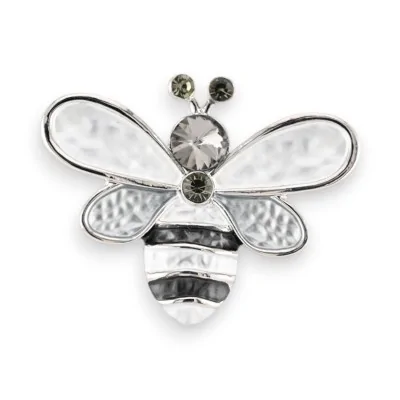
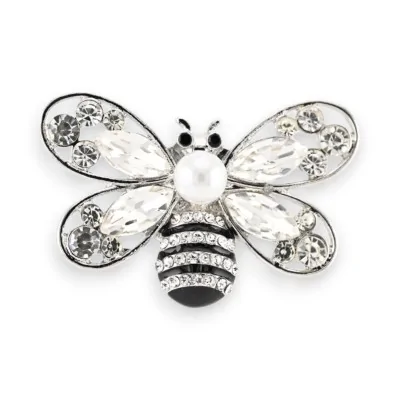
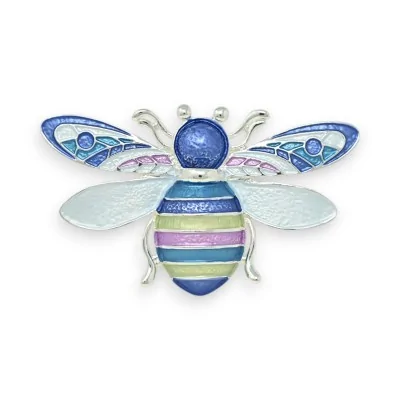
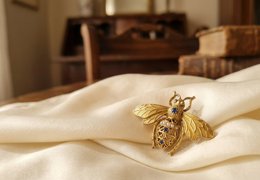
If the bee speaks to you, you do not have to wait for one to fly through the window. The motif entered jewellery for exactly this reason: its message of work, sweetness and abundance. A bee-shaped brooch on a lapel or scarf keeps that lucky symbol close every day, long after a bee in the house has come and gone. To understand where its symbolic power comes from, from Napoleon's emblem to the Manchester worker bee, our guide to the symbolism of the bee in jewellery tells the whole story.
Yes, in most British and European traditions a bee in the house is good luck, linked to prosperity, good news or a welcome visitor. A bee in the house has been read as a blessing for centuries. The belief grows from the bee's long symbolism of work and abundance. It is folklore rather than fact, but the practical advice that comes with it, to let the bee leave unharmed, is always sound.
A bee landing on you is traditionally read as a blessing and a sign of coming prosperity, since the insect is choosing to rest on you without stinging. Stay calm and still, and it will usually fly off on its own. A honeybee stings only as a last resort because it dies afterwards, so it has little reason to sting you.
Bees usually come inside drawn by light, flowers, potted plants or a sweet smell, or because a colony has settled nearby. It is natural exploring behaviour, not aggression. Repeated visits can point to a nest close by, which a beekeeper can relocate without destroying the colony.
No, you should not kill a bee indoors. Folklore treats it as bad luck, and ecologically the bee is an essential pollinator. Open a window and let it leave on its own, or guide it out gently with a glass and a sheet of paper.
Mode Tendance, jewellery and accessories editorial team. Published 3 July 2026.
 Hoop Earring Trends 2026: 8 Looks to Wear Now
 Autumn/Winter 2026 jewellery trends: 7 pieces to adopt
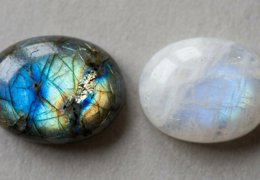 Labradorite vs moonstone: how to tell them apart
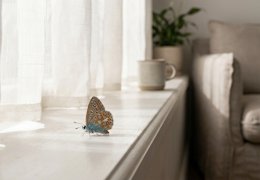 What it means when a butterfly comes into your house
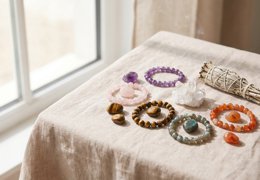 How to cleanse and charge crystals: the complete guide
 Which side to wear a brooch: the rule explained
 Bee symbolism: meaning, the Manchester worker bee and spiritual sense
 How to cleanse labradorite and charge it