A clear guide to carrying medication in hand luggage: UK rules, the 100 ml exemption, doctor's letters and controlled...
Mode Tendance, Click here to understand delivery to the United States, Australia and United Kingdom
English GB


A clear guide to carrying medication in hand luggage: UK rules, the 100 ml exemption, doctor's letters and controlled...

UK rules, clinical age guidance, choosing a safe piercer, first studs and the full healing timeline for a child's ear...

Sizing in inches and centimetres, teeth spacing, spring strain and materials: how to pick a claw clip that actually...

What pin-up style is, how it differs from rockabilly, and how to build the silhouette from clothes you already own.
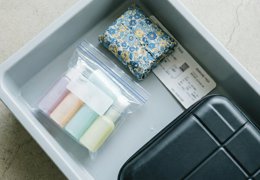
UK airports no longer share one liquids rule. Where the 2 litre allowance applies, where 100ml still stands, and how...

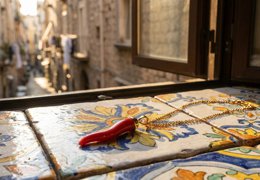



Labradorite and moonstone belong to the same broad mineral family, the feldspars, and both throw back light in a way that stops you in your tracks. That shared sparkle is exactly why shoppers mix them up, in store windows and online listings alike. Yet a trained eye separates them in seconds using a single clue: the nature of their shimmer. This comparison walks through their composition, optical effect, body colour, hardness and care so the confusion never trips you up again.
Labradorite is a plagioclase feldspar whose composition sits between albite (sodium) and anorthite (calcium). First described in Labrador, Canada, in 1770, it is usually opaque with a dark grey to black body. Its signature is a metallic play of colour, the labradorescence, that flares across the surface. Madagascar is now the leading source, while Finland produces the intense, multicoloured variety known as spectrolite.
Moonstone is a potassium feldspar, an orthoclase of the adularia type interleaved with thin layers of albite. It is typically pale, from translucent white to nearly transparent, and shows a soft blue-white glow that seems to drift beneath the surface. The finest blue moonstone comes from Sri Lanka, while India and Madagascar supply much of the white and so-called rainbow material on the market.

The shimmer gives each stone away. Labradorite produces labradorescence, the Schiller effect: crisp flashes of blue, green, gold and sometimes orange that appear depending on the viewing angle, caused by light diffracting off fine lamellar layers inside the crystal. Moonstone shows adularescence, a diffuse blue-white veil that scatters between alternating layers of orthoclase and albite. Moonstone glows, labradorite flashes: that single image settles most cases.

Body colour often separates the two before you even study the shimmer. Labradorite usually has a dark, grey-to-black base on which the colour ripples like a flash of lightning. Moonstone has a light, white-to-translucent body crossed by a gentle blue halo. A dark body almost always means labradorite, while a milky, luminous stone points to moonstone.
| Feature | Moonstone | Labradorite |
|---|---|---|
| Family | Potassium feldspar (orthoclase/adularia) | Plagioclase feldspar |
| Optical effect | Adularescence (soft blue veil) | Labradorescence (multicoloured flash) |
| Body colour | White to translucent | Grey to black |
| Transparency | Translucent to transparent | Opaque |
| Hardness (Mohs) | 6 to 6.5 | 6 to 6.5 |
| Sources | Sri Lanka, India, Madagascar | Canada, Madagascar, Finland |
Rainbow moonstone is not a moonstone in mineral terms. Rainbow moonstone is actually white labradorite, a plagioclase rather than a potassium feldspar. The trade adopted the appealing name because of its luminous look and bluish flashes, but its composition and multicoloured play place it firmly with labradorite. This single naming habit causes most of the confusion between the two gems. For stones with a genuinely labradorescent blue-gold flash, browse our labradorite range.
Choose by the look you want and the story you like. Moonstone is one of the birthstones for June, traditionally linked to femininity, cycles and intuition, and suits anyone drawn to a soft, ethereal glow. Labradorite, with its bolder metallic flash, is associated in folklore with protection and transformation, and works well for those who prefer a dramatic, changeable stone. Both are affordable in everyday qualities, with prices rising for vivid blue moonstone or intense spectrolite.
Both stones handle daily wear if you treat them gently, since both rank 6 to 6.5 on the Mohs scale and can scratch or chip. Clean them with lukewarm water and a soft cloth, keep them away from perfume, cosmetics and household chemicals, and store them apart from harder gems. Remove rings and bracelets before sport, cleaning or showering to protect the surface and the setting.
Look at the body colour and the type of shimmer. A pale, white or translucent stone with a milky blue glow that floats beneath the surface is moonstone; a dark-bodied stone that throws sharp blue, green and gold flashes is labradorite. The diffuse veil of adularescence is what separates it from labradorite's crisp flash.
No, rainbow moonstone is really white labradorite. It belongs to the plagioclase group, like ordinary labradorite, rather than the potassium feldspar of true moonstone. The commercial name reflects its luminous appearance, but its mineralogy classes it among labradorites.
The two gems are almost identical in hardness, between 6 and 6.5 on the Mohs scale. Neither is meaningfully tougher than the other, so both need the same care against scratches and knocks and both suit sensible everyday wear.
Value depends on the play of light rather than the species. Top blue moonstone from Sri Lanka and intense Finnish spectrolite command the highest prices, while standard white moonstone and grey labradorite beads remain very affordable.
Moonstone is a recognised birthstone for June, alongside pearl and alexandrite. Labradorite is not a traditional birthstone, though it is often chosen as a personal or zodiac-linked stone for its striking colour play.
Yes, with a little care. Their moderate hardness suits daily wear in a bracelet or pendant, but it is best to take the piece off for housework, sport or showering and to avoid contact with hard surfaces that could scratch the stone.
Mode Tendance, jewellery and accessories editorial team. Published on 30 June 2026. Sources: Gemological Institute of America (moonstone description, June birthstone); mineralogical classification of the feldspar group (plagioclase and alkali feldspars); Mohs hardness scale.
 Hoop Earring Trends 2026: 8 Looks to Wear Now
 Autumn/Winter 2026 jewellery trends: 7 pieces to adopt
 Bee in the House: Meaning, Symbolism and Superstition
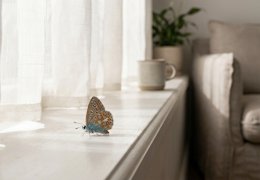 What it means when a butterfly comes into your house
 How to cleanse and charge crystals: the complete guide
 Which side to wear a brooch: the rule explained
 Bee symbolism: meaning, the Manchester worker bee and spiritual sense
 How to cleanse labradorite and charge it