A clear guide to carrying medication in hand luggage: UK rules, the 100 ml exemption, doctor's letters and controlled...


A clear guide to carrying medication in hand luggage: UK rules, the 100 ml exemption, doctor's letters and controlled...

UK rules, clinical age guidance, choosing a safe piercer, first studs and the full healing timeline for a child's ear...

Sizing in inches and centimetres, teeth spacing, spring strain and materials: how to pick a claw clip that actually...

What pin-up style is, how it differs from rockabilly, and how to build the silhouette from clothes you already own.

UK airports no longer share one liquids rule. Where the 2 litre allowance applies, where 100ml still stands, and how...






Buying for a woman who has everything can feel impossible. She owns the classics, treats herself all year and quietly returns the duplicates. The good news is that the issue is not a lack of ideas but a lack of method. Instead of yet another list, this guide gives you a way of thinking that stops you landing on something she already owns, whatever your budget.
The real obstacle is not budget but redundancy. A woman who has everything rarely needs one more object, and a gift that duplicates something ends up in a drawer. The trick is to step out of the logic of accumulation. Rather than hunting for another thing, you look for what a complete collection is missing: meaning, time or emotion. A good gift fills a gap, not a shelf. That single shift removes half the weak ideas straight away, and it works whatever your relationship to her, mother, friend, partner or colleague.
The anti-duplicate rule is three questions to ask before you buy: what does she already own in abundance, what does she genuinely use every day, and what would she never buy for herself. The first rules out duplicates, the second points to the useful, the third to the unspoken wish. Start from what she already owns. For a woman who has everything, that last question is usually the sharpest, because the best gift is the small luxury she keeps talking herself out of.
The four-gift rule keeps giving focused: one thing she wants, one she needs, one to wear and one to read. Popular in the UK for its restraint, it works just as well for an adult who has everything, because it forces variety and curbs impulse buying. Give less but give better. Applied to a woman who has everything, the framework turns a vague search into four clear, complementary choices rather than a pile of near-duplicates.

An experience sidesteps duplication entirely: a workshop, a spa day, a concert or a tasting cannot sit twice in her wardrobe. Research by psychologist Thomas Gilovich at Cornell University shows experiential purchases bring more lasting satisfaction than material ones, because they feed memory and identity. Experiences outlast material things. For a woman who has everything, a moment to live holds far more value than another accessory, and it is often shared with someone she loves. Think of a cookery class with a chef, a wine tasting, a pottery workshop, a night in an unusual stay or a ticket to a show she would not have booked herself. Choose the experience around her interests, never yours.
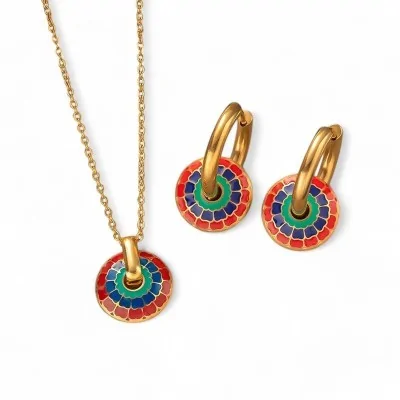
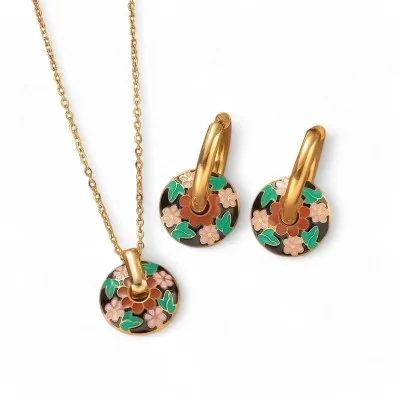
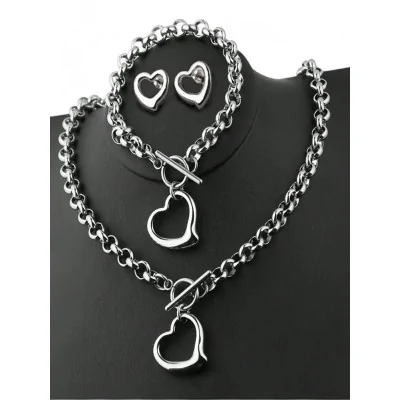
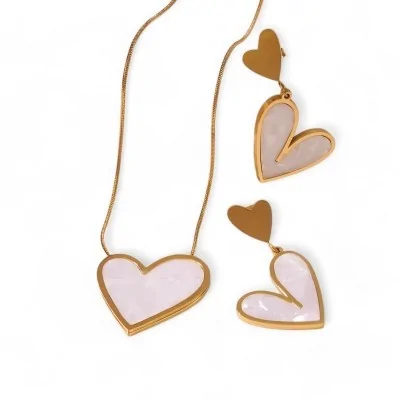
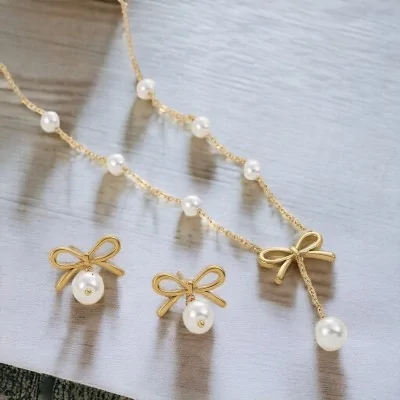
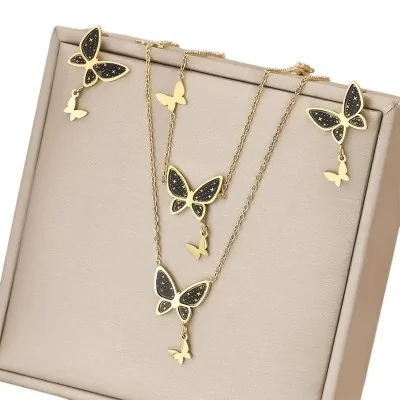
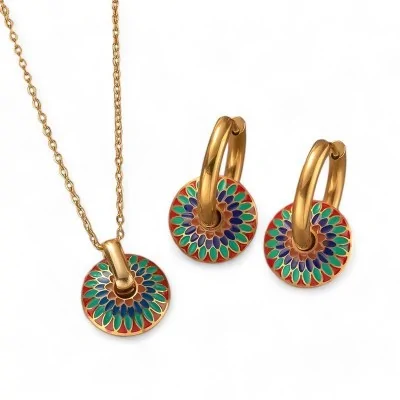
Personalisation turns an ordinary object into a one-off, so it cannot be a duplicate: an engraving, initials, a date or a message make the gift strictly irreplaceable. An engraved matching jewellery set, for instance, offers a coordinated pair you then make personal. Personalisation makes a gift impossible to duplicate. For a woman who has everything, knowing an item was made with her in mind often matters more than the item itself. An engraved date, an illustrated portrait, a printed playlist or a bound photo album turns an ordinary present into an intimate keepsake. Personalisation takes a little planning, and that lead time is exactly what proves the intention.
A small, consumable gift almost always lands well: a scented candle, rare tea or coffee, fine chocolates or a single beauty treat. It is enjoyed and then gone, which avoids clutter and duplication alike. Chosen with care and nicely wrapped, a modest gift shows intention without straining your budget or her cupboard space, and it never competes with what she already has. A single-estate tea, a small-batch honey, an artisan candle or a box of fine patisserie is enough to signal thought. A consumable also keeps the budget in check: you can aim for excellence on one thing rather than spreading yourself thin.
To go further, see our guides to Christmas gift ideas for her and birthday gifts by age.
The strongest choice is an intangible gift such as an experience, a class or a treatment she would not have booked herself. It escapes duplication because it adds nothing to her possessions. A personalised object, unique by definition, or a high-quality consumable that is enjoyed and gone also work extremely well.
The four-gift rule means giving four things: something she wants, something she needs, something to wear and something to read. It began as a way to keep children's gifts balanced but suits adults too. For someone hard to buy for, it forces variety and stops you piling up similar items she may already own.
A personalised or experiential gift usually feels the most special, because it signals thought rather than spend. An engraved keepsake, a handwritten voucher for time together or a booked experience shows you paid attention. The feeling of being understood matters more than the price tag, especially for someone who already owns the obvious things.
Focus on a single, well-chosen consumable or a homemade experience. Quality tea, a favourite author's new book, a candle or a voucher for an afternoon together all deliver without overspending. A modest gift that fits her tastes beats an expensive one that risks duplicating what she owns.
Mode Tendance, jewellery and accessories editorial team. Published on 2 July 2026. Sources: Thomas Gilovich (Cornell University) research on experiential purchases; the four-gift principle (want, need, wear, read).
Medication in hand luggage: prescriptions, exceptions and security checks Ear piercing for a child: what age, uk rules and safety How to wear pin-up style in 2026 without looking like a costume Liquids in hand luggage: UK airport rules and limits 2026 How to change a watch battery yourself: a step-by-step guide
 Nickel allergy and jewellery: symptoms and safe metals to choose
 How to change a watch strap: steps and mistakes to avoid
 Infected ear piercing: how to spot it and what to do