A clear guide to carrying medication in hand luggage: UK rules, the 100 ml exemption, doctor's letters and controlled...


A clear guide to carrying medication in hand luggage: UK rules, the 100 ml exemption, doctor's letters and controlled...

UK rules, clinical age guidance, choosing a safe piercer, first studs and the full healing timeline for a child's ear...

Sizing in inches and centimetres, teeth spacing, spring strain and materials: how to pick a claw clip that actually...

What pin-up style is, how it differs from rockabilly, and how to build the silhouette from clothes you already own.
UK airports no longer share one liquids rule. Where the 2 litre allowance applies, where 100ml still stands, and how...






Scroll through any jewellery feed and you will see ears stacked with tiny hoops and studs in places you may not even know the name of. Behind every one of them sits a specific ear piercing with its own placement, pain level and healing time. This guide maps out the main types, from the humble lobe to the trickiest cartilage spots, and answers the questions people in the UK ask most: how much it hurts, how long it takes to heal, what it costs and what to do about the dreaded cartilage bump.
Most piercers work with around fifteen to twenty recognised placements. They all fall into three zones: the soft lobe at the bottom, the outer cartilage rim running up the side, and the inner cartilage folds around the ear canal. Soft tissue and cartilage behave very differently, which is why a lobe heals in weeks while an ear piercing through cartilage can take the best part of a year.
The classic first piercing, placed in the fleshy lower part of the ear. Pain is mild, healing is quick and jewellery options are endless. Second and third holes line up along the lobe and form the base of any ear stack.
A stacked lobe sits a few millimetres above an existing hole for a clustered, layered look. The transverse lobe runs horizontally through the lobe with a barbell, an unusual angle that works best on larger, detached lobes.
The helix is the outer upper rim, the most popular cartilage spot of all and usually the first ear piercing people choose after their lobes. The forward helix sits on the fold just above the tragus, facing forwards, often worn as a double or triple row of tiny studs. Two helix holes side by side with matching rings are commonly called snakebites.
The flat is the smooth plate of cartilage between the helix rim and the inner folds, perfect for star, flower or bezel-set designs that lie flush against the skin.
One straight barbell connecting two holes across the top of the ear. Striking, but it means two cartilage wounds healing at once, and the bar catches on hair and helmets, so it suits patient owners.
The tragus is the small flap guarding the ear canal, a favourite for micro studs. The anti-tragus sits opposite it, just above the lobe, and needs a pronounced ridge of cartilage to work.
The conch fills the large central shell of the ear, worn with a flat-back stud or a hoop that wraps the whole edge. An orbital uses one ring through two holes, usually in the helix or lobe area, so the hoop appears to orbit the ear.
The daith hugs the innermost fold above the ear canal. Claims that it relieves migraines remain scientifically unproven, so choose it for the look rather than any health promise. The rook pierces the upper inner ridge and the snug the mid ridge above the anti-tragus, two of the thickest and most demanding cartilage spots.
Everyone's threshold differs, but the ranking barely changes from piercer to piercer. Lobes sit around 2 out of 10. Helix, tragus and flat hover around 4 to 5. Conch and daith push slightly higher, and snug, rook and industrial top the chart because the needle passes through thick, folded cartilage. The honest rule of thumb: the thicker the cartilage, the sharper the pinch, though the moment itself lasts seconds.
A lobe settles in six to eight weeks. Cartilage is another story: most cartilage piercings need six to twelve months before you can safely change the jewellery. During that window, clean twice daily with sterile saline, skip alcohol and peroxide, and avoid sleeping on the fresh side. The infamous bump that appears next to a healing cartilage piercing is usually an irritation reaction to pressure, snagging or poor-quality metal rather than an infection; it generally fades once the cause is removed. The Association of Professional Piercers recommends implant-grade titanium or 316L surgical steel for initial jewellery, both compliant with the EU nickel release limits measured under standard EN 1811.

Placement dictates jewellery more than fashion does. Flat-back labret studs suit the tragus, conch and flat because nothing pokes the head side of the ear. Curved barbells follow the fold of the rook and snug. Ball closure rings and hinged clickers dress the daith, helix and healed conch. Straight industrial barbells are a category of their own. Sizes matter too: most cartilage work uses 16 gauge (1.2 mm) posts, lobes typically 18 or 20 gauge, and a properly measured length leaves a little room for initial swelling without dangling. After a fresh ear piercing, keep the starter piece in place until your piercer confirms the channel has settled; downsizing the post too early is a classic cause of angled healing, while leaving an overlong bar invites snags.
Typical studio prices range from about 15 to 30 pounds for a lobe and 25 to 60 pounds for cartilage placements, basic jewellery included, with London studios at the upper end. High-street chains offer cheaper gun piercing for lobes, but for any cartilage spot choose a needle studio over a piercing gun: a gun crushes cartilage instead of cutting it cleanly, which raises the risk of long-term irritation.
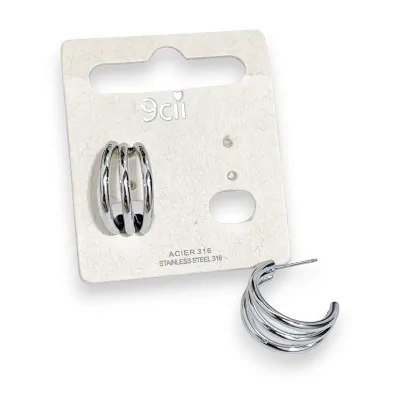
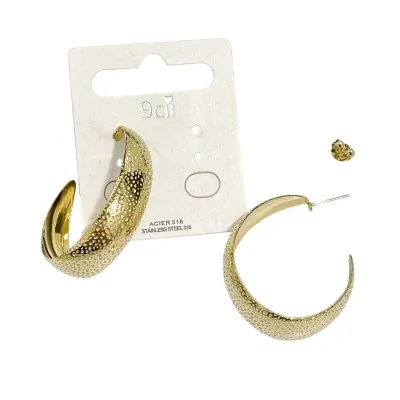
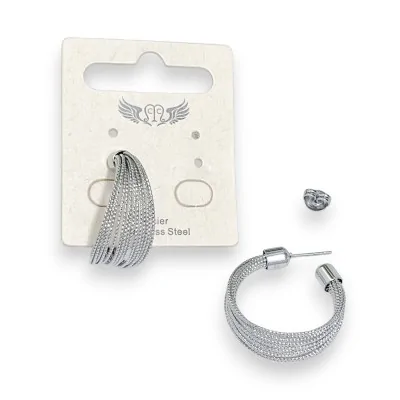
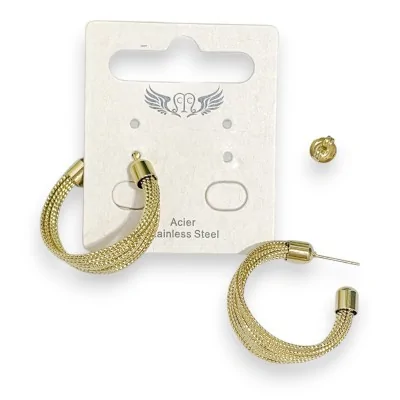
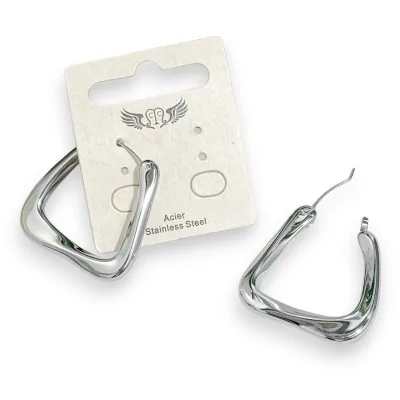
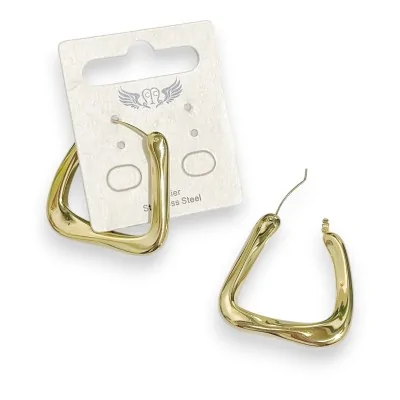
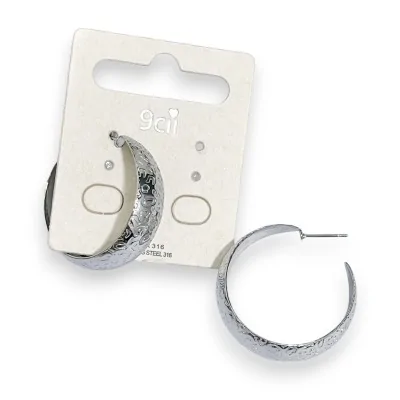
A good ear stack mixes textures: one statement hoop, a couple of plain studs, a hugging cuff. If you want the curated look without committing to months of aftercare, ear cuffs and clip-on earrings deliver the same effect with zero healing time, and they are ideal while an existing piercing heals. Browse our hypoallergenic hoop collection for gold and silver finishes designed for sensitive lobes. For the science behind why surgical steel suits reactive skin, see our guide to the benefits of stainless steel jewellery, and if you are weighing up metals for another placement, our silver versus steel nose piercing comparison uses the same criteria.

The main placements are the lobe family (standard, second, third, stacked, transverse), the outer cartilage group (helix, forward helix, flat, industrial) and the inner group (tragus, anti-tragus, conch, orbital, daith, rook, snug).
The standard lobe is the gentlest by far, both during the piercing and through healing. Among cartilage options, the helix is usually considered the easiest entry point.
Snug, rook, conch and industrial piercings sit at the slow end, often needing nine to twelve months. Patience with aftercare matters more than the initial pain.
Better not. Pressure during sleep is one of the main causes of irritation bumps and crooked healing. A travel pillow with the ear in the hole helps side sleepers through the first months.
Most piercers advise a maximum of two to three in one sitting, ideally on the same ear, so your body is not healing too many wounds at once and you can still sleep on the other side.
Mode Tendance, jewellery and accessories editorial team. Published 7 June 2026. Sources: aftercare guidelines from the Association of Professional Piercers (safepiercing.org), EU REACH regulation annex XVII on nickel restriction, standard EN 1811 on nickel release testing. Healing information is indicative and does not replace advice from a healthcare professional.
Medication in hand luggage: prescriptions, exceptions and security checks Ear piercing for a child: what age, uk rules and safety How to wear pin-up style in 2026 without looking like a costume Liquids in hand luggage: UK airport rules and limits 2026 How to change a watch battery yourself: a step-by-step guide
 Nickel allergy and jewellery: symptoms and safe metals to choose
 What to give a woman who has everything: the anti-duplicate method
 How to change a watch strap: steps and mistakes to avoid