A clear guide to carrying medication in hand luggage: UK rules, the 100 ml exemption, doctor's letters and controlled...
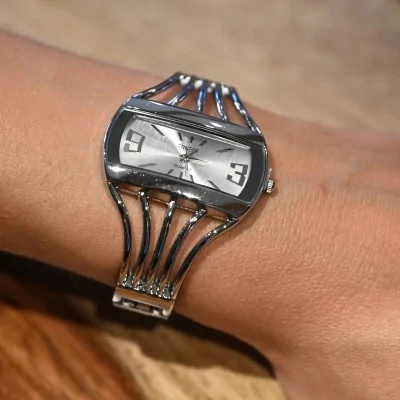
€12.90 €6.45 -50%


A clear guide to carrying medication in hand luggage: UK rules, the 100 ml exemption, doctor's letters and controlled...

UK rules, clinical age guidance, choosing a safe piercer, first studs and the full healing timeline for a child's ear...

Sizing in inches and centimetres, teeth spacing, spring strain and materials: how to pick a claw clip that actually...

What pin-up style is, how it differs from rockabilly, and how to build the silhouette from clothes you already own.

UK airports no longer share one liquids rule. Where the 2 litre allowance applies, where 100ml still stands, and how...






Yes, you can change a watch battery yourself on most quartz watches, with a few inexpensive tools and about ten minutes. The vast majority of quartz watches use a standard button cell and a removable case back, so no watchmaking skill is required. This guide walks through every step, from choosing the right opener to checking the seal, so you avoid scratching the case or disturbing the movement.
In most cases, yes: a common quartz watch opens without special training. The mechanism is simple, the battery is an off-the-shelf coin cell, and there is nothing to calibrate afterwards. Most quartz watches open with basic tools. The exceptions are dive watches, screw-down water-resistant cases and valuable pieces, where a professional is safer to preserve the gasket, the water resistance and any warranty.
Changing a watch battery calls for very little equipment, most of it in a cheap watch-repair kit. Set up a clear, well-lit surface and lay the watch face-down on a soft cloth so the crystal does not get scratched.

The way you open the case depends on its type, and this is the trickiest step. Turn the watch over on a cloth and look at the back: smooth and press-fitted, notched around the rim, or held by tiny screws. Each type has its own technique.
A snap-off back is press-fitted and has a small lip or notch on the edge. A snap-off back lifts with a case knife: slide the blade into the notch and lever gently until it pops. Always push the blade away from your fingers to avoid a slip.
A screw-down back has evenly spaced notches all around. Fit a case-back wrench onto two or three of them and turn anticlockwise to unscrew it. A grippy rubber ball or mat can sometimes loosen a back that is not tightly sealed.
Swatch-style and some fashion watches use a very tight press-fit back with a single small notch. Support the case firmly, slide the knife into the notch and lever with steady pressure. Take your time, as these backs can feel stubborn.
With the back open, locate the coin cell, usually held by a small metal tab or a clip you gently ease aside. Note which way the plus sign faces (the positive pole is normally upward and visible). Using tweezers, lift out the old battery without touching the gears.

The size is printed on the old battery, which is the surest way to buy the correct replacement. Read the code printed on the old battery, such as SR626SW or CR2032, before you remove it. Watch batteries are standardised button cells (IEC 60086-3): each code maps to a precise diameter, height and voltage. Match the code, then fit the new cell the same way up, positive pole visible, and press the retaining tab back over it.
Close the back by pressing straight down until it clicks for a snap-off type, or screwing it back down for a screw-down type. Check that the gasket is seated and clean. Opening a watch breaks its water seal, so the gasket should be checked or replaced before any contact with water. Wipe the case and confirm the second hand is moving.
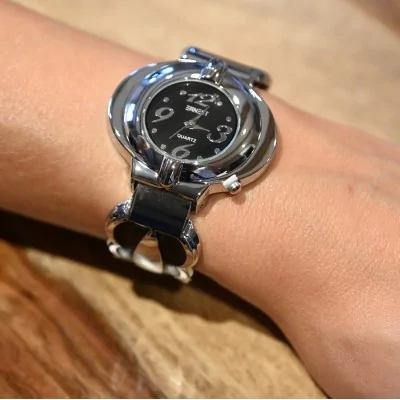
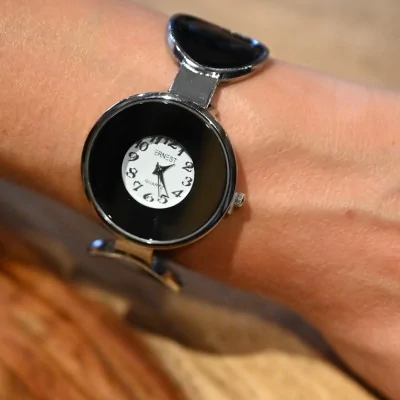
Some watches are worth taking to a watchmaker despite the cost. A dive watch always goes to a professional, because pressure testing the seal cannot be done at home. The same applies to a valuable piece, a watch under warranty, or a back you cannot open without risking a scratch. For an everyday fashion watch, such as our discounted Ernest watches, a home change stays simple and cheap. If the strap is worn too, see how to change your watch strap.
A quartz watch battery lasts two to five years on average, depending on the model and how much the movement draws. Simple three-hand watches run longer than those with extra functions such as a chronograph or backlight. A second hand that jumps in several-second steps often signals a dying battery.
The safest method is to read the reference printed on the old battery, for example SR626SW, 377 or CR2032. This standardised code gives the diameter, height and voltage. If it is unreadable, a retailer can identify the cell from the watch model or by measuring the old one.
The main risks are scratching the case while levering the back and touching the gears with a metal tool. Working on a cloth, with non-magnetic tweezers and without forcing anything, the change is harmless. The second concern is water resistance, which should be checked after any opening.
Yes, a quartz watch restarts at zero or a random time after the swap. Pull out the crown, set the time and date, then push it back in. On watches with a date, advance the hands to the right day rather than using the quick-set at night.
First check that the battery is the correct model, seated the right way up, and that the retaining tab touches the contact. A cell that has sat in storage may already be flat. If nothing happens, the movement may need a watchmaker's attention.
Mode Tendance, jewellery and accessories editorial team. Published 17 July 2026. Sources: IEC 60086-3 standard for button cells used in horology; watch battery cross-reference tables (SR626SW / 377, CR2032).

 Medication in hand luggage: prescriptions, exceptions and security checks Ear piercing for a child: what age, uk rules and safety How to wear pin-up style in 2026 without looking like a costume Liquids in hand luggage: UK airport rules and limits 2026
 Nickel allergy and jewellery: symptoms and safe metals to choose
 How to knit a headband: a step-by-step beginner tutorial
 What to give a woman who has everything: the anti-duplicate method
 How to change a watch strap: steps and mistakes to avoid