A clear guide to carrying medication in hand luggage: UK rules, the 100 ml exemption, doctor's letters and controlled...


A clear guide to carrying medication in hand luggage: UK rules, the 100 ml exemption, doctor's letters and controlled...

UK rules, clinical age guidance, choosing a safe piercer, first studs and the full healing timeline for a child's ear...

Sizing in inches and centimetres, teeth spacing, spring strain and materials: how to pick a claw clip that actually...

What pin-up style is, how it differs from rockabilly, and how to build the silhouette from clothes you already own.
UK airports no longer share one liquids rule. Where the 2 litre allowance applies, where 100ml still stands, and how...






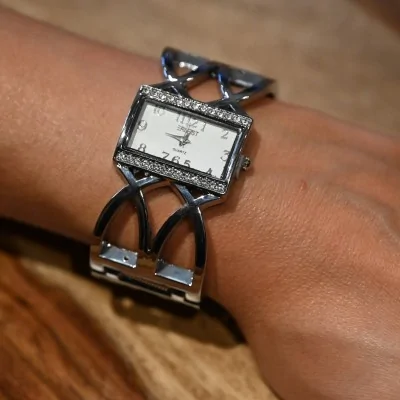
A worn, stretched or dated band is often the only reason a watch sits unused in a drawer, even though the case and movement still work perfectly. Learning how to change a watch strap lets you refresh a watch in minutes with the right watch strap and match it to any outfit, without a trip to a workshop. This guide walks through measuring the fitting, the tools you need, removing every strap type and fitting a new one, plus the mistakes that scratch a case.
Replacing the strap revives a watch for a fraction of the cost of a new model, because the case and movement stay untouched. Cracked leather, a loose bracelet or simply a change of taste never justify buying another watch. change the strap, not the watch is the most economical way to extend a piece and adapt it to the moment. One watch with three straps covers far more occasions than three cheap watches with one band each.
Before buying anything, measure the lug width, the gap between the two lugs that hold the strap, in millimetres. measure the lug width before buying a strap because a one millimetre error stops the strap from fitting. Standard widths run from 18 to 24 mm in even numbers. Use a ruler or a caliper across the inside of the lugs, and write the figure down before you shop.

One tool covers most jobs: a spring bar tool, with a forked end on one side and a fine push pin on the other. The fork slides under the spring bar to compress it, and the pin reaches the bar through drilled lugs. a proper spring bar tool prevents case scratches far better than an improvised flat screwdriver. For a metal bracelet, add a pin pusher or a small hammer and a holder to drive the link pins out.
The removal method depends on the fitting, so identify it first by turning the watch over and looking at the lugs. Drilled lugs show a small hole through each side; solid lugs show none. The four cases below cover almost every watch.
Slide the tiny lever on the underside of the strap towards the centre with a fingernail, and the spring bar retracts so the strap lifts away. Quick-release straps need no tool at all, which makes them the easiest starting point for beginners.
Insert the push pin into the outer hole of the lug and press the spring bar end inward until that side frees. Work one side at a time. Drilled lugs are the fastest and safest fitting because you act from outside the case.
Free the spring bars the same way, then resize the bracelet by pushing out the link pins in the direction of the arrows stamped underneath. Keep every pin and collar together so you can refit links later.
To fit the new strap, with the new watch strap in hand, seat one end of the spring bar in a lug hole, compress the other end with the fork, align it with the opposite hole and release slowly until it clicks. Always tug the strap gently afterwards to confirm both ends are locked. A click you can feel, plus a strap that resists a light pull, means the bar has seated correctly in both lugs.

Material sets both the look and the use of the watch. Leather and faux leather dress a watch up for daily wear away from water; faux leather copes better with rain and sweat. A metal bracelet looks formal and is sized by removing links. A fabric NATO watch strap threads under the bars without removing them, a safe first choice, while silicone suits sport and summer. Browse our watches with a leather-look band for inspiration, and see how to pair a watch with your outfits.
Most problems trace back to the spring bar or the tool. If the bar will not compress, you are likely on the wrong side of a solid lug; switch to the fork from inside the case. If the tool keeps slipping and marking the case, work on a cloth and never use a knife blade. reseat any strap that pops off. A strap that pops off after fitting was not fully seated: redo that side and listen for the click. If a watch is truly beyond saving, it may be time to find a new watch.
Allow two to five minutes per strap once you have the tool and have identified the fitting. Quick-release and drilled lugs are fastest; a metal bracelet takes longer because you also remove links and adjust the length to your wrist.
Yes, on quick-release straps fitted with a small sliding lever you push with a fingernail. Every other fitting needs a spring bar tool, because improvising with a screwdriver scratches the case and can bend the spring bar.
Measure the lug width, the distance between the two lugs, with a ruler or caliper. That figure, usually an even number from 18 to 24 mm, is the strap width to buy. The strap length is a separate choice that depends on your wrist.
No, compatibility depends on the lug width and the fitting system. A strap only fits if it has the right width and the right bar type. Watches with shaped lugs or a proprietary attachment accept only dedicated straps.
Use a dedicated spring bar tool, work on a cloth and protect the case with a thin film when working on solid lugs. The rule is never to use a rigid blade that can slip. A slow, controlled movement beats a sudden push every time.
Mode Tendance, accessories and watch editorial team. Published on 28 June 2026.
Sources: standard horological lug widths (18 to 24 mm), ISO 22810 standard on the water resistance of watches.
 Medication in hand luggage: prescriptions, exceptions and security checks Ear piercing for a child: what age, uk rules and safety How to wear pin-up style in 2026 without looking like a costume Liquids in hand luggage: UK airport rules and limits 2026
 How to change a watch battery yourself: a step-by-step guide
 Nickel allergy and jewellery: symptoms and safe metals to choose
 How to knit a headband: a step-by-step beginner tutorial
 What to give a woman who has everything: the anti-duplicate method