A clear guide to carrying medication in hand luggage: UK rules, the 100 ml exemption, doctor's letters and controlled...


A clear guide to carrying medication in hand luggage: UK rules, the 100 ml exemption, doctor's letters and controlled...

UK rules, clinical age guidance, choosing a safe piercer, first studs and the full healing timeline for a child's ear...

Sizing in inches and centimetres, teeth spacing, spring strain and materials: how to pick a claw clip that actually...

What pin-up style is, how it differs from rockabilly, and how to build the silhouette from clothes you already own.
UK airports no longer share one liquids rule. Where the 2 litre allowance applies, where 100ml still stands, and how...


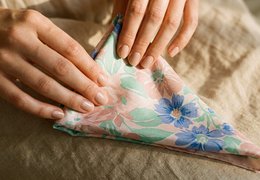



During treatment the scalp often turns dry, tight and sensitive to the smallest rub. A chemo headscarf answers two everyday needs at once: feeling like yourself again, and keeping head covering that stays put from morning to night without constant readjusting.
This guide gathers what matters most: the fabrics that respect a fragile scalp, simple wraps that hold all day, and the small tricks that keep a scarf secure without ever feeling tight. It is about comfort and confidence rather than medical advice.
Reach for soft, natural fibres first. Cotton, bamboo and modal glide over bare skin without catching, soak up warmth and let air move freely, which matters during the hot flushes that often come with treatment. A satin lining or a light silky scarf reduces the tiny frictions that irritate a tender scalp. Pure polyester, by contrast, traps heat and can feel scratchy.
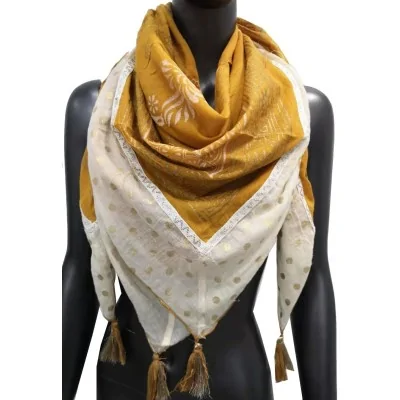
Check the finishing too. soft natural fabrics soothe a tender scalp, but a stray inner seam can ruin the comfort, so look for flat or seam-free edges. A square of roughly 70 to 90 cm gives enough fabric to cover the whole head and tie long tails, which is exactly what makes the difference between a scarf that slips and one that stays.
These two wraps cover most days. Both start with the square laid over the head, points to the back, and adjust without pulling on the skin. The aim is to wrap, not to compress: take a moment to find the right tension so the scarf holds on its own and still feels pleasant hours later.
Lay the square across the forehead, bring both panels behind the head, cross them at the nape and tie them on top or to one side. This enveloping wrap covers the whole head neatly and sits low enough to stay hidden under the tails. Tuck the ends inside for a tidy finish.
Knot the scarf at the nape leaving the tails loose, twist the two tails around each other into a single rope of fabric, then wrap that rope into a soft coil and tuck the end under. a cotton scarf liner stops slipping, so add one underneath before you start on a smooth scalp.
A bare scalp loses its natural shield of hair, so protection matters around the clock. Two moments call for special care: strong daylight and the night, and each is best handled a little differently.
In daylight, cover up before strong sun and favour a closely woven scarf or a wide-brimmed hat, since bare skin burns far more quickly than you expect. Seek shade and avoid the midday hours where you can. In cold weather, a soft cap keeps precious warmth in.
At night, swap the knotted scarf for a soft sleep cap in cotton or bamboo: it cannot come undone while you turn, and a satiny surface limits rubbing against the pillow. Many people find a gentle cap more restful than a tied scarf, with no pressure on the scalp through the night.

You do not have to manage everything alone. In the UK, major charities offer free, reliable guidance on hair loss and head covering, and some run schemes that lend or gift scarves, hats and turbans to people in treatment. asking for support is a sign of strength, and a quick word with your treatment team or nurse often opens the door to local services.
It also helps to build a small rotation of scarves you genuinely like, so getting ready never feels like a chore. Keep a couple by the bed, one in your bag, and a warmer cap for cold mornings. Familiar, comfortable headwear quietly restores a sense of routine.
Keep three to five scarves on rotation to get through treatment without fuss: enough to alternate colours, wash some while wearing others and always have a clean piece to hand. Stash one by the bed, one in your bag and a warmer cap for cold mornings, so getting ready stays effortless.
Wash them gently on a delicate cycle with a mild, fragrance-free detergent, since detergent residue can irritate skin that is already reactive. Dry them flat and out of direct sun to protect the fibres and keep colours bright. A cool iron is plenty for cotton and bamboo, and it preserves the flat hems that feel so kind against a tender scalp.
For more wrapping ideas, see our guide on how to tie a headscarf, and browse soft pieces in our square scarves selection.
A large square of about 70 to 90 cm in cotton, bamboo or modal works best, soft and breathable with no irritating seam. That size gives enough fabric to cover the whole head and tie long tails into a wrap or coil. Natural fibres suit a sensitive scalp far better than pure synthetics, especially during hot flushes.
Wear a thin cotton liner under the scarf so the fabric grips slightly on a smooth scalp. Tie the knot at the nape rather than the crown, tuck the tails in, and keep the tension gentle but firm. A light mist of water on the fabric also helps it stay disciplined on windy days.
 How to wash a silk scarf without ruining it
 How to keep a scarf from slipping off your head and hair How to tie a headscarf: 6 styles from Bardot to turban How to tie a square scarf : 8 essential knots