A clear guide to carrying medication in hand luggage: UK rules, the 100 ml exemption, doctor's letters and controlled...


A clear guide to carrying medication in hand luggage: UK rules, the 100 ml exemption, doctor's letters and controlled...

UK rules, clinical age guidance, choosing a safe piercer, first studs and the full healing timeline for a child's ear...

Sizing in inches and centimetres, teeth spacing, spring strain and materials: how to pick a claw clip that actually...

What pin-up style is, how it differs from rockabilly, and how to build the silhouette from clothes you already own.

UK airports no longer share one liquids rule. Where the 2 litre allowance applies, where 100ml still stands, and how...






A scarf for short hair is one of the fastest ways to refresh a pixie, a bob or an awkward grow-out stage. You are not tying length here, you are framing the face, hiding regrowth and adding volume where a short cut sits flat. This guide covers five real ways to wear it, how to pick the right square, and the size rules people search for.
Short hair fans tend to ask about two quick guidelines first: the so-called three rule and the lighter 2.5 rule. Both are simple ways to keep an outfit balanced, and a head wrap fits neatly into either once you treat it as your statement piece.
A scarf works on short hair because it adds texture and a focal point exactly where a cropped cut bares the face and neck. Long hair gets gathered; short hair gets bordered, so you style the roots, the fringe and the crown rather than the length. Worn near the face, a bright square also lifts the complexion and softens a very short cut.
On a pixie or a grow-out, a head wrap covers an uneven hairline between salon visits and disguises the line where colour fades. On fine, flat hair it builds optical volume on top. A silk twill grips far better than slippery satin, which matters most when there is little hair to hold a knot.
For short hair, reach for a silk square of roughly 26 to 35 inches, folded on the bias or rolled into a band. Size beats print here: too small and it will not loop the head, too large and it piles up and flattens the cut. Fabric decides whether the wrap stays put all day.
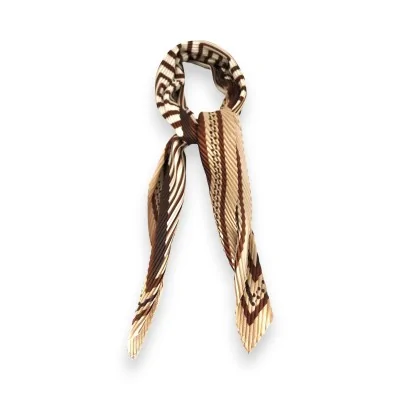
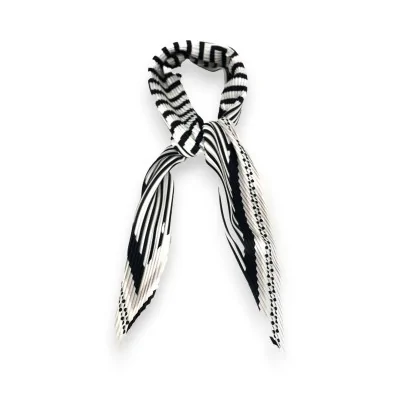
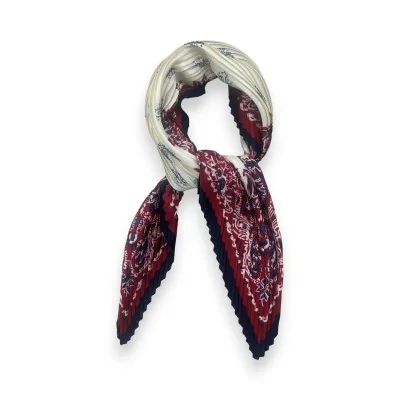
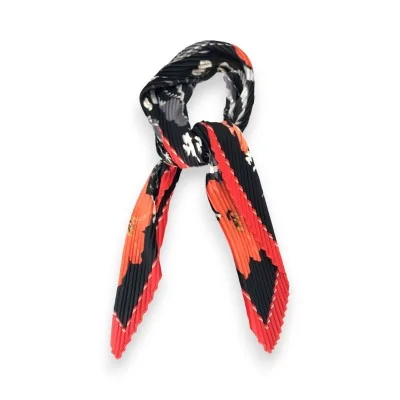
A classic 28 inch square covers most head styles without bulk. A 28 inch square sits more securely on a cropped cut than an oversized wrap that slides. Choose silk twill or a lightly textured weave over glossy polyester, which slips on short strands. Browse sizes and prints in our square scarves category to compare.
These five styles run from quick to more sculpted, and each one adapts to short lengths if you adjust the tension and where you tie the knot. Start on lightly styled, slightly textured hair so the fabric catches instead of sliding off.
Roll the square into a two to three inch band, lay the centre at the nape, bring both ends to the crown and tie a small knot. This wide band clears the face and adds height, ideal on a short bob.
Drape the open square over the back of the head, cross the ends at the front and knot them on top. This head wrap covers the whole cut, so it suits a grow-out or an unwashed day.
Twist the scarf into a thin rope, set it like a tiara and let the crown volume rise above the band. Twisting the scarf adds grip on very short hair, where a flat band would slide straight off.
Fold the square into a triangle, place it with the point at the nape and tie the ends in a small knot above the forehead. This nods to a retro bandana look while keeping a tidy, modern finish.
For natural or TWA short hair, wrap the square fully and tuck the edge under at the nape to protect the coils. It guards fragile texture and turns an in-between length into a deliberate style.

The best wrap depends on your cut: a pixie wants lightness and visible crown volume, a short bob carries wide bands, and natural coils suit a full protective wrap. Match the gesture to the length instead of forcing one knot on every head.
On a pixie, keep to thin twists and tiaras that let the top breathe. On a bob, wide bands and a side knot flatter the cut line. On grow-out or natural texture, the full wrap and front knot hide the regrowth line. Tie onto lightly styled hair so the silk catches every time. For more knots, see our headscarf styles guide and our eight square-scarf knots.
And if the fabric still moves, our complete guide on keeping a scarf from slipping covers grip bases and pins that work on short hair.
Roll the square into a band, lay the middle at the nape, bring the ends up and knot them on top or to one side. With short hair, begin on lightly textured strands so the silk grips, and pick a 26 to 35 inch twill square rather than slippery satin to stop the wrap from sliding off during the day.
The three rule is a styling shorthand that limits a look to three strong elements so it stays balanced rather than busy. A scarf for short hair counts as one of those three, which means you ease back on bold earrings or extra hair accessories and let the wrap carry the statement on its own.
The 2.5 rule is a softer version of the three rule, where the half point is a subtle accent rather than a full statement piece. With a short cut and a head wrap, the wrap is your main element and the half is something quiet, such as a thin earring, keeping the overall balance light and uncluttered.
Keep colour and contrast near the face, and lift the wrap off the forehead rather than flattening it onto the skull. A bright square that opens up the hairline freshens the features, while dull tones pulled tight tend to harden a short cut. Soft volume on the crown and a knot set slightly off-centre also keep the look current.
Yes, a very short cut or a pixie takes a head scarf well when you favour thin bands and twists. Set the fabric as a tiara or a volume headband and let the top of the cut rise above the band, so the style keeps dimension instead of pressing the hair flat against the head.
Mode Tendance, fashion and accessories desk. Published on 8 June 2026, based on our silk square-scarf edit and our in-house knot guides.
How to choose a claw clip or barrette for your hair type How to knit a headband: a step-by-step beginner tutorial
 How to keep a scarf from slipping off your head and hair How to tie a headscarf: 6 styles from Bardot to turban
 Wedding guest hairstyles: easy ideas you can do yourself
 How to wear hair clips at a wedding: 5 placements that work