A clear guide to carrying medication in hand luggage: UK rules, the 100 ml exemption, doctor's letters and controlled...
Mode Tendance, Click here to understand delivery to the United States, Australia and United Kingdom
English GB


A clear guide to carrying medication in hand luggage: UK rules, the 100 ml exemption, doctor's letters and controlled...

UK rules, clinical age guidance, choosing a safe piercer, first studs and the full healing timeline for a child's ear...

Sizing in inches and centimetres, teeth spacing, spring strain and materials: how to pick a claw clip that actually...

What pin-up style is, how it differs from rockabilly, and how to build the silhouette from clothes you already own.

UK airports no longer share one liquids rule. Where the 2 litre allowance applies, where 100ml still stands, and how...

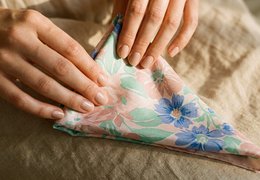




A four leaf clover tucked into a locket, a tiny horseshoe on a chain, a blue glass eye watching from a wrist: the lucky charm has survived every fashion cycle since antiquity. Long before it became jewellery, it was a tool for hope. This guide traces the history of lucky charms, from Egyptian amulets to the pieces we wear today, and explains what the most famous good luck symbols actually mean.
A lucky charm is any small object that tradition credits with protecting its owner or attracting good fortune. Its power is symbolic rather than material: it turns an invisible wish, courage, safety, prosperity, into something you can hold and wear. A lucky charm makes hope wearable, which is why pierced amulets appear in archaeology from the Stone Age onwards. Anthropologists note that nearly every culture developed its own repertoire of protective objects, and that the habit of wearing them as jewellery, close to the skin, is one of the most persistent human customs on record.
The story begins in ancient Egypt, where scarab beetles carved from carnelian and faience were worn as symbols of rebirth; the British Museum alone holds thousands of them. Roman children received a bulla at birth, a small capsule of protective amulets worn until adulthood. Medieval Europe favoured pilgrim badges and engraved talismans. The decisive turn came in the nineteenth century, when Queen Victoria popularised bracelets hung with sentimental keepsakes, portrait lockets, engraved hearts, miniature keys. Victorian fashion turned protection into sentiment: the charm no longer warded off evil, it preserved happy memories. Soldiers of both world wars carried the habit on, collecting small tokens from every front, and by the 1950s the charm-laden wrist had become a classic of Western style.

Every culture keeps its own catalogue of good luck symbols, and most of them have crossed borders through jewellery. The four leaf clover owes its fame to botanical rarity; the horseshoe, hung points up, forms a cup that holds luck in. The blue evil eye bead of the eastern Mediterranean reflects ill will back at the sender, while the hamsa hand shields the household in North African and Middle Eastern tradition. Italy contributes the red cornicello horn, covered in depth in our guide to the meaning of the Italian horn, Japan the beckoning maneki neko cat, Portugal the colourful rooster of Barcelos. Animal symbols deserve a chapter of their own, from ladybirds to owls, and we explore them in our guide to the symbolism of animals in jewellery.
Folk tradition usually puts the four leaf clover, the horseshoe and the evil eye bead at the top, a reputation built on age and ubiquity rather than measurable effect. We compare them culture by culture in our guide to the most powerful good luck charms.
The good luck charm has a long list of famous devotees, which says much about how persistent the habit is. Michael Jordan wore his University of North Carolina shorts under his Chicago Bulls kit for his entire career, a fact he confirmed in interviews. Tennis champions are famous for their meticulous pre-serve routines, and generations of actors refuse to name a certain Scottish play inside a theatre. Sports psychologists take these rituals seriously: a study published in Psychological Science in 2010 found that participants using a so called lucky golf ball sank significantly more putts than a control group, because believing in luck measurably boosts confidence and persistence. The charm on a bracelet works on exactly the same principle, just in a more elegant format.
The modern way to wear lucky charms is relaxed and personal: a single pendant on a fine chain for a discreet statement, a stack of small symbols on one wrist for collectors, or a tiny motif on a brooch or earring as a private wink. One well chosen symbol tells a story, so there is no need to pile them on. If you prefer the collected look, our range of bracelets with symbolic charms features the tree of life, hearts and stars in silver tone, gold tone and two tone finishes. A good luck bracelet also makes a thoughtful gift, for exams, travels or new beginnings, because it carries a wish rather than just an ornament. The butterfly motif, currently enjoying a strong revival, has its own story, told in our piece on the meaning of the butterfly brooch.

An amulet passively protects the wearer from harm, while a talisman is meant to actively attract a specific benefit such as luck, love or success. Amulets repel, talismans attract. In modern jewellery the distinction has largely disappeared and both are simply called lucky charms.
The four leaf clover remains the most popular good luck gift for exams and fresh starts, followed by the star, associated with finding one's direction, and the horseshoe for lasting luck. For a new job, the tree of life is a favourite choice because it symbolises growth.
European tradition holds that points facing up form a cup that stores good luck, while points facing down let the luck drain away. Irish folklore takes the opposite view: a downward horseshoe pours its luck over everyone passing beneath it. As jewellery, both orientations are worn happily.
No, they are among the most stable motifs in fashion jewellery: finishes and materials change with the seasons, but the clover, the eye, the hand and the star return every year. The charm bracelet format itself has been in continuous fashion since the Victorian era.
Mode Tendance, jewellery and accessories editorial team. Published 7 June 2026. Sources: Egyptian amulet collections of the British Museum; study on lucky charms and performance, Psychological Science, 2010, University of Cologne; folklore of the Barcelos rooster, Portuguese national tourism office.
 Hoop Earring Trends 2026: 8 Looks to Wear Now Autumn/Winter 2026 jewellery trends: 7 pieces to adopt
 Bee in the House: Meaning, Symbolism and Superstition
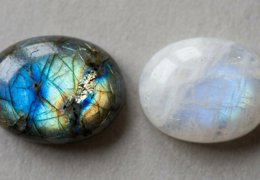 Labradorite vs moonstone: how to tell them apart
 What it means when a butterfly comes into your house
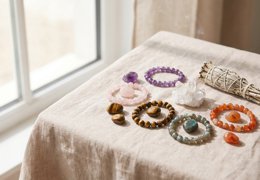 How to cleanse and charge crystals: the complete guide
 Which side to wear a brooch: the rule explained
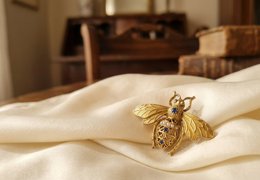 Bee symbolism: meaning, the Manchester worker bee and spiritual sense